
Adults considering braces often start with a familiar question: could treatment ease crowded front teeth, close a gap, or help an uneven bite feel more balanced? The answer depends on the starting position of the teeth, how the upper and lower jaws fit together, gum health, the appliance selected, and the plan for keeping teeth in place afterward. A smile photo can show a visible change, but it can't explain the treatment choices and habits behind it.
These six adult braces results are educational scenarios, not promises or individual patient records. Each shows how an adult's main concern can shape treatment planning, everyday routines, and retention. Treatment often takes one to two years, but the timeline varies with the case, according to the British Orthodontic Society's treatment guidance. Adults in North Wilmington, Middletown, West Dover, and Millsboro can request a free consultation with iTero digital 3D scanning at Stellar Orthodontics to discuss whether braces, clear ceramic braces, or Invisalign may fit their needs.
Table of Contents
- 1. Mild Crowding Straightened with Clear Aligners
- 2. Front Teeth Aligned with Clear Ceramic Braces
- 3. Closing a Small Gap Between Front Teeth
- 4. Correcting an Overbite or Underbite in Adulthood
- 5. Aligning Teeth Before Cosmetic Dental Work
- 6. Long-Term Stability After Adult Orthodontic Treatment
- Adult Braces Results: 6-Case Comparison
- Turn Your Example Into a Personal Treatment Plan
1. Mild Crowding Straightened with Clear Aligners
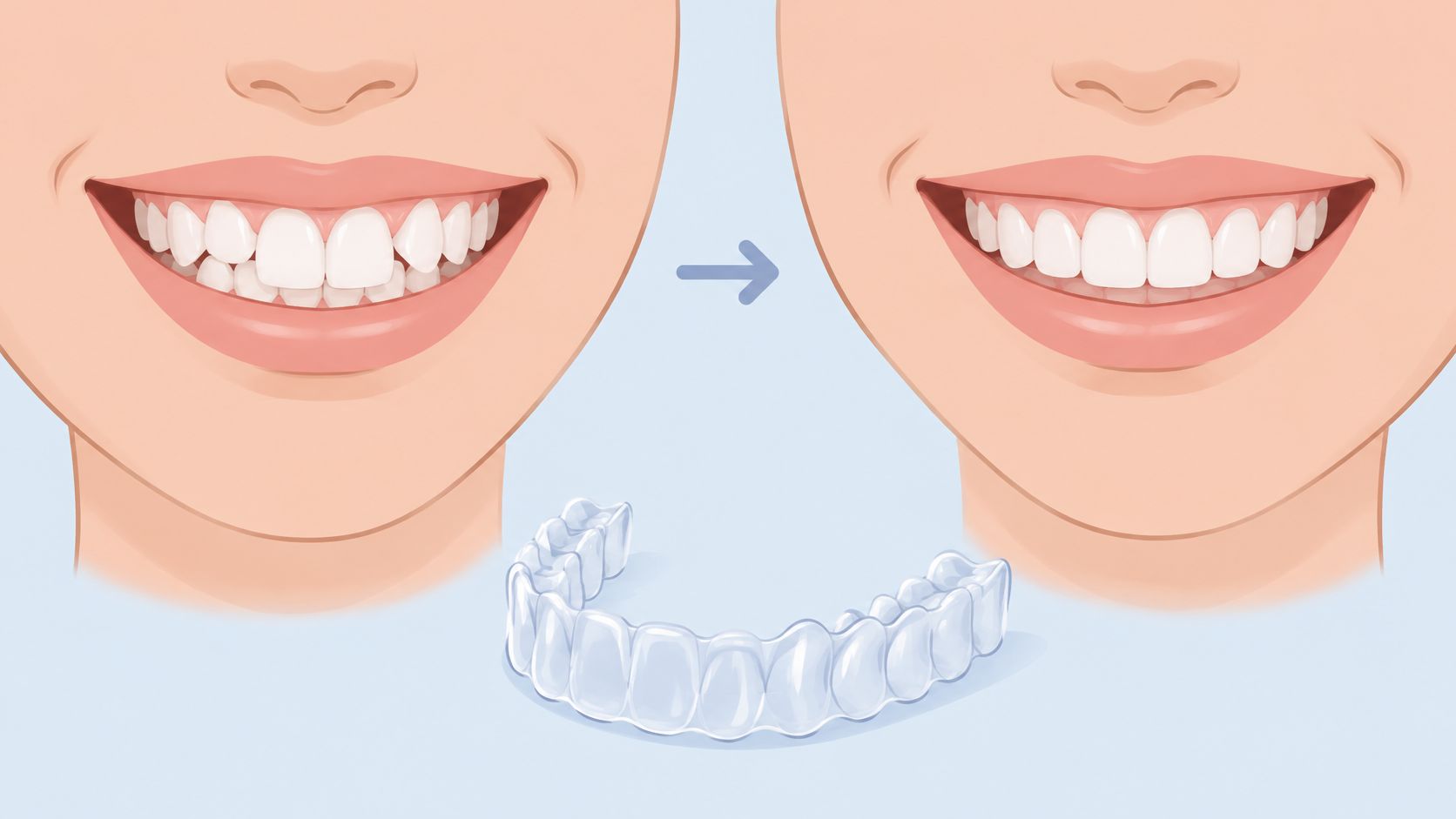
Slightly overlapping front teeth can be a long-standing concern, or they may have shifted since earlier treatment. For an office professional in her 30s, clear aligners such as Invisalign may be worth discussing if her orthodontist determines that her crowding can be treated with removable trays. A Middletown resident in his 40s might also consider aligners, then follow the active treatment with a retainer to help maintain the new alignment.
With aligners, each tray is designed to guide teeth through a planned sequence of small movements. The orthodontist sets the schedule for changing trays and checks progress along the way. The trays are removable, which can make eating and brushing more straightforward, but they only work as planned when the patient wears them consistently. The best appliance and the expected timeline depend on the individual evaluation, not just how mild the crowding looks in a photograph.
Adults comparing this option can explore how Invisalign may work for crowded teeth. A free consultation with iTero digital 3D scanning can help the orthodontist review alignment and discuss whether aligners are a reasonable approach.
Daily routine matters: Keeping a tray case nearby makes it easier to store aligners safely at meals. Brushing before putting them back in helps avoid trapping food against the teeth.
A phone reminder can help with tray changes, but the orthodontist's instructions should set the schedule. Retainers are also worth discussing early, rather than treating them as an afterthought once the visible crowding has improved.
2. Front Teeth Aligned with Clear Ceramic Braces
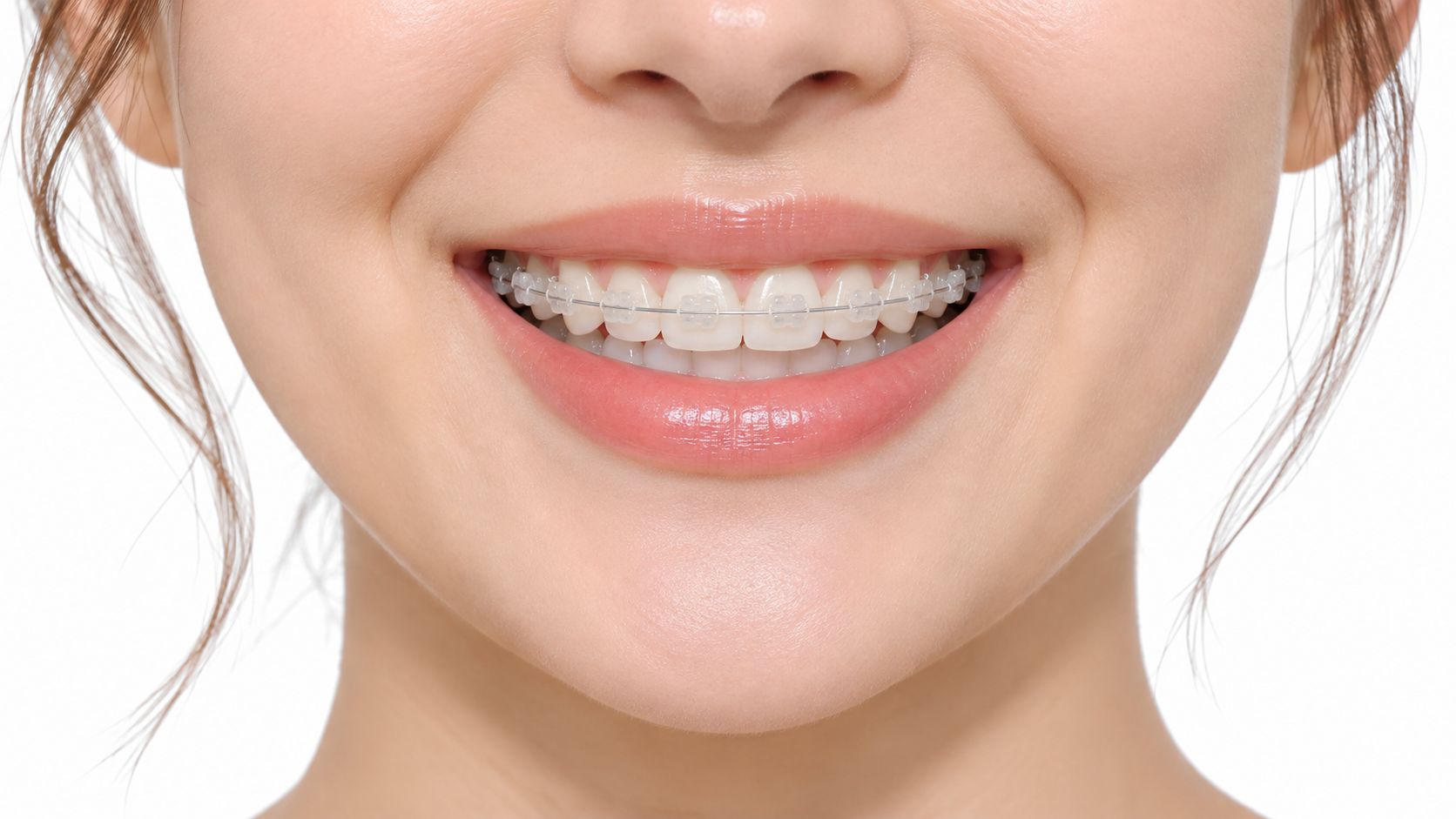
For adults who prefer a fixed appliance, clear ceramic braces offer another way to address front-tooth alignment. Tooth-colored or translucent brackets attach to the teeth and connect to an archwire. They're less visually prominent than metal brackets for many people, while remaining fixed in place during treatment.
Consider a Dover-area adult with a moderate overbite who wants a less noticeable option but needs the orthodontist to assess the full bite, not only the front teeth. A Millsboro professional in her 50s might choose ceramic braces to address minor gaps on both the upper and lower teeth. Those scenarios illustrate why the treatment decision depends on the movement needed and the patient's preferences, rather than appearance alone.
Stellar Orthodontics offers clear ceramic braces at its Delaware locations. Adults can ask whether this appliance suits their alignment and bite goals during a free consultation. The practice's guide to clear ceramic braces for adults can also help readers understand the option before a visit.
Caring for brackets day to day
Fixed braces require attention during meals and regular care at home. Hard candies, ice, and chewing on pens can damage brackets, so adults should avoid those habits. After coffee, tea, or other colored drinks, rinsing with water can help clear residue. If a bracket rubs against the lips or cheeks, orthodontic wax may help protect the irritated area while the patient contacts the orthodontist for guidance.
Adjustment appointments are part of the plan, and keeping them helps the orthodontist monitor progress. Treatment length is individual, so adults should ask for an estimated timeline and what might affect it. A photo may show straighter teeth, but it won't show the appointment routine and careful cleaning that help support treatment.
3. Closing a Small Gap Between Front Teeth
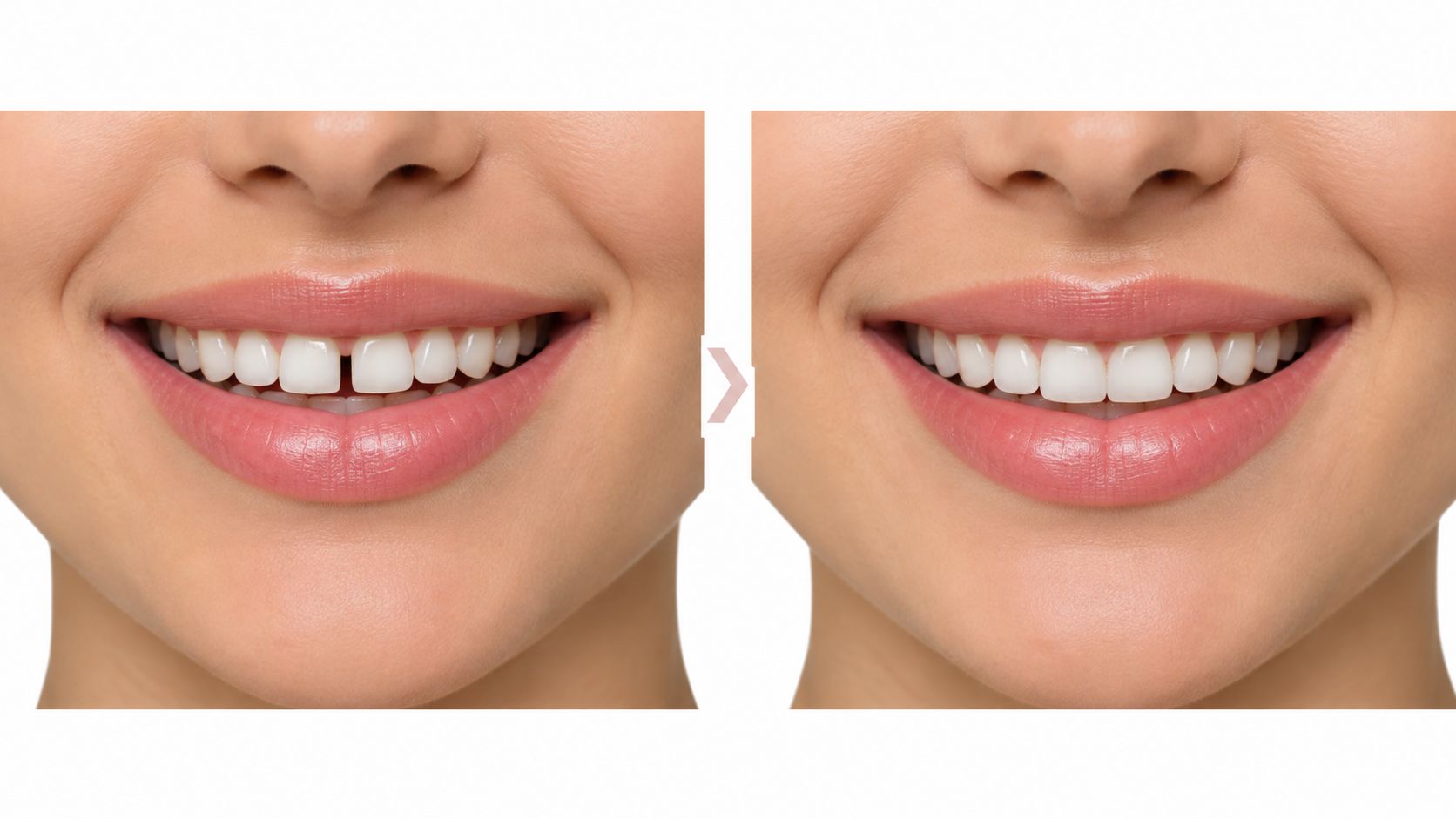
A gap between the upper front teeth can be a feature someone has had since childhood, or a change noticed over time. An adult in Wilmington might want to close a small gap with clear aligners, while a Middletown resident may prefer clear ceramic braces, particularly if other teeth also need alignment. The appliance choice depends on the gap's size and cause, the bite, and the condition of the gums.
The orthodontist can examine how the teeth meet and whether the gap is part of a broader spacing or bite concern. Photographs from earlier years may help explain when the space appeared or whether it changed. That history doesn't determine the treatment by itself, but it can add useful context to the clinical assessment.
Plan for the space after treatment
Closing a gap is only part of planning for a stable result. Adults should ask whether a retainer will be needed long term and how the orthodontist will monitor the teeth after active treatment. Teeth can shift over time, so the retention plan should match the individual case rather than rely on a generic expectation.
Regular dental cleanings remain important during orthodontic care. Patients should also avoid biting hard objects or opening packages with their front teeth, which can put unnecessary pressure on teeth and appliances. The orthodontist can explain what kinds of everyday habits to avoid based on the chosen treatment.
A useful appointment conversation can include what caused the gap, whether other teeth need to move, and what the retention routine will involve. Those questions help connect the visible goal with the steps needed to support it.
4. Correcting an Overbite or Underbite in Adulthood
When upper and lower teeth don't meet comfortably, straightening the visible front teeth may not address the main concern. An overbite or underbite involves how the arches fit together, so the orthodontist needs to evaluate the bite as well as alignment. Adults should mention jaw discomfort, clicking, or chewing difficulty at the consultation, since those details help shape the discussion.
A Dover resident in her 40s with a deep overbite might discuss clear ceramic braces to help level the bite. A Millsboro adult with a mild underbite could be prescribed braces and elastic bands, if the orthodontist determines they're appropriate. Elastics need to be worn according to instructions because the patient's daily follow-through is part of the treatment plan.
A systematic review and meta-analysis of 20 randomized trials involving 1,470 orthodontic patients found that fixed appliances produced measurable improvement in occlusion. The mean final Peer Assessment Rating score was 6.0 points, compared with an average absolute improvement of 23.0 points, an 82.6% reduction with a 95% confidence interval of 70.8% to 94.4%. The mean American Board of Orthodontics Objective Grading System score was 18.9 points. These findings offer evidence that fixed appliances can improve more than cosmetic straightness, although the trials weren't limited to adults and individual outcomes vary with the case. The results are detailed in a systematic review of fixed orthodontic treatment outcomes.
Bite correction is a planning question, not just a photo comparison. A written plan can clarify the intended tooth movements, estimated timing, and appointment schedule.
A free consultation at Stellar Orthodontics can include iTero digital 3D scanning to support discussion of bite concerns and possible options.
5. Aligning Teeth Before Cosmetic Dental Work
Some adults are considering orthodontics alongside restorative or cosmetic dental work, such as veneers, crowns, a bridge, or an implant. In that situation, treatment order matters. An adult in Wilmington might use aligners to address crowded lower teeth before receiving veneers on the front teeth. A Middletown patient may complete orthodontic alignment before a bridge is placed to replace a missing tooth.
These are planning examples, not a prescription for every smile. The orthodontist and general or restorative dentist can coordinate around the patient's existing teeth, proposed restorations, and goals. Treatment may need to be sequenced so that the restorative plan accounts for tooth positions after orthodontic movement. Adults should clarify which provider will coordinate each step and when decisions about final restorations need to be made.
Bring the whole dental picture
Previous dental records, X-rays, and any written cosmetic plans can help the orthodontist understand the starting point. Adults should also discuss existing dental work and the specific changes they hope to make. A consultation can help determine whether alignment should come before restorative treatment, and whether braces or aligners are suitable for the planned movements.
Retainers belong in this conversation, too. The orthodontist can explain how retention will work around the planned restorations and what maintenance may be needed after active treatment. A coordinated plan helps each provider understand the intended result and the order of care, rather than treating tooth alignment and cosmetic work as unrelated decisions.
Patients considering both kinds of treatment can ask their dental providers to communicate directly. That practical step can make it easier to understand the overall sequence, appointment needs, and what each part of the plan is meant to accomplish.
6. Long-Term Stability After Adult Orthodontic Treatment
Braces or aligners can move teeth, but treatment completion doesn't mean teeth can never shift again. Adults should consider retention part of the result from the start. A Dover adult might wear a clear retainer at night after aligner treatment and return for periodic checks. A Millsboro adult with a bonded retainer behind the lower teeth may also use a removable retainer at night, if that's the orthodontist's recommendation.
Retainer schedules vary. British Orthodontic Society guidance says some patients may be advised to wear removable retainers every night for the first 12 months, then gradually reduce use to at least once weekly. It also notes that continued part-time wear for life is the only way to ensure teeth cannot move. That is general guidance, not an individual prescription, and the orthodontist may recommend a different schedule depending on the case and retainer type. Adults can review the British Orthodontic Society's retainer guidance.
A retainer is part of maintaining the result, not a spare accessory to use only when convenient.
Make retention practical
A removable retainer needs regular cleaning and a safe place when it's out of the mouth. Keeping it in its case is more reliable than wrapping it in a napkin, where it can be thrown away by mistake. For a bonded retainer, the patient should ask how to floss around the wire and what signs may mean it needs attention.
Retainers can wear out, break, or stop fitting properly. Adults should ask what to do if a retainer is lost or damaged, whether replacement is available, and when to schedule follow-up checks after treatment. Stellar Orthodontics explains how long retainers may be needed after braces, while the orthodontist can provide instructions for an individual case.
Adult Braces Results: 6-Case Comparison
| Example | Implementation Complexity | Resource Requirements | Expected Outcome | Ideal Use Case | Key Advantage |
|---|---|---|---|---|---|
| Mild Crowding with Clear Aligners | Low to moderate; suitability depends on alignment needs | Removable trays worn 20–22 hours daily; periodic orthodontic visits | Gradual improvement in mild crowding | Adults seeking a discreet option for mild to moderate crowding | Removable for meals and oral hygiene |
| Front Teeth Alignment with Clear Ceramic Braces | Moderate; fixed braces can address a range of alignment and bite concerns | Regular adjustment visits; care to avoid staining or damaging brackets | Straighter front teeth and improved alignment | Adults wanting fixed treatment with less-visible brackets | Less visible than metal braces without relying on daily tray wear |
| Closing a Small Gap | Low to moderate; plan depends on gap size, bite, and gum health | Aligners or braces; retainers may be needed afterward | Reduced space between teeth and a more even smile | Adults with a small gap between front teeth or other teeth | Often focuses treatment on a specific concern |
| Correcting an Overbite or Underbite | Moderate to high; requires assessment and may involve additional appliances | Detailed exam and imaging, regular visits, and possible elastic wear | Improved alignment of the bite; chewing comfort may improve for some patients | Adults with bite concerns affecting tooth contact or function | Multiple treatment options can be considered based on case complexity |
| Aligning Teeth Before Cosmetic Dental Work | Moderate to high; coordination with restorative or cosmetic providers is needed | Orthodontic treatment followed by planned restorative care | Better tooth positioning before veneers, crowns, bridges, or implants | Adults planning orthodontic and cosmetic dental treatment | May support a more balanced final restorative result |
| Long-Term Stability After Treatment | Low to moderate; depends on the retainer type and follow-up plan | Consistent retainer wear, cleaning, and periodic checkups | Helps maintain alignment; teeth may still shift over time | Adults who have completed braces or aligner treatment | Retainers help protect treatment results over time |
Turn Your Example Into a Personal Treatment Plan
The six examples begin with different concerns, from mild crowding and a front-tooth gap to a bite issue, planned dental work, or the need to maintain an earlier result. Comparing them means looking beyond a smile photo. The starting bite, tooth positions, gum health, and any existing dental work all help determine which approach may suit an adult's goals.
Timelines are individual, and an orthodontist can estimate treatment length after examining the teeth and bite. Removable aligners call for consistent wear and a routine for meals, brushing, and tray changes. Fixed braces require adjustment visits, careful cleaning around brackets, and attention to foods or habits that could damage the appliance. Neither choice removes the need to plan for retention afterward.
Retention deserves specific questions before treatment begins. Adults can ask how long retainers may be needed, whether fixed or removable retention is being considered, how to keep the appliance clean, and what to do if it breaks or no longer fits. A result is more than the moment braces come off or the last aligner is used. It also includes a realistic plan for protecting the alignment over time.
A 2024 clinical study of adults receiving orthodontic treatment reported an average treatment duration of 18.6 months, with a standard deviation of 4.8 months. The same study reported varied compliance and satisfaction levels, reinforcing that the treatment experience depends on more than the final position of the teeth. Those figures describe the study participants, not a guaranteed timeline or expected satisfaction for an individual. Adults can read the clinical study on adult orthodontic treatment duration and patient experience.
Adults in North Wilmington, Middletown, West Dover, and Millsboro can request a free consultation at Stellar Orthodontics. iTero digital 3D scanning can support a personalized discussion about braces, clear ceramic braces, or Invisalign, including the likely treatment approach and the retention plan afterward.
Stellar Orthodontics offers free adult consultations with iTero digital 3D scanning at its North Wilmington, Middletown, West Dover, and Millsboro locations. Adults considering braces, clear ceramic braces, or Invisalign can visit Stellar Orthodontics to learn about arranging a consultation and discussing a personal treatment plan.