Early orthodontic guidance for children and growing smiles in Delaware
Orthodontics for Kids in Delaware

Orthodontics for kids in Delaware starts with timing, growth, and smart monitoring.

The American Association of Orthodontists recommends a first orthodontic check by age 7. Most kids won't need treatment that early - but a check-up lets a Stellar orthodontist spot crowding, bite shifts, and growth concerns while early intervention is still simple. The Stellar evaluation is free regardless of whether your child needs treatment now or later.

  • Age 7AAO first-evaluation guidance
  • Phase 1 readyWhen early treatment is right
  • Medicaid WelcomedAll 3 DE plans plus CHIP
  • Kid-FriendlyModern, gentler, smaller brackets
Why early evaluations matter

Some problems are easier to guide while a child is still growing.

Early orthodontic visits help families understand what to watch, whether Phase 1 treatment is needed now, and whether a simpler future treatment is possible with well-timed intervention. Most early evaluations result in "see you in 6 to 12 months" rather than "let's start treatment" - and that's a good outcome.

Crowding and eruption concerns
Crossbites and bite shifts
Severe overbite with palatal impingement
Spacing or jaw development questions
Impacted or missing permanent teeth
A plan for future teen treatment
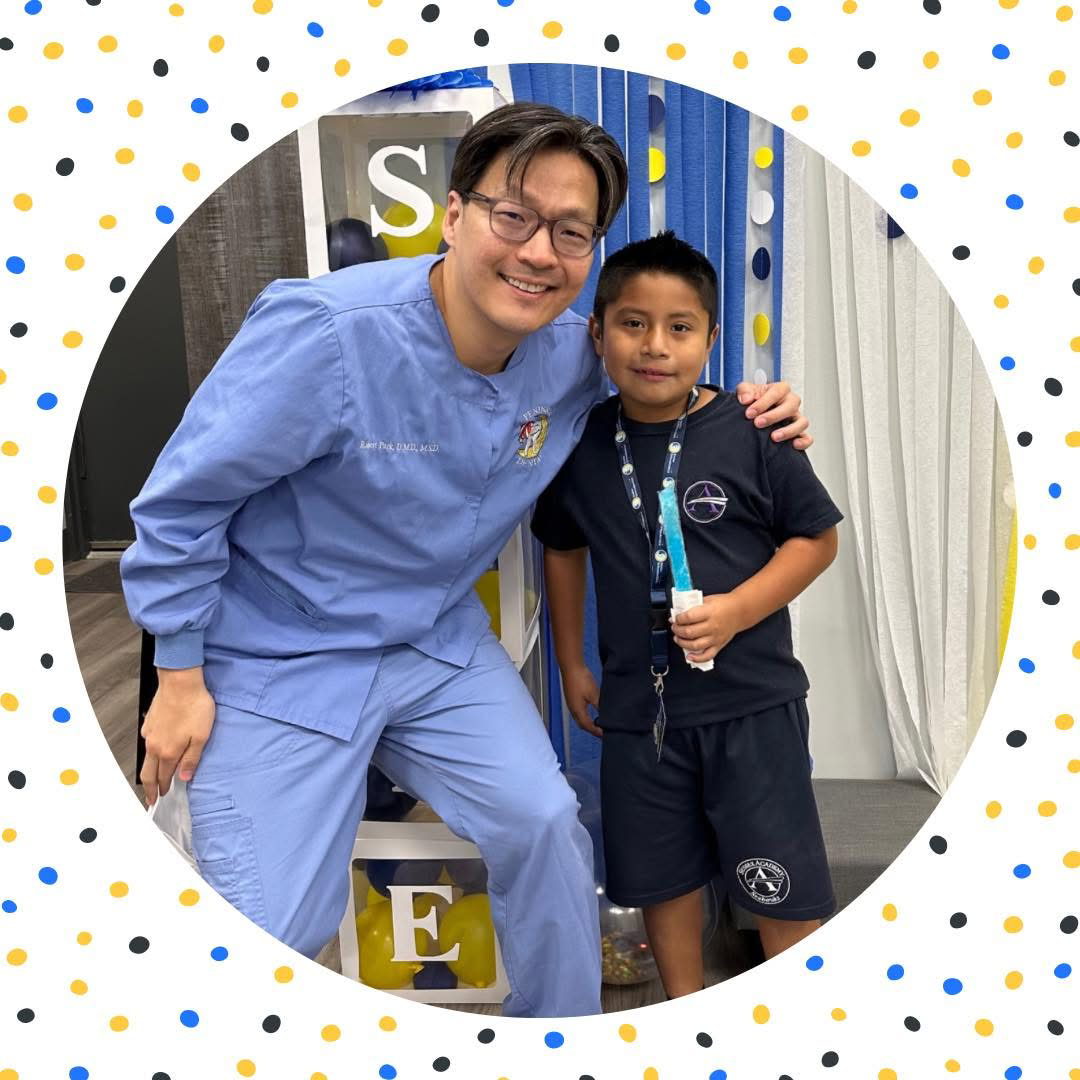
Dr. Park with a young Stellar Orthodontics patient
By age

What to expect at each age.

Treatment recommendations depend less on a child's birthday and more on which permanent teeth have come in. The age ranges below are the typical patterns we see at Stellar.

Ages 7–9 (first evaluation)

The AAO-recommended first check. Most kids at this age have a mix of baby teeth and the first permanent molars and front teeth. Active treatment is rare; the goal is to spot any structural issues early. Typical outcome: "see you in a year." If a real Phase 1 trigger is present (severe crossbite, severe overbite, impacted tooth), we discuss whether and when to begin.

Ages 9–11 (Phase 1 window)

The most common Phase 1 treatment window. If a child needs an expander, a partial braces case, a space maintainer, or growth guidance, this is when those happen. Phase 1 cases typically run 6 to 12 months of active treatment, followed by a monitoring period until Phase 2.

Ages 11–14 (Phase 2 / comprehensive)

Most permanent teeth have erupted. This is the most common braces age. Many kids who never needed Phase 1 begin here. Phase 2 typically uses traditional metal braces, clear ceramic braces, or Invisalign Teen and runs 18 to 24 months. See our teen orthodontics guide for the full breakdown.

Phase 1 vs Phase 2

Two distinct phases, often years apart.

Most kids never need Phase 1 treatment - they go straight to Phase 2 (comprehensive braces or Invisalign Teen) as teens. But for the kids who do benefit from Phase 1, the early intervention often makes Phase 2 simpler or shorter later.

Phase 1 Ages ~7–11

Interceptive treatment

Specific, targeted treatment for a specific problem. Uses appliances like expanders, partial braces, or space maintainers. Typical duration 6 to 12 months active.

Resting 1–3 years

Monitoring between phases

Between Phase 1 and Phase 2. The child is monitored at no-charge check-ins while permanent teeth finish erupting. No active treatment.

Phase 2 Ages 11–14

Comprehensive treatment

Full braces or Invisalign Teen to align all teeth and finalize the bite. Typical duration 18 to 24 months.

Not every Phase 1 patient needs Phase 2. Not every Phase 2 patient had Phase 1. The free consultation is where we map out which phases your child needs.

Signs to bring your child in

None of these guarantee treatment is needed - but they're reasons to schedule a free evaluation:

  • Visible crowding as permanent teeth come in
  • Baby teeth that are slow to fall out
  • Thumb sucking past age 5
  • Mouth breathing as the default
  • Jaw shifting sideways when biting together
  • Difficulty chewing or biting
  • Facial asymmetry
  • Trauma to the mouth or front teeth
What kids actually experience

Modern kids' braces don't feel like the braces from a generation ago.

The biggest worry parents bring to the first visit isn't usually cost or timing - it's "will my kid hate this?" Most kids surprise their parents. Modern brackets are about half the size of the brackets from twenty years ago, wires apply gentler forces, and visits are shorter.

  • Color elastics every visit. Kids pick new colors at each adjustment - school colors, sports teams, holiday combos.
  • 30-minute visits every 6 to 8 weeks. Short enough to fit between school and after-school activities.
  • Sports mouthguards. Custom-fit to the braces. Your kid doesn't sit out of football, soccer, lacrosse, or anything else.
  • Modern brackets and wires. Smaller, lighter, gentler. Less initial soreness than what most parents remember.
  • Reward systems. Stellar's kid-friendly office culture makes appointments something most kids look forward to.
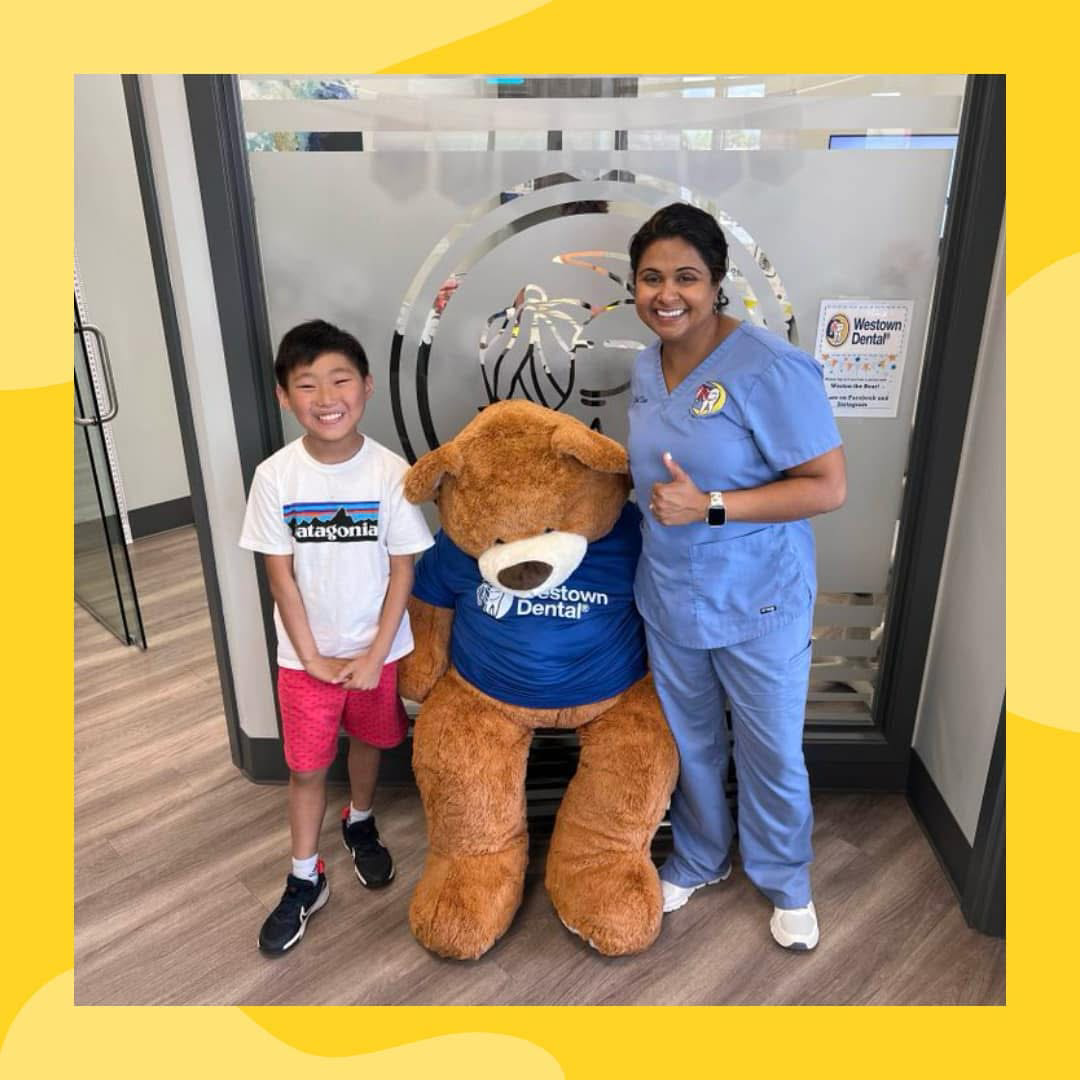
Dr. Dave with a patient and the Stellar Orthodontics mascot
Cost & coverage

What kids' orthodontic care costs in Delaware.

  • Phase 1 treatment: typically $1,500 to $3,500 in Delaware, depending on appliances and case length
  • Phase 2 (full braces or Invisalign Teen): $3,000 to $7,500 depending on treatment modality and complexity
  • Most major dental insurance accepted, typically $1,000–$3,000 in lifetime ortho benefits per patient
  • Delaware Medicaid covers medically necessary cases for kids under 21 with no member cost-share once authorized
  • HSA and FSA payments accepted for any private-pay portion
  • Sibling and multi-patient family discounts if more than one child is in treatment
  • Free evaluation regardless of qualification or treatment timing

On Delaware Medicaid?

Children under 21 enrolled in Highmark Health Options, AmeriHealth Caritas Delaware, Delaware First Health, or CHIP may qualify for fully covered orthodontic treatment under the EPSDT benefit. Stellar handles the pre-authorization paperwork.

  • Free Medicaid evaluation at any Stellar office
  • All 3 Delaware Medicaid plans plus CHIP accepted
  • Phase 1 covered when medically necessary
  • No member cost-share for covered services once authorized
Kids Orthodontics FAQ

Honest answers to the questions parents ask most.

What age should my child first see an orthodontist?

The AAO recommends a first check by age 7. Most kids won't need treatment that early, but a check-up lets a Stellar orthodontist spot crowding, bite shifts, or growth concerns while early intervention is still simple. The evaluation is free.

What is Phase 1 orthodontic treatment?

Phase 1 is interceptive orthodontic care for kids while baby and permanent teeth are still mixed (typically ages 7 to 11). It uses targeted appliances (expanders, partial braces, space maintainers) to correct specific problems early. Phase 2 (full braces) often follows years later when needed.

Does my young child actually need braces yet?

Probably not. Most kids who get a first evaluation around age 7 are placed on monitoring rather than active treatment. When Phase 1 is genuinely needed, it's usually for a specific reason that benefits from being addressed early.

What signs should I watch for?

Visible crowding as permanent teeth come in, baby teeth slow to fall out, thumb sucking past age 5, mouth breathing, jaw shifting sideways when biting, difficulty chewing, or facial asymmetry. None of these guarantee treatment is needed, but they're reasons to schedule an evaluation.

How much does Phase 1 cost?

Typically $1,500 to $3,500 in Delaware. The free evaluation is free regardless. Stellar accepts most major dental insurance and Delaware Medicaid for kids who qualify under medically necessary criteria.

Does Delaware Medicaid cover kids' braces?

Yes for medically necessary cases. Kids under 21 enrolled in DSHP or CHIP may qualify when HLD Index criteria or an auto-qualifying condition is met. See our Medicaid braces for kids page for the full breakdown.

What's the difference between Phase 1 and Phase 2?

Phase 1 is early interceptive treatment between ages 7 and 11 for specific bite or growth issues. Phase 2 is comprehensive treatment (typically full braces or Invisalign Teen) once all permanent teeth are in place, usually ages 11 to 14. Most kids only need Phase 2.

Will my kid hate the orthodontist?

Most kids surprise their parents. Modern braces are dramatically smaller and gentler than they were a generation ago. Color elastic swaps at each visit are usually the favorite part. Our team is trained to make children comfortable from the first appointment.

On Medicaid? Your child's evaluation and braces may be fully covered.

Stellar accepts all 3 Delaware Medicaid plans plus CHIP for kids and teens under 21. We handle the pre-authorization paperwork for you.

See Medicaid braces for kids

Have questions about your child's bite or tooth alignment?

Book a free early orthodontic evaluation at any Stellar office and get a plan built around growth, not guesswork.

Book My Free Consultation
Call (844) 727-2237