
A child mentions crooked teeth at breakfast, a dentist mentions braces at a checkup, and suddenly parents have a dozen questions. How long does approval take? Should a cleaning come first? Which foods need to go? Learning how to prepare for braces is easier when those questions get sorted onto a calendar, starting about three months out, instead of landing all in the week before an appointment.
Table of Contents
- Your Braces Prep Timeline at a Glance
- Book the Consult and Check Coverage Early
- Get Teeth and Gums Checked Before Bonding
- Diet and Daily Habits to Start Now
- What to Bring and What Happens at Bonding Day
- Helping Kids and Teens Feel Ready
- Book Your Free Consultation This Week
Your Braces Prep Timeline at a Glance
A Middletown parent of a 10-year-old who wants a spring start should begin coverage checks in January. That window leaves room for pre-authorization, a dental cleaning, and a few weeks of brushing practice. A Millsboro teen with exams in May can book the free consultation early, then fit the cleaning around exam week so bonding day does not compete with testing.
The calendar works like packing for a trip. Long items go in first. Coverage checks and the dental visit need the longest lead time. Diet practice, a comfort plan, and a little emotional prep sit closer to bonding day: smaller bites, soft foods, and orthodontic wax, so the first week feels expected rather than sudden.
| When | Task | Why it matters |
|---|---|---|
| About 3 months before | Book the free consultation and gather insurance and Medicaid details | Coverage approval can take time, so start early |
| 6 to 8 weeks before | Schedule a routine dental exam and cleaning, and treat any cavities | Active decay should be addressed before brackets are placed |
| 4 weeks before | Start the twice-daily brushing and interdental cleaning routine | Habits need time to become automatic |
| 1 week before | Practice eating with smaller bites and stock soft foods | Shows whether the routine is realistic for your child |
| Bonding day | Arrive with clean teeth, cards, and written questions | Clean teeth and a clear plan make the visit smoother |
| First week after bonding | Use orthodontic wax and keep soft foods on hand | Helps the first days of adjustment feel manageable |
Three Habits That Keep the Calendar on Track
- Use one shared calendar: Both parents see consults, cleanings, and school conflicts in the same place.
- Write questions down as they come up: A phone notes app works fine between appointments.
- Bring that list to the first visit: Questions written at home do not get forgotten in the chair.
Start with the earliest open row this week. If coverage is the open item, book the consultation and gather coverage details first.
Book the Consult and Check Coverage Early
A family hoping to bond in June should have the consult on the calendar by March. Coverage paperwork works like a permission slip before a field trip: the date stays tentative until the answer comes back.
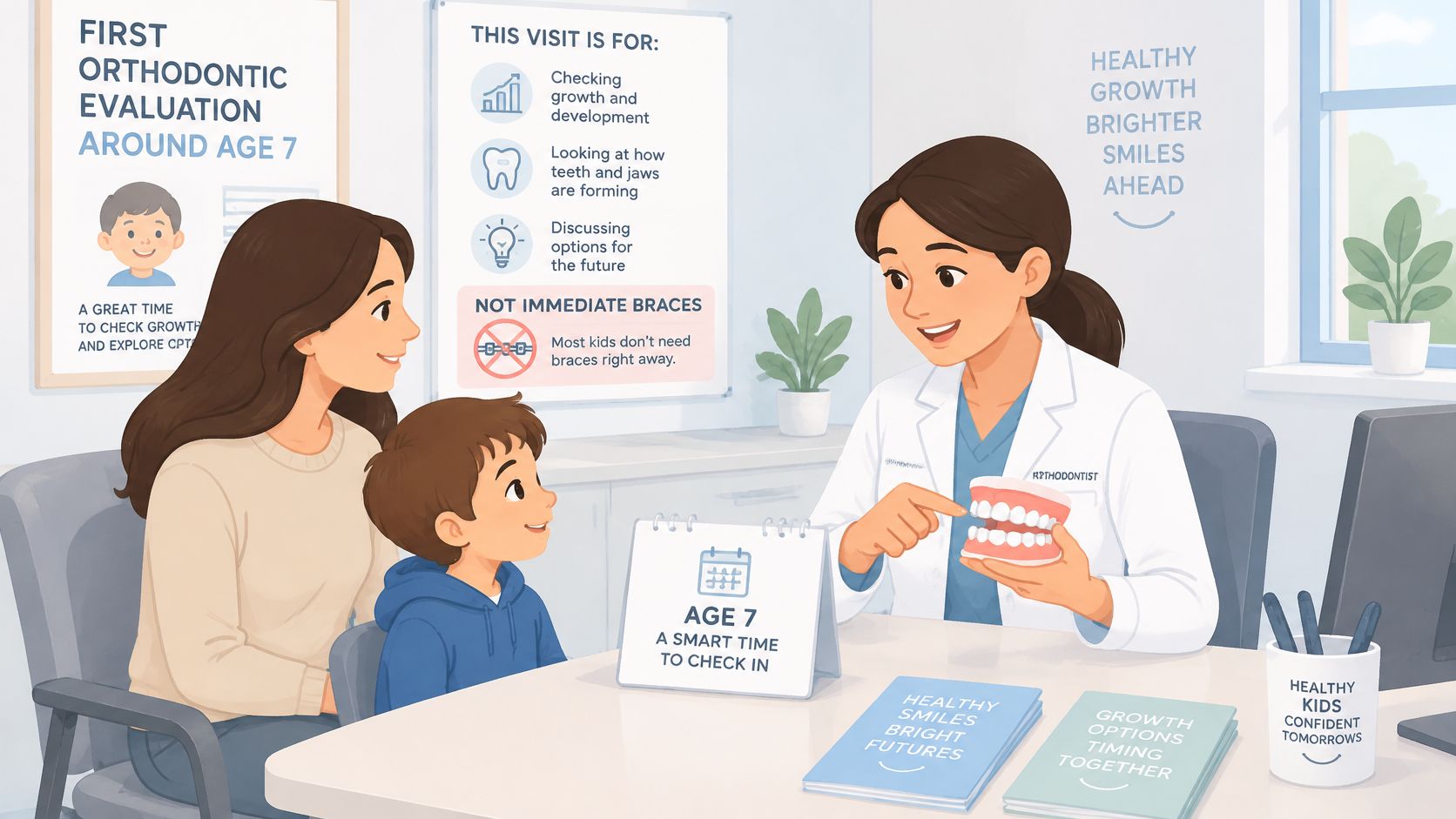
The American Association of Orthodontists FAQ page recommends children receive their first orthodontic evaluation no later than age 7. The visit decides whether treatment should start now, wait until more adult teeth come in, or isn't needed. It can also flag problems with tooth eruption, jaw growth, or bite development while those choices are still open.
Call the office closest to school or work: North Wilmington, Middletown, West Dover, or Millsboro. The consultation is free whether you go ahead with treatment, whether insurance covers any of it, or whether a child qualifies for Medicaid braces. The orthodontist who would treat your child's case leads that visit, so you can ask about braces, timing, and financing in plain language instead of retelling the same questions later.
Bring the dental insurance card, and the Medicaid card if your child has one. Ask whether treatment needs pre-authorization before it can start. Approval can take weeks, so build that wait into the three months before a target start, the same way you would block time for a school form. Ask the plan to write down any lifetime maximum, age limit, or waiting period.
When pre-authorization is approved, Medicaid covers complete diagnostic records, traditional fixed metal braces, all scheduled adjustment visits, repairs to broken brackets or wires during treatment, removal of appliances at the end of treatment, and the initial set of retainers. Your own plan still sets the rules, so confirm them with the insurer and the office. For a clearer picture of what plans often pay and what they leave out, read this guide to dental insurance for braces.
If you expect to pay privately, ask for the total, the payment schedule, and what that price includes before you circle a month.
Get the coverage answer in writing before you count on a start date.
Get Teeth and Gums Checked Before Bonding
About three months before bonding, book the dental exam the same way you would mark a pre-authorization deadline. Braces are a poor time to discover decay. Brackets and wires make plaque harder to remove, and the CDC page on cavities and tooth decay reports that 50% of children ages 6 to 9 have had at least one cavity in a primary or permanent tooth, while more than half of adolescents ages 12 to 19 have had a cavity in a permanent tooth.
The orthodontist monitors tooth movement. The general dentist keeps checking decay and gum health. Those visits work like two inspections on the same house: one tracks whether the walls are moving into place, and the other looks for leaks before the walls close up.
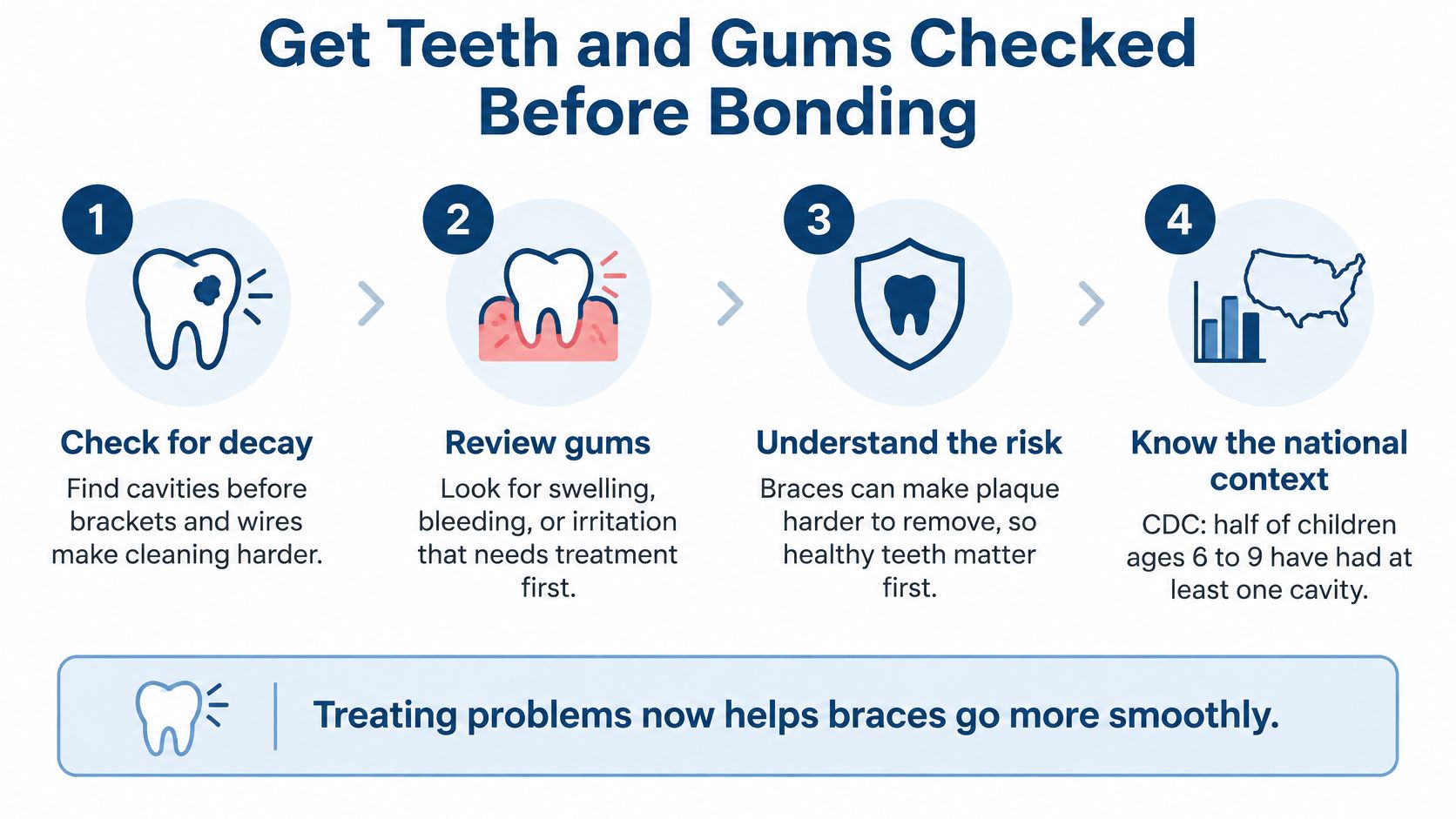
If a cleaning is due, schedule it early in that three-month window so any repair can finish before brackets go on. Ask the dentist to treat cavities or gum inflammation first. Decay left under a bracket works like paint over a damp wall: the problem stays, and cleaning around it gets harder. While you are there, ask whether extra fluoride or sealants make sense for higher-risk teeth.
At home, brush twice a day with fluoride toothpaste and clean between teeth with floss or interdental brushes. A common slip is brushing only the front surfaces. Parents supervising evening brushing for children under about 10 can spot missed areas early.
Brackets also create plaque-retentive surfaces, and a systematic review on white-spot prevention notes visible lesions can appear within four weeks of appliance placement.
Use fluoride toothpaste twice a day, and ask the orthodontist whether fluoride varnish belongs in that routine for your child. A review of fluoride varnish during fixed-appliance treatment linked applications to fewer white spots at appliance removal, though certainty was limited. A systematic review of preventive interventions found active patient reminders reduced white-spot lesion incidence compared with no reminders, with a relative risk of 0.40, although evidence quality was low. Set a daily phone alarm, and keep an interdental brush or floss threader where brushing happens.
Take a baseline photo of the teeth before bonding. Changes around brackets are easier to spot with a starting picture.
Diet and Daily Habits to Start Now
About three months before bonding day, put eating practice on the calendar next to insurance paperwork. While a pre-authorization decision is still pending, a juice box sipped from lunch until pickup coats the teeth for hours. A candy bar finished in a few minutes does less of that slow damage.
The NHS guidance on braces advises limiting sugary foods and drinks because frequent sugar exposure increases the risk of tooth decay, and avoiding hard, crunchy, sticky, or chewy foods that can break or dislodge brackets and wires.
Sugar exposure works like a dripping faucet. Each sip restarts the acid clock. The goal is fewer sugary moments across the day.
Use those waiting weeks to rehearse the pattern you will keep after brackets go on. Swap the between-meal drink for water. Cut apples and raw carrots into smaller pieces instead of biting them whole, and eat slowly so a firm bite does not land on one tooth. Once treatment starts, stop chewing gum, sticky candy, hard candy, and ice. A few weeks of practice makes the first day feel familiar rather than like a sudden set of rules.
| Food or habit | Why it matters | Easy swap |
|---|---|---|
| Chewy caramel or taffy | Can pull brackets off wires | Soft fruit or yogurt |
| Ice and hard candy | Can break brackets or chip teeth | Cold water |
| Chewing gum | Sticky and can get stuck in brackets | Skip it and brush after meals |
| Sugary drinks between meals | Frequent sugar raises the risk of decay | Water |
| Hard raw vegetables and crusty bread | Can break wires or brackets | Cooked vegetables cut into small pieces |
For a longer list, see these foods to avoid with braces. The aim is fewer preventable enamel problems and fewer broken brackets, with meals that still taste good.
What to Bring and What Happens at Bonding Day
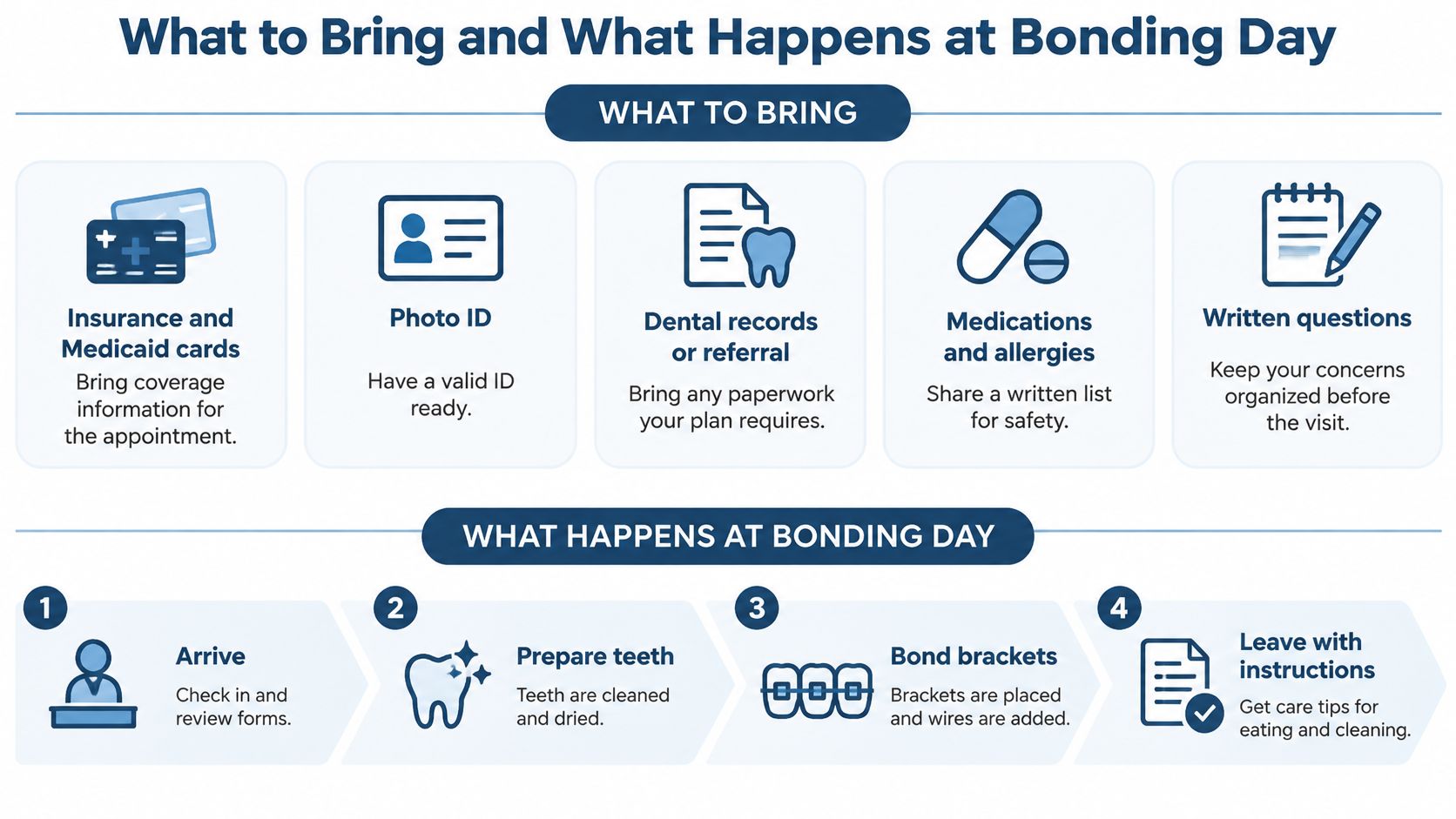
Pack the bag the night before. Bring insurance and Medicaid cards, a photo ID, any dental records or referral your plan requires, a list of medications and allergies, and written questions. Clean teeth matter too. The American Association of Orthodontists braces page states patients generally don't need special preparation, can eat normally, but should brush and floss thoroughly beforehand.
What the Consultation Looks Like
At Stellar Orthodontics, the consultation has six steps: check-in (about 5 minutes), meeting the orthodontist (about 5 minutes), clinical exam (about 10 minutes), 3D iTero scan and x-rays (about 15 minutes), treatment plan (about 15 minutes), and financial walkthrough (about 10 minutes). Braces placement itself is a 60 to 90 minute appointment in which brackets are bonded to the front of each tooth and the first archwire is placed.
Five Questions Worth Asking at the First Visit
- What's included: Ask what the consultation includes and how long each part takes.
- Options in plain language: Ask the orthodontist to explain treatment options and the expected timeline in clear terms.
- Payment and coverage: Ask how payment and coverage are handled.
- Bonding day details: Ask how long placement takes and what gets placed.
- Tools before leaving: Ask the team to show you the orthodontic wax and cleaning tools.
Reading about what to expect after getting braces before the visit helps families ask sharper questions.
Bring a snack for after the appointment and a comfort item for younger children, then plan a quiet evening.
Helping Kids and Teens Feel Ready
Children feel the most anxious before anything is bonded, when the appointment is still a blank. A 12-year-old asking whether classmates will notice, or whether lunch will hurt, is doing real prep work. Put that talk on the calendar about three months out, beside coverage checks and diet practice, then return to it the week of bonding.
A younger child often calms down after seeing where a parent will sit and what happens first. Naming the order works like listing stops on a familiar drive.

The 2025 dental anxiety research summarized in this study PDF found significantly higher dental anxiety during the initial phase of appliance use, with anxiety decreasing after six months. Kids hesitate when they picture food limits, pain, or the unknown. Coping guidance is most useful at the first appointment, on bonding day, and at the first adjustment.
Parents can describe the day in plain steps and skip phrases like "this will be awful." Braces placement involves no injections, no drilling, and no pain. Ask the orthodontist what soreness is normal afterward and when pain is unusual, so answers at home stay accurate.
Five Ways to Build Confidence
- Walk through the calendar: Review bonding day the night before as one item on the prep calendar.
- Rehearse a school answer: Practice one short reply if a classmate asks about the braces.
- Practice with wax: Practice using orthodontic wax on the cheek side of a finger or a soft cloth so it feels familiar.
- Plan soft foods: Keep a short list of soft first-week foods ready.
- Ask about sports: Ask the office about a sports mouthguard for contact sports.
This short video gives families another way to preview the experience together at home.
For teens, cover appearance, school, speaking, sports, and bullying in that same conversation. Let the teen ask questions directly before the appointment. Ownership helps.
Book Your Free Consultation This Week
Pick the first open row in the timeline and book the consultation this week. That open row is usually the consult itself, plus the coverage details you still need to gather. Those tasks sit at the front of a calendar that can run about three months, and waiting does not shrink pre-authorization, dental cleanings, or the weeks you use to practice a braces-friendly diet and get emotionally ready.
A free consultation at Stellar Orthodontics stays free whether you proceed with treatment, whether insurance covers any of it, or whether a child qualifies for Medicaid braces. It includes a full orthodontic exam, a 3D iTero scan, and a printed treatment plan with transparent pricing before you leave. You walk out with a sequence and real numbers, the same way a school calendar shows the test date before anyone starts studying.
Mark the appointment on the same calendar you have been using for the rest of this prep.
Three Things to Bring
- The checklist from this guide: Mark which timeline rows are done and which are still open, including coverage, diet practice, and emotional readiness.
- Insurance and Medicaid cards: Coverage questions get faster, clearer answers when the cards are in the room.
- Written questions: Ask about dental visits before bonding, what the first weeks of eating look like, and how bonding day unfolds.
A good first visit ends with a clear next step. That step might be treatment soon, treatment later, or more time to get gums and daily habits ready. You leave knowing which preparation still belongs on the calendar.
Book a free consultation at Stellar Orthodontics or call the nearest office in North Wilmington, Middletown, West Dover, or Millsboro, and bring your questions about coverage, timing, and bonding day.