.png)
Teens usually love Invisalign Teen's appearance and freedom, but treatment succeeds only when they wear the aligners for 20 to 22 hours a day. That's the most common honest takeaway in Invisalign teen reviews, and it matters more than nearly invisible plastic, removable trays, or an appealing digital preview.
A Delaware parent may see page after page of glowing reviews, then hear a teen complain about a lisp at school, forget an aligner at lunch, or leave the trays in a backpack during sports practice. The useful question isn't whether Invisalign Teen looks good in photos. It's whether the system fits that particular teen's habits, maturity, schedule, and willingness to follow a daily routine.
Table of Contents
- What Invisalign teen reviews really tell Delaware parents
- How Invisalign Teen works for adolescent patients
- The honest pros and cons teens mention most
- Real timelines and what each stage feels like
- Practical tips from teens who finished with great results
- Invisalign Teen compared to traditional braces through teen eyes
- Is Invisalign Teen the right choice for your teen
- Cost, insurance, and booking a free Delaware consultation
What Invisalign teen reviews really tell Delaware parents
At a Delaware orthodontic consultation, a mother scrolls through Invisalign teen reviews on her phone while her son examines several aligner cases on the counter. He likes that the trays are difficult to see. She wants to know whether he'll remember to put them back in after lunch, band practice, and basketball.
That moment captures the value of reviews. These posts, testimonials, video diaries, and forum discussions describe lived experiences from adolescents and parents who have gone through aligner treatment. They aren't clinical trial data, and a single enthusiastic or angry review can't predict what will happen in another patient's mouth. They can, however, reveal the daily details that polished marketing often leaves out.
What parents should look for
Useful reviews tend to describe wear-time honesty, tray changes, speech, soreness, cleaning, attachments, lost aligners, and social situations. A review that only says a teen loves the result offers limited guidance. A review that explains how the teen handled school lunches, photos, sports, and reminders gives a family something practical to evaluate.
Families can read reviews on general review pages, patient-story platforms, video channels, and orthodontic practice websites, but patterns matter more than star ratings. Repeated comments about convenience may show that removability is a meaningful benefit. Repeated complaints about forgetting trays may reveal the main risk for a busy or impulsive teen.
Practical rule: A review is most useful when it describes what the teen had to do every day, not only how the smile looked at the end.
The product has also been used by teens for long enough to generate substantial consumer experience. Invisalign Teen entered the market in 2008, when Align Technology introduced it as a teen-specific clear aligner product. Align reported that more than 3 million teenagers aged 19 or younger had been treated with the Invisalign System by September 30, 2021, while later consumer materials reported more than 6.5 million teen patients treated since 2001. Those figures come from Align Technology's Invisalign background information, and they show why families now have a broad range of teen experiences to examine.
For families in North Wilmington, Middletown, Dover, West Dover, or Millsboro, reviews should be a starting point, not the final decision. They help parents ask sharper questions at a consultation: Can the teen manage the routine? Will attachments be needed? How will progress be checked? What happens if wear time slips? Those answers carry more weight than a review written by a patient with a different bite, schedule, and level of support at home.
How Invisalign Teen works for adolescent patients
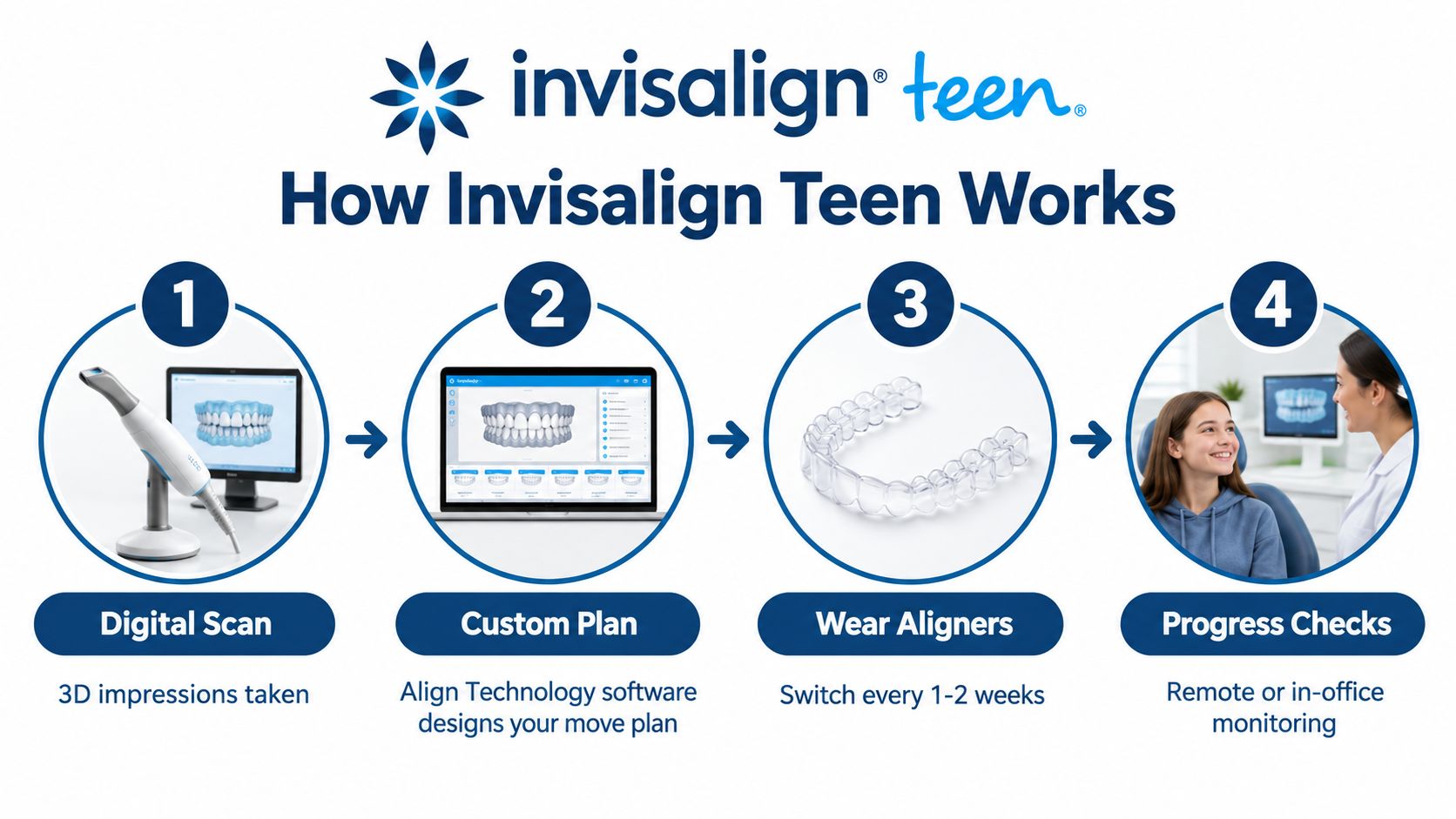
Invisalign Teen uses a sequence of clear, custom-made thermoplastic aligners. An orthodontist plans tooth movement from digital scans or impressions, and each tray applies pressure intended to guide teeth through the prescribed sequence. The treatment plan may include attachments, elastics, space for erupting teeth, or other features based on the teen's bite and dental development.
The system's teen-specific design is important when parents interpret reviews. Some aligners include small blue compliance indicators that fade with wear, giving parents and providers a visual signal that can support a conversation about use. The indicators are not a medical test or a perfect clock. A review of compliance indicators found that they can estimate wear time but may be manipulated intentionally or unintentionally, so they work best as a rough check rather than definitive proof. The findings appear in this peer-reviewed review of orthodontic compliance indicators.
Features that show up in reviews
Some teens have eruption tabs, which provide space for teeth that haven't fully erupted. That feature can be relevant for growing patients because incoming teeth may need room during treatment. Other patients may receive mandibular advancement features for bite correction during growth. Neither feature makes every case suitable for aligners. The orthodontist still needs to assess dental development, the bite, and skeletal relationships.
Not every patient needs attachments. When they are prescribed, small tooth-colored shapes help the aligner grip teeth and guide particular movements. Reviews often call them barely noticeable, while other teens notice them immediately in close-up photos. Both experiences can be accurate because placement and the number of attachments vary by treatment plan.
Parents can learn more about the general process through Stellar's explanation of what Invisalign is and how it works. The key point is simple: the aligner is a tool, not an automatic treatment plan. The orthodontist decides whether the teen's needs fit the system, and the teen's daily wear determines whether the planned sequence can work as intended.
The honest pros and cons teens mention most
Positive Invisalign teen reviews usually focus on appearance, control, and convenience. Teens like that the trays are less noticeable than braces, can come out for meals, and don't create the same visible hardware during photos or social events. Removability also makes brushing and flossing around the teeth more straightforward, although it creates a separate responsibility to clean the trays and replace them consistently.
The strongest independent evidence supports a balanced view rather than a promise of universal superiority. A peer-reviewed adolescent study found that Invisalign and fixed appliances produced similar overall satisfaction and quality-of-life scores after at least six months of treatment. Invisalign patients adapted faster to the appliance, while both groups were generally highly satisfied. The adolescent orthodontic study suggests that comfort and adjustment speed may shape review sentiment more than a dramatic difference in the final experience.
What teens praise
Common positive themes include:
- A discreet appearance: The aligners allow many teens to smile without prominent brackets and wires.
- Removable eating: A teen can take the trays out for meals instead of managing food around fixed hardware.
- Simpler access to teeth: The trays come out for brushing and flossing, though hygiene still requires discipline.
- Lifestyle flexibility: Sports, performances, photos, and social events can feel less dominated by orthodontic hardware.
- A sense of control: Some teens prefer having a treatment routine that fits around daily activities rather than having a fixed appliance that remains in place.
What creates negative reviews
The most common complaints are less glamorous. Teens may notice temporary speech changes, pressure when a new tray seats, soreness after a tray switch, attachment edges, staining from drinks, and the inconvenience of removing trays before eating. A teen who snacks frequently may find the routine especially irritating because every eating occasion creates another removal, cleaning, and reinsertion decision.
The largest complaint is usually wear-time pressure. Invisalign Teen requires the trays to be worn for the prescribed period, generally 20 to 22 hours daily, and a teen who repeatedly forgets them at school, during sports, or at a restaurant may experience delayed progress. That practical tradeoff is highlighted in independent patient discussion, including this patient account focused on regret and compliance.
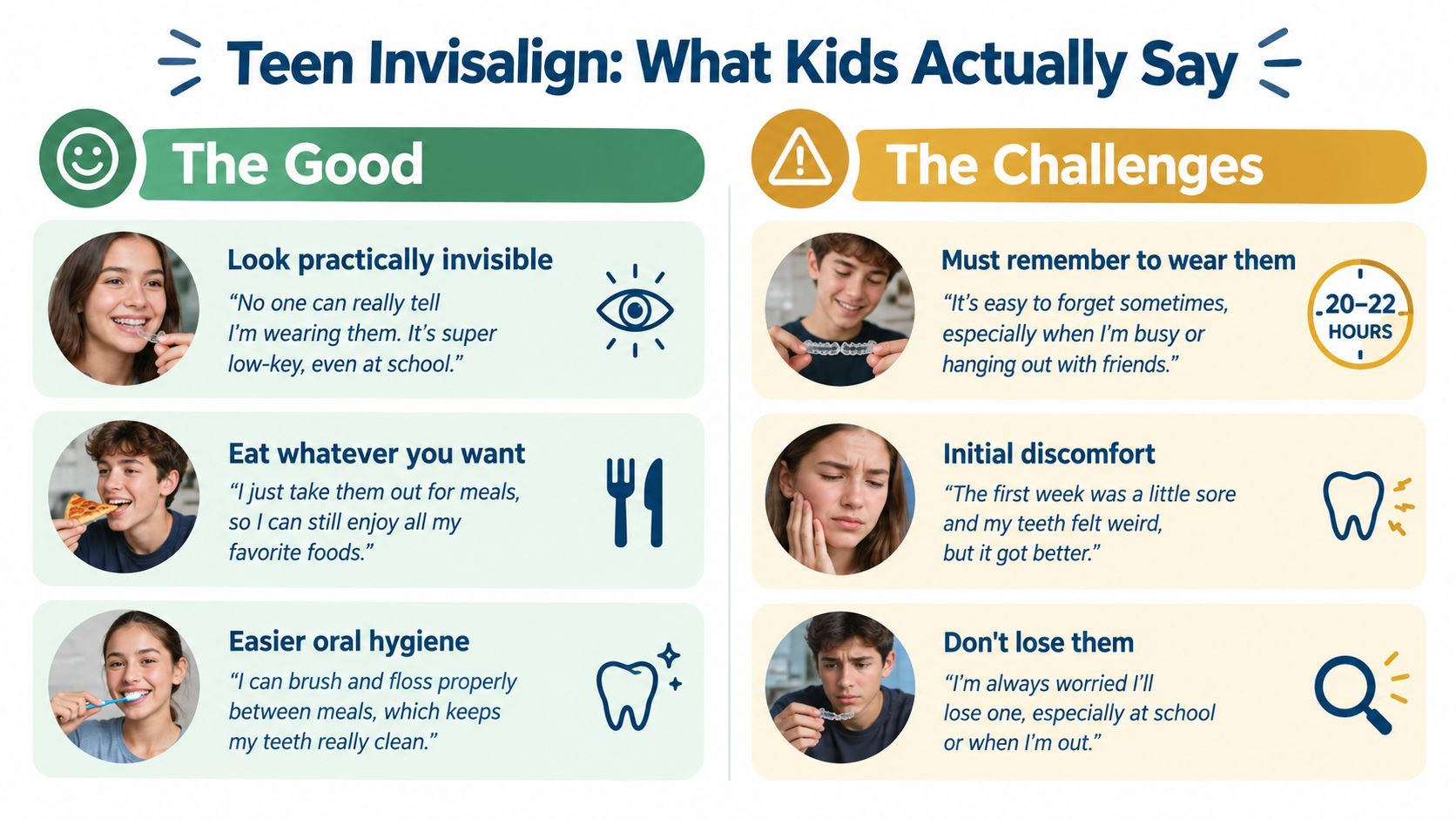
A useful interpretation is that many negative reviews describe a mismatch between the teen and the routine, not a simple product failure. Parents should treat repeated complaints about speech, soreness, hygiene, or attachments as manageable possibilities. They should treat persistent refusal to wear the trays as a potential deal-breaker.
Real timelines and what each stage feels like
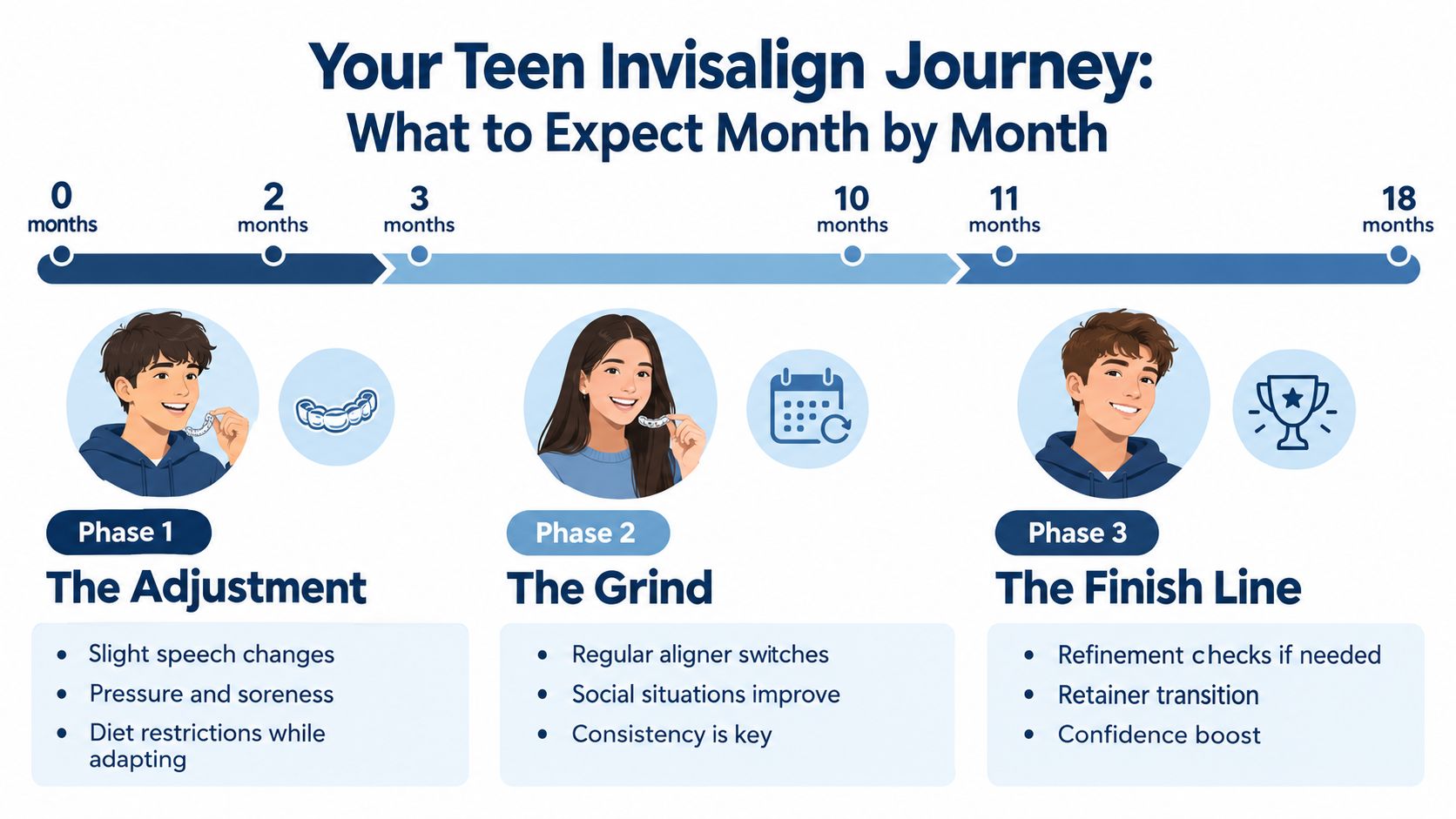
Reviews often describe treatment as a progression of adjustment rather than one continuous experience. The early stage feels awkward. The middle stage becomes routine. The later stage brings questions about tracking, refinements, and retainers. The exact schedule depends on the treatment plan and the teen's response, so a review from one patient shouldn't be treated as a promise for another.
The adjustment stage
During the first days, many teens focus on speech. A slight lisp can feel obvious to the wearer, especially at school, even when classmates barely notice. Speaking aloud, reading, and practicing conversations can help the teen become comfortable with the trays. Pressure is another common sensation, particularly when a new aligner seats tightly over the teeth.
Meals create a second learning curve. The teen has to decide when to remove the trays, store them safely, eat, clean the mouth and aligners, and put the trays back in. The case matters because a napkin, lunch tray, or pocket is an easy place to lose an aligner.
The routine stage
As the sequence continues, reviews tend to shift from “Can this teen get used to it?” to “Can this teen stay consistent?” Soreness may return when the next tray is introduced, and attachments may feel more noticeable at first than they do later. Some teens describe the pressure as a reminder that the tray is working, while others find the recurring discomfort frustrating.
The large comparative analysis cited by Invisalign drew on more than 530,000 teen patients aged 11 to 19 and reported equivalent results between Invisalign treatment and braces. The same source says 98% of experienced Invisalign orthodontists reported that teens in their practices are compliant with treatment. Those findings add weight to the positive reviews, but they don't erase individual differences in routine or motivation. The Invisalign Teen guarantee resource also reports that 84% of surveyed prospective teen patients preferred clear aligners over traditional braces.
The tracking and finishing stage
Later reviews often mention progress checks, additional scans, and refinement trays. A refinement doesn't automatically mean treatment failed. Teeth may not move exactly as the digital plan predicted, and the orthodontist may order additional trays to complete planned movements. Parents should ask before treatment how refinements are handled and what the fee includes.
The blue indicator can support a discussion when a parent and teen disagree about wear time, but it shouldn't replace professional assessment. A tray that no longer fits properly, a tooth that isn't tracking, or repeated missed wear requires an honest conversation with the orthodontist.
The treatment experience can be seen in the following patient education video:
Reviews are most useful when they describe sensations and decisions at each stage. A teen who says, “The first trays felt strange, then the routine became automatic,” offers more practical guidance than a review that only reports satisfaction at the finish.
Practical tips from teens who finished with great results
Successful reviews tend to credit habits rather than willpower alone. The teen keeps the case visible, plans for school and activities, and treats wear time as part of the daily routine. Parents can support that routine without turning every meal into an argument.
Make wear time automatic
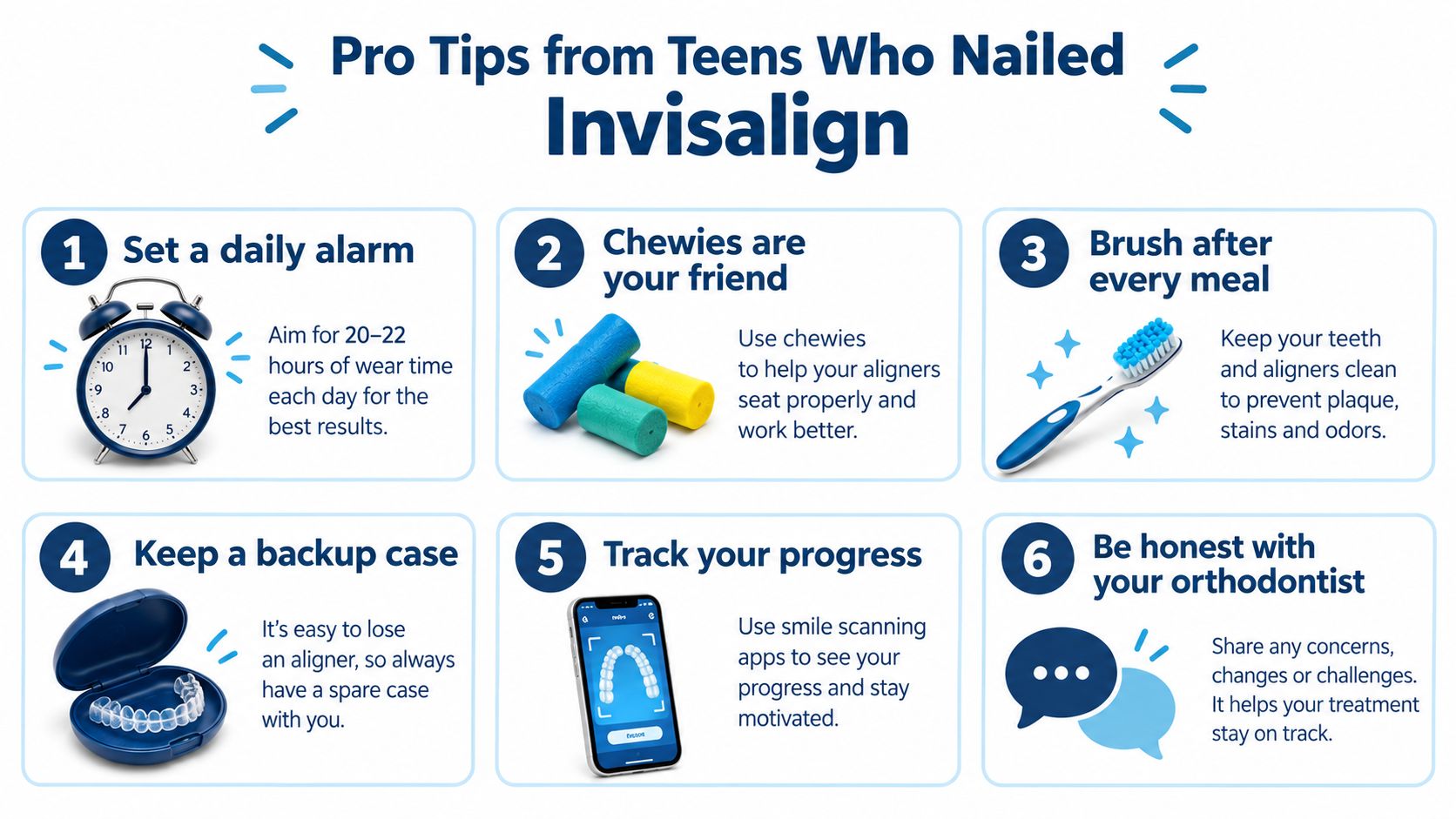
The basic rule is clear: aligners come out for eating, drinks other than water, brushing, flossing, and situations directed by the orthodontist. They go straight into the case, never a napkin. A phone reminder can help with reinsertion after lunch or practice, while a second reminder can mark a tray change.
Chewies may help seat aligners when the orthodontist recommends them. They don't compensate for missed wear, and the teen should follow the specific instructions provided for that treatment plan.
Reduce hygiene friction
A school-ready travel kit can include a toothbrush, floss, a case, and a small container for cleaning the aligners. Gentle soap or an orthodontist-approved aligner cleaner is preferable to abrasive toothpaste for the trays. Water is the safest drink while the aligners remain in place, and removing the trays before other drinks can reduce staining and residue.
A parent shouldn't assume that removable means maintenance-free. The teen still needs to brush the teeth, clean the trays, and return them promptly after meals. Frequent snacking can make this routine harder, so families may benefit from planning meals and snacks around the school day.
Make social situations manageable
A teen can practice speaking before returning to school, remove trays discreetly for photos when permitted, and keep a spare case in a trusted location. Sports require a plan agreed with the orthodontist, especially when a mouthguard is involved. Parents should also teach the teen to report a lost or damaged tray promptly rather than skipping it without notice.
The compliance indicators can be checked periodically, but they shouldn't become a daily surveillance system. Invisalign explains that not every patient needs attachments and that their number and placement vary by plan, as described in this guide to common Invisalign misconceptions. The most productive parent response is to praise consistency, ask about obstacles, and bring problems to the orthodontist early.
Invisalign Teen compared to traditional braces through teen eyes
Teen reviews rarely describe a simple winner. They describe different responsibilities. Invisalign Teen places more responsibility on the patient because the appliance can be removed. Braces remain attached, which removes the wear-time decision but creates fixed hardware that affects cleaning, food choices, and appearance.
| Factor | Invisalign Teen, review themes | Traditional braces, review themes |
|---|---|---|
| Appearance | Less noticeable, especially in ordinary conversation and photos | Visible brackets and wires, though some teens become comfortable with the look |
| Eating | Trays come out for meals, with no aligner in the mouth during eating | Food choices and cleaning can require more care around fixed hardware |
| Comfort | Smooth trays may reduce hardware irritation, but pressure and tray-change soreness remain | Wires and brackets can irritate cheeks, while adjustment discomfort varies |
| Hygiene | Teeth are accessible for brushing and flossing, but the teen must clean trays and reinsert them | Brushing and flossing around brackets can take more patience |
| Responsibility | Requires consistent wear, safe storage, and routine cleaning | Appliance stays in place, so missed wear isn't the central issue |
| Appearance during activities | Trays can be removed only as directed, including for some photos or activities | Hardware remains present during sports, performances, and photos |
| Finishing process | Reviews often mention fit checks and possible refinement trays | Reviews often mention wire adjustments and bracket-related visits |
Parents can read a more detailed treatment comparison in Stellar's guide to Invisalign versus braces for children. The choice should still be based on the teen's clinical needs, not only preference.
For an image-conscious teen who reliably follows routines, Invisalign Teen may feel liberating. For a teen who regularly loses belongings, resists brushing, or wants to remove the appliance whenever it becomes inconvenient, braces may be the more practical choice. Sports and band can favor either option depending on the activity and the orthodontist's instructions, so the consultation should address the teen's actual schedule.
Comfort also deserves a realistic comparison. Aligners can avoid some bracket and wire irritation, but they aren't sensation-free. Braces can create rubbing and adjustment soreness, but they don't depend on a teen remembering to put them back in after every meal. The better appliance is the one the teen can manage consistently and safely.
Is Invisalign Teen the right choice for your teen
Aggregated Invisalign teen reviews can identify patterns, but they can't diagnose a bite or measure a teen's maturity. They're a screening tool for lifestyle fit. The orthodontist still needs to evaluate dental development, tooth movement needs, and the relationship between the jaws.
Teens who often fit the routine
A mature teen who already manages sports equipment, school deadlines, or a personal hygiene routine may adapt well. Image-conscious teens may also stay motivated because they value a less visible appliance. Teens in sports or band can appreciate removability, provided they understand that convenience comes with strict responsibility.
A teen with reliable brushing habits has another advantage. Aligners cover the teeth, so the family needs a plan for cleaning before the trays go back in. The ability to follow instructions matters more than age alone.
Teens who may struggle
Younger adolescents may need more parent supervision. Teens with complex skeletal bite issues may need a different treatment approach or a combination of orthodontic methods. A teen who repeatedly forgets retainers, nightguards, or other oral appliances should be evaluated carefully before choosing a removable treatment system.
Parents can run a practical self-audit before the consultation:
- Track five school days of behavior. Note whether the teen keeps track of small personal items and follows routines without repeated reminders.
- Observe brushing independence. The question is whether the teen brushes adequately without a parent standing nearby.
- Discuss the food routine. A teen who snacks constantly may find repeated removal and reinsertion frustrating.
- Ask for an honest reaction. The teen should explain what feels manageable and what feels unacceptable.
- Review the consequences. The family should understand that missed wear can affect progress and may require professional intervention.
The candid recommendation is straightforward. Reviews should set expectations about speech, soreness, hygiene, attachments, and wear time. An in-person consultation should decide whether Invisalign Teen fits the teen's teeth and habits.
Cost, insurance, and booking a free Delaware consultation
Families often want a precise treatment price before the orthodontist has examined the teen. That isn't realistic. The fee depends on the complexity of movement, the treatment plan, the handling of refinement trays, retainers, insurance benefits, and the payment arrangement.
| Cost factor | Typical range or status | Notes for Delaware families |
|---|---|---|
| Invisalign Teen treatment fee | Varies by case and provider | A written estimate should explain what the fee includes |
| Orthodontic insurance | Plan-specific | Families should confirm the orthodontic lifetime maximum, eligibility rules, and aligner coverage directly with the carrier |
| Flexible spending and health savings accounts | May be usable for eligible care | The account administrator and treatment provider can clarify documentation and timing |
| Monthly payment plans | Available at some practices | Parents should ask about the deposit, monthly amount, interest, and what happens if refinements are needed |
| Delaware Medicaid coverage | Braces may be covered for qualifying children under 21, while clear aligner coverage is uncommon | Families should verify medical necessity and benefits directly before choosing an appliance |
| Refinement trays | Contract-specific | The consultation should state whether additional trays are included and for how long |
| Retainers | Ongoing post-treatment expense | Parents should ask about the initial retainer, replacement pricing, and future ordering process |
Major dental carriers may apply orthodontic benefits through a lifetime maximum rather than paying every treatment expense. Families should ask the insurer whether the benefit applies to clear aligners, whether the teen meets the plan's eligibility rules, and whether the orthodontic maximum has already been used by another family member. HSA and FSA funds may help with eligible orthodontic expenses, subject to the account's rules.
Delaware families using Medicaid should verify benefits with the plan before assuming clear aligners qualify. Coverage for braces and coverage for clear aligner therapy aren't automatically the same, even when both are orthodontic treatments.
Questions for a free consultation
A parent can bring the teen's insurance details, a list of medications and relevant dental history, and practical questions about school, sports, meals, and compliance. A useful consultation should address:
- Whether digital 3D scanning is available.
- Whether a board-certified orthodontist is involved in the diagnosis and treatment plan.
- Whether attachments, elastics, eruption tabs, or other features may be needed.
- How the office handles lost or damaged aligners.
- How refinements are evaluated and whether they're included.
- What retainer care follows active treatment.
- How the office coordinates insurance and monthly payments.
Families can review what to expect from a free orthodontic consultation near Delaware. Free consultations are available at North Wilmington, Middletown, Dover/West Dover, and Millsboro, making it easier for families across the state to discuss aligners and braces in person.
Stellar Orthodontics offers free consultations, iTero digital 3D scanning, braces, and Invisalign Teen for children and teens across its North Wilmington, Middletown, Dover/West Dover, and Millsboro locations. Families weighing Invisalign teen reviews against braces can visit Stellar Orthodontics to book a consultation and receive a treatment recommendation based on the teen's needs, habits, and daily schedule.