.png)
Which metal braces fit a family best? Many parents and patients start with the assumption that every metal option is the same. The bracket design, the material, the position on the teeth, and even the elastic color can change the daily experience, although they don't all represent a different bracket system.
This guide separates seven types of metal braces and metal-brace choices by the decisions Delaware families face, including visibility, comfort, customization, material sensitivity, treatment complexity, and appointment preferences. Cost, comfort, treatment duration, and eligibility depend on the individual treatment plan, so an orthodontist must match the appliance to the patient's teeth, bite, health history, and goals.
Stellar Orthodontics offers free consultations at locations in North Wilmington, Middletown, Dover/West Dover, and Millsboro. Availability can vary by location and case, but a consultation gives families a practical way to discuss which options may fit.
Table of Contents
- 1. Traditional Stainless Steel Braces
- 2. Self-Ligating Metal Braces
- 3. Lingual Metal Braces
- 4. Titanium Metal Braces
- 5. Brackets With Colored Ligatures and Bands
- 6. Speed Metal Braces
- 7. Mini Metal Braces
- 7-Type Metal Braces Comparison
- Turn Your Shortlist Into a Treatment Plan
1. Traditional Stainless Steel Braces
Traditional stainless steel braces remain the familiar starting point for many families. Small metal brackets are bonded to the front of the teeth, and an archwire connects them. Elastomeric or metal ligatures hold the wire inside each bracket slot, allowing the orthodontist to adjust the system as teeth and bite relationships change. The British Orthodontic Society's history of stainless steel explains how the material became central to modern fixed appliances during the twentieth century.
Stainless steel became important because it supported smaller, durable bracket-and-wire systems. W.H. Hatfield patented 18-8 stainless steel in 1924, Lucien De Coster is credited with first using stainless steel orthodontically in Belgium in 1927, and the material was showcased at the 1931 London Congress. By the 1950s, stainless steel had also enabled smaller brackets, including the first .018" x .022" bracket designed by C.C. Steiner in 1953.
Why families choose them
This option offers a well-established approach for many alignment and bite concerns. It's also easy to personalize with colored ligatures, and the bracket design gives the orthodontist a familiar way to control tooth movement. Families learning how to go about getting braces can ask how traditional brackets would fit the patient's specific plan.
Daily care matters: A soft-bristled toothbrush, floss threaders, careful food choices, prescribed elastics, and regular appointments help protect the treatment process.
Sticky foods such as caramel and hard foods such as nuts can damage brackets or wires. Wax can help if a bracket rubs against the cheeks or lips, especially during the early adjustment period.
2. Self-Ligating Metal Braces
Self-ligating braces are a bracket system, not just a different color or finish. Instead of relying on a separate elastic or metal tie, each bracket uses an integrated clip, slide, gate, or spring to hold the archwire. The clinical overview of self-ligating brackets describes this built-in mechanism and explains why the design is distinct from conventional tied braces.
The practical difference is easy to understand. Traditional brackets need an external ligature, while self-ligating brackets close around the wire with their own locking mechanism. Reviews describe self-ligating systems as being designed to reduce friction at the bracket-wire interface, which may allow the wire to slide more easily during certain stages of alignment and space closure. That doesn't guarantee faster treatment for every patient.
Active and passive designs
Self-ligating brackets generally fall into two groups:
- Active brackets: A spring clip presses against the archwire, creating direct contact with it.
- Passive brackets: A rigid slide or lock closes the slot more like a tube, allowing the wire to move with less direct pressure.
The orthodontic review of active and passive self-ligating brackets provides this classification. Families may also hear product names such as Damon or In-Ovation during a consultation, but the important question is how the selected bracket works in the planned treatment.
A patient comparing options in Middletown or Dover/West Dover can ask whether the system may affect cleaning, adjustment visits, wire changes, and expected treatment length. The bracket door shouldn't be forced during brushing or flossing. Careful hygiene and flexible scheduling still matter, even if a particular adjustment appointment is efficient.
3. Lingual Metal Braces
Lingual metal braces place custom brackets on the back, or tongue side, of the teeth. From the front, the appliance is hidden, making this the most discreet metal-brace placement in the list. The approach may appeal to an adult who speaks publicly, works with clients, or doesn't want brackets visible in photographs.
The trade-off is that the hidden position changes the adjustment experience. The tongue may need time to adapt, speech can feel different at first, and cleaning requires patience. Because the brackets sit behind the teeth, the orthodontist must evaluate the patient's tooth anatomy, bite, and treatment needs before confirming eligibility.
Discretion requires planning
Lingual braces can require specialized placement and adjustment. Families should ask about appointment length, speech adaptation, tongue comfort, cleaning tools, and the expected treatment timeline before choosing them. Wax may help with tongue irritation during the early period, while specialized floss threaders can make access easier.
Adults considering discreet treatment can also review types of braces for adults before a consultation. The useful comparison isn't “visible versus invisible.” It's whether the patient is prepared for the cleaning routine and adjustment period that come with placing metal braces behind the teeth.
The following visual comparison can help families discuss the difference between front-facing and hidden placement:
Lingual braces may suit a patient who prioritizes appearance above convenience, but the orthodontist must still determine whether the system can address the required movements. A consultation at North Wilmington, Middletown, Dover/West Dover, or Millsboro can clarify whether this option is appropriate.
A short video can provide another visual explanation of hidden bracket placement:
4. Titanium Metal Braces
Titanium braces replace stainless steel with a titanium alloy. Families may discuss this option when a patient has a known metal sensitivity, a history of irritation from orthodontic materials, or a concern about nickel exposure. The material choice should follow a careful conversation with the orthodontist, rather than a general assumption that titanium is necessary or automatically better.
A patient who reacted to jewelry or another metal product should share that history before treatment begins. An orthodontist may recommend appropriate evaluation, including allergy testing when clinically indicated, and can explain which appliance components contain which materials. The goal is to choose a system that fits the patient's health history as well as the orthodontic mechanics.
Material choice is only one part of the plan
Titanium may offer a lighter, biocompatible alternative, but families still need to compare bracket design, placement, cleaning needs, availability, and total cost. A titanium bracket can still be visible if it's bonded to the front of the teeth, and a different material doesn't remove the need for appointments or good oral hygiene.
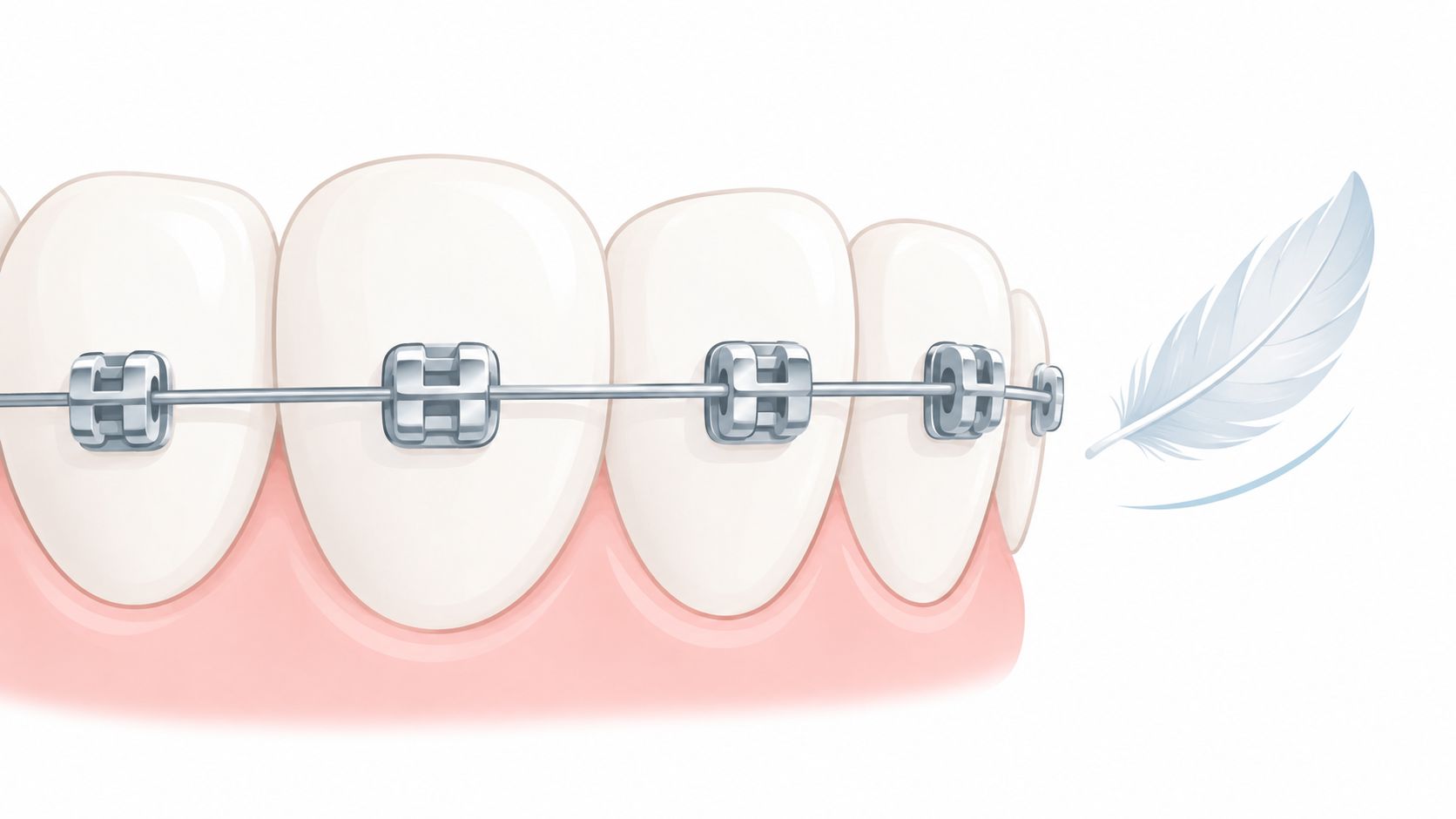
Before choosing titanium, a Delaware family can ask:
- Sensitivity history: Could prior reactions affect appliance selection?
- Material availability: Is the requested option available at the preferred Stellar Orthodontics location?
- Treatment mechanics: Would the titanium bracket design suit the planned tooth movements?
- Financial planning: How would the material choice affect total cost, insurance, and payment options?
Titanium can be a thoughtful option for the right patient, but it isn't a universal substitute for stainless steel. The orthodontist must confirm whether it fits the case and whether any sensitivity concern requires further evaluation.
5. Brackets With Colored Ligatures and Bands
What should families compare if the bracket stays the same but the braces look different? Colored ligatures are a customization choice, not a separate metal-brace system. The appliance may still use a conventional stainless steel bracket, while small elastic rings hold the archwire in place. The orthodontist can replace those rings during adjustment appointments.
For children and teens, color can make treatment feel more personal. They might select school colors, seasonal shades, a favorite color, or a quieter gray or clear look. The color changes the appearance, not the bracket design or the basic treatment mechanics.
Personal style without changing the appliance
A new color can also give a nervous child something positive to anticipate at each visit. Families can use that choice to keep appointments engaging, then connect it with practical habits such as brushing, flossing, and protecting the braces.
Color selection often follows everyday needs:
- Lower visibility: Lighter or neutral shades may attract less attention.
- Stronger contrast: Darker colors can make the metal brackets look more deliberate.
- Special events: Families may coordinate shades with holidays, photographs, or team activities.
- Food habits: Patients who regularly eat berries or red sauce may choose colors that make staining less noticeable.
Ligatures can change appearance between appointments. The orthodontist may suggest shades that fit the patient's routine and appliance needs, but the choice remains cosmetic. Blue elastics on a conventional bracket still indicate a conventional bracket system.
At Stellar Orthodontics, patients can ask about available colors during appointments at the Delaware location serving their treatment plan. Families should evaluate this option for personalization, not treat it as a separate bracket technology. The right appliance still depends on the patient's treatment needs, comfort, and orthodontic plan.
6. Speed Metal Braces
“Speed braces” can refer to high-efficiency bracket systems that focus on bracket geometry, wire interaction, or lower-friction mechanics. The name shouldn't be treated as a promise that every patient will finish treatment sooner. Tooth movement depends on the patient's biology, the complexity of the bite, the treatment plan, appointment attendance, oral hygiene, and compliance with instructions.
Some systems use self-ligating features, specialized slots, or wire designs intended to support efficient movement. That makes this category overlap with bracket mechanics rather than define a completely separate material. The metal remains durable, while the engineering changes how the wire sits and moves within the bracket.
Ask what “faster” means for the case
A family considering a high-efficiency system should ask for a case-specific explanation. “Faster” might refer to wire changes, appointment workflow, a particular stage of movement, or the projected treatment plan. It shouldn't be accepted as a guaranteed outcome without understanding the patient's diagnosis.
The guide to how long braces take to work can help families prepare questions about treatment duration. Useful questions include:
- Bracket mechanics: What feature makes the system different?
- Expected timeline: What duration is projected for this patient?
- Patient responsibilities: How could missed visits or inconsistent elastic wear affect progress?
- Appointment preferences: Could the system change the type or length of visits?
A patient who follows instructions carefully and keeps appointments gives the treatment plan the best chance to proceed as designed. Even then, an orthodontist must account for individual variation. A free consultation at Stellar Orthodontics can help a family decide whether a speed-oriented bracket system adds meaningful value for the specific case.
7. Mini Metal Braces
Could a smaller bracket provide a quieter appearance without changing the fact that treatment uses fixed metal braces? Mini metal braces use a smaller, lower-profile bracket on the front of the tooth. Their appeal is mainly visual. An adult may prefer less noticeable hardware at work, while a teenager may like the reduced bracket profile.
Bracket size is a customization choice, not a separate treatment goal. The orthodontist still selects the appliance according to tooth movement, bite relationships, access, and the control needed for the case.
A smaller profile with practical trade-offs
Mini brackets may leave some areas easier to reach with a toothbrush. They do not make cleaning automatic. Food can collect around the bracket and near the gumline, so the patient still needs an appropriate toothbrush, flossing method, and regular appointments.
Their appearance falls between standard front-facing metal braces and lingual braces hidden behind the teeth. Clear or neutral ligatures can make the appliance more understated. Colored ligatures add personality, but they change the brace's appearance rather than creating a different bracket system.
A family can use a consultation to compare the option against daily routines:
- Treatment fit: Can the smaller bracket provide the access and control planned for this case?
- Cleaning: Which floss threaders or interdental tools will fit comfortably?
- Appearance: Would clear, neutral, or colored ligatures suit the patient's preference?
- Availability: Is the requested mini bracket system offered at the selected location?
- Lifestyle: Could a lower-profile appliance feel more comfortable for school, work, sports, or social situations?
Mini metal braces can suit patients who want fixed treatment with a less prominent front-facing appearance. They may support comfort and appearance preferences, but the smallest bracket is not automatically the best choice. The orthodontist must match bracket design to the patient's diagnosis and treatment plan, then explain what the family gains and gives up with each option.
7-Type Metal Braces Comparison
| Type | Implementation complexity | Resource requirements | Expected outcomes | Ideal use cases | Key advantages |
|---|---|---|---|---|---|
| Traditional Stainless Steel Braces | Low, standard placement and adjustments | Standard metal brackets, archwires, routine visits | Predictable, effective correction for wide range including severe cases | Cost-conscious patients, severe crowding or bite issues, all ages | Most affordable, durable, well-established results |
| Self-Ligating Metal Braces (Bracket System) | Moderate, specialized bracket installation and training | Self-ligating brackets and compatible wires, fewer clinic visits | Efficient tooth movement; may reduce appointment time and friction | Patients wanting fewer visits or potentially shorter treatment | Fewer adjustments, lower friction, easier hygiene |
| Lingual Metal Braces (Hidden Behind Teeth) | High, custom fabrication and specialist expertise required | Custom lingual brackets, lab work, longer chair time | Fully hidden results with full control; initial speech/tongue adaptation | Image-conscious adults/teens who need invisible metal treatment | Completely invisible from front, full orthodontic control |
| Titanium Metal Braces | Low–Moderate, similar technique to steel but special ordering | Titanium alloy brackets/components, possible sourcing lead time | Comparable tooth movement with reduced tissue irritation/allergy risk | Patients with metal sensitivities or nickel allergies | Hypoallergenic, lighter, high biocompatibility |
| Brackets with Colored Ligatures and Bands | Low, cosmetic option added to standard brackets | Colored elastic ligatures replaced regularly (monthly) | No change to clinical effectiveness; improves patient experience | Young patients or anyone wanting personalization | Customization at no extra bracket cost; engaging for kids |
| Speed Metal Braces (High‑Efficiency Bracket Systems) | Moderate–High, advanced systems and experienced clinicians | Specialized high‑efficiency brackets/wires, trained orthodontist | Potentially shorter treatment time and fewer visits (patient-dependent) | Patients seeking accelerated treatment and motivated compliance | Optimized mechanics for faster, efficient tooth movement |
| Mini Metal Braces (Low‑Profile Brackets) | Low–Moderate, more precise placement due to smaller brackets | Smaller low‑profile brackets compatible with standard wires | Similar corrective outcomes with reduced visibility and comfort benefit | Adults/teens wanting less noticeable metal braces | Lower profile, easier cleaning, slightly more comfortable |
Turn Your Shortlist Into a Treatment Plan
The best choice among the types of metal braces depends on what the patient values most and what the orthodontist needs to accomplish. Traditional stainless steel brackets prioritize familiar mechanics, broad clinical use, and a durable design. They're often the clearest starting point for families who want an established fixed appliance and don't place appearance above every other concern.
Self-ligating and speed-oriented systems change the bracket mechanics. Self-ligating brackets use an integrated clip or slide instead of a separate ligature, while high-efficiency systems may focus on wire interaction and bracket geometry. Those features can support lower-friction sliding mechanics, but they don't guarantee shorter treatment or fewer visits for every patient. The review of orthodontic friction and bracket performance reports that conventional cast stainless-steel brackets showed mean frictional forces ranging from 40 to 336 g, and it summarizes comparisons in which self-ligating designs produced lower friction than steel-tied brackets. The mechanical result still has to be interpreted within the patient's complete treatment plan.
Mini brackets reduce the visible profile without hiding treatment. Lingual braces place the appliance behind the teeth for maximum discretion, but they can require more adaptation and specialized care. Titanium addresses material concerns for selected patients, while colored ligatures personalize a conventional system without creating a new bracket type.
Before committing, families should ask about:
- Expected treatment duration: What does the orthodontist project for this specific case?
- Comfort and adaptation: What may feel different during the first part of treatment?
- Cleaning: Which brush, floss threader, or interdental tool should the patient use?
- Availability: Is the preferred system offered at the selected location?
- Total cost: How do materials, bracket design, and placement affect fees?
- Insurance and payment options: Which benefits and monthly plans may apply?
Patient satisfaction can also reflect more than appearance. In a validated satisfaction study, metal-brace patients had the highest mean total satisfaction score at 170.81, compared with 165.75 for tooth-colored brackets and 162.52 for clear aligners, with an overall difference of P = 0.004 (patient satisfaction findings). The same study found higher ratings for dentofacial improvement, psychosocial improvement, and dental function among metal-brace patients, while situational aspects scored lower. That pattern supports a useful reminder, appearance is important, but many patients judge treatment by how well it improves function and confidence.
Stellar Orthodontics provides free consultations with iTero digital 3D scanning at North Wilmington, Middletown, Dover/West Dover, and Millsboro. Families can bring their questions, discuss traditional metal braces and other available options, and learn which plan fits the patient's needs rather than choosing by appearance alone.
Stellar Orthodontics offers free consultations with iTero digital 3D scanning at its Delaware locations, including North Wilmington, Middletown, Dover/West Dover, and Millsboro. Families can visit Stellar Orthodontics to compare metal-brace options, discuss material and visibility concerns, and request an appointment for a personalized treatment plan.