Popcorn is best avoided for the whole of fixed braces treatment because unpopped kernels can loosen brackets or bend wires, and hulls get trapped around the hardware. One handful at a sleepover or in a dark theater is enough to start the trouble.
It's Friday night, the lights are down, and the bowl is making its way down the couch. A parent in Delaware has heard the rule, and a child with new brackets is asking why can't you eat popcorn with braces when everyone else is eating it. The short version feels strict. The longer version is easier to live with once you can picture what the hardware is doing, and what a single hard bite does to it.
Table of Contents
- How Popcorn Damages Braces and Teeth
- What to Do After Biting a Kernel
- Why Some Popcorn Is Riskier Than Others
- Softer Snacks That Work for Movie Night
- When Popcorn Is Safe to Eat Again
- Book a Free Consultation at Stellar Orthodontics
How Popcorn Damages Braces and Teeth
Popcorn is discouraged for the whole of active treatment because it combines a hard-food hazard with a cleaning problem. The American Association of Orthodontists lists popcorn among foods to avoid for the duration of treatment, alongside nuts, ice, hard chips, pretzels, and hard candy. The same guidance says to skip foods that are hard, sticky, crunchy, or chewy when they can't be modified into a softer texture. That rule covers children, teenagers, and adults, and it covers metal braces and ceramic braces alike.
Think of each bracket as a small bolt holding a shelf steady. The archwire is the shelf. Chewing soft food is like setting a book on that shelf. Biting an unpopped kernel is a sudden knock on one bolt. The rest of the shelf may look fine, while that one connection loosens.
Two problems, not one crunch
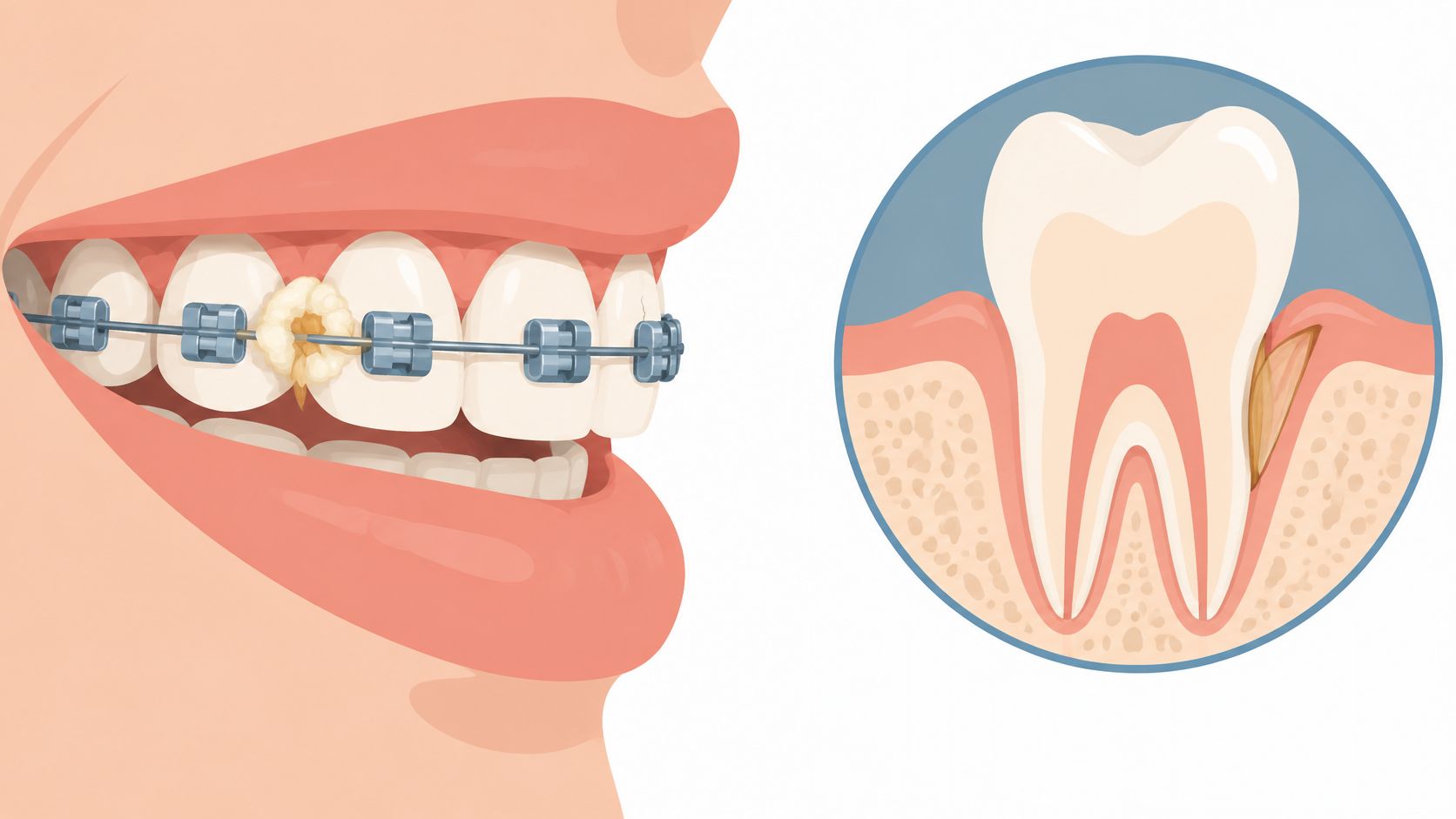
Parents often hear "popcorn is crunchy" and stop there. Crunch is only half the story. An unpopped or partly popped kernel is much harder than the fluffy pieces around it. The American Association of Orthodontists food guidance classifies popcorn with hard, crunchy, and sticky foods that may break brackets, loosen wires, or damage appliances, because biting a kernel puts a localized load on the bond between bracket and enamel or bends the archwire.
A damaged bracket or a distorted wire can interrupt the planned force on that tooth. The tooth may no longer get the pressure the orthodontist set, in the amount or the direction that was planned. Fixing it usually means an unscheduled visit, not a wait until the next regular adjustment.
Hulls behave differently. They're thin and fibrous, so they don't have to break anything to cause trouble. They slide between brackets, wires, teeth, and gum tissue. Those spots are harder to see and harder to clean than a normal tooth surface, so a fragment can sit there and keep the gum irritated.
Practical rule: Picking every kernel out of the bowl doesn't solve it. Hulls stay crunchy, and they still lodge around the hardware.
What each part of the mouth takes
| Appliance or tooth part | What popcorn does | Possible result |
|---|---|---|
| Brackets | A kernel concentrates force on one bonded bracket | Bracket loosens or breaks |
| Archwire | Biting a hard kernel can bend the wire | Wire pokes or planned pressure shifts |
| Elastic ties and bands | Hulls wedge into small ties and bands | Trapped debris and gum irritation |
| Gumline | Thin hulls lodge where gum meets the bracket | Soreness and retained food |
| Natural teeth | Hard kernels can crack enamel | Chipped or cracked tooth |
The same bite can hit more than one row of that table. A kernel may bend the wire while a hull from the same mouthful wedges under an elastic tie. Softer movie snacks, such as yogurt, applesauce, or cheese cut into small pieces, put less force on the appliances and are easier to clean afterward. For kids and teens, the workable rule is to skip popcorn rather than hunt through the bowl for hard pieces.
What to Do After Biting a Kernel
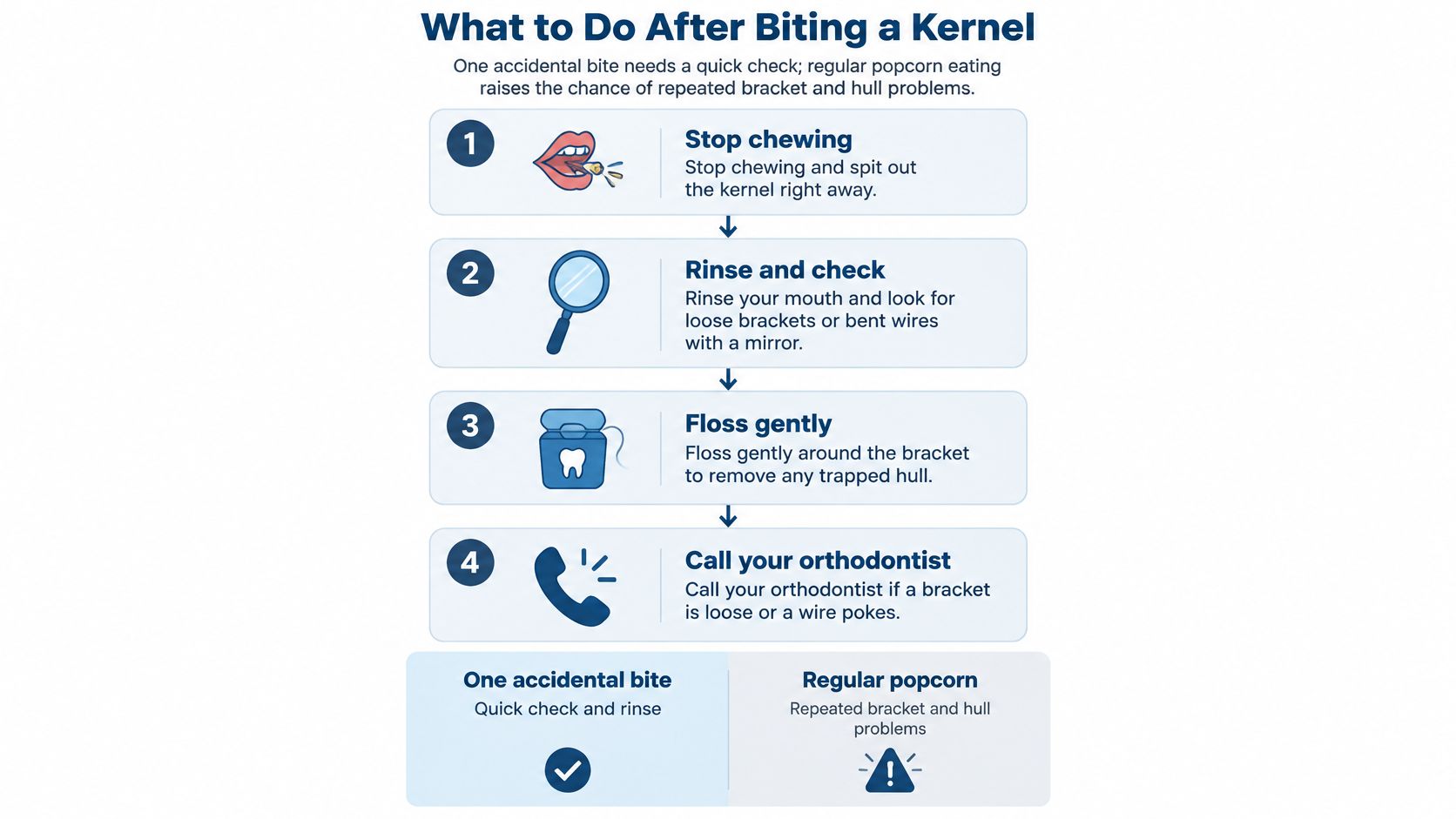
One accidental bite needs a quick check. Eating popcorn on a regular basis raises the chance of repeated bracket and hull problems. A single slip at a birthday party isn't the same as a weekly movie habit, and the response shouldn't be the same either.
Four steps after one bite
- Stop chewing. Spit out the kernel and any loose fragment you can see. Don't dig at the bracket with a fingernail or a toothpick. Prying at the bond can loosen a bracket that was still holding.
- Look, then feel. Use a mirror in good light and check each bracket and the wire. Run the tongue gently along the braces for anything loose, shifted, or sharp. A bracket that rocks, or a wire end that wasn't poking before, is the sign to pause.
- Rinse, then clean. Swish with plain water so loose bits float out. Floss gently around the brackets and brush in the usual way so hull fragments don't stay behind. A water flosser for braces can flush the gumline when string floss can't reach a thin piece, used on a gentle setting.
- Cover a poke, then call if something moved. If a wire end is sharp, press a small piece of orthodontic wax over it so the cheek or lip isn't cut. Call the orthodontic office if a bracket feels loose, a wire is bent, or irritation lasts after cleaning. The office handles the repair. Pulling a loose bracket or tugging a wire at home can bend the setup further.
Don't pull a loose bracket off, even if it seems to be hanging by the wire. Leave it in place and let the office decide how to rebond it.
Match the symptom to the next step
| Symptom | Likely cause | Next step |
|---|---|---|
| Bracket feels loose or moves | Bracket partly detached | Call the orthodontic office and do not pull it off |
| Wire pokes cheek or lip | Wire bent or shifted | Cover with orthodontic wax and call the office |
| Hull stuck between brackets | Trapped fragment | Rinse, floss gently and brush |
| Gums stay sore after cleaning | Irritation from retained debris | Contact the office if it continues |
| Tooth pain or a visible crack | Possible enamel damage | Contact your dentist or orthodontist promptly |
Tooth pain or a visible crack is a different problem from a stuck hull. That one goes to the dentist or the orthodontist promptly, not to another round of brushing. A hull that rinses out, with no loose bracket and no lasting soreness, can stay a one-time lesson. A bowl that shows up every weekend is the pattern to change, because each new kernel is another chance to knock the same bond.
Why Some Popcorn Is Riskier Than Others
The snack name isn't the whole risk. How the popcorn was popped, coated, and scooped changes what hits the braces.
Hull-free bags cut down on the big unpopped kernels people notice at the bottom of a bowl. They don't clear the thin fragments that still wedge around ties and along the gumline. Dental guidance on popcorn with braces treats that as two separate mechanical risks, and it notes that the available evidence is largely precautionary guidance rather than a quantified popcorn-specific bracket-failure rate. Hull-free isn't a free pass.
Partly popped batches are the highest-risk option at home or in a theater. The fluffy pieces hide dense kernels, and a scoop from the bottom of the bag is where those kernels collect. One of them is enough to bend a wire even when the rest of the serving feels soft.
Caramel and kettle-coated popcorn add a third problem. The American Association of Orthodontists patient guidance, which named popcorn among foods that may damage braces or become stuck around appliances in guidance dated at least to January 30, 2023, points out that caramel popcorn adds stickiness, so residue clings around brackets and cleaning gets harder. That guidance treats popcorn as a food to avoid throughout active treatment, not only in the first weeks.
Buttered movie popcorn is less sticky than caramel, and families sometimes treat it as the safer theater choice. It still carries hulls and kernels. Butter and salt don't soften an unpopped kernel into something a bracket can shrug off.
If a snack is hard to chew, sticky, or leaves crumbs that you have to pick out of your teeth, skip it while fixed braces are on. Individual exceptions belong to the treating orthodontist, not to a guess at the concession stand. Ask before trying a "softer" version a friend recommended.
Softer Snacks That Work for Movie Night
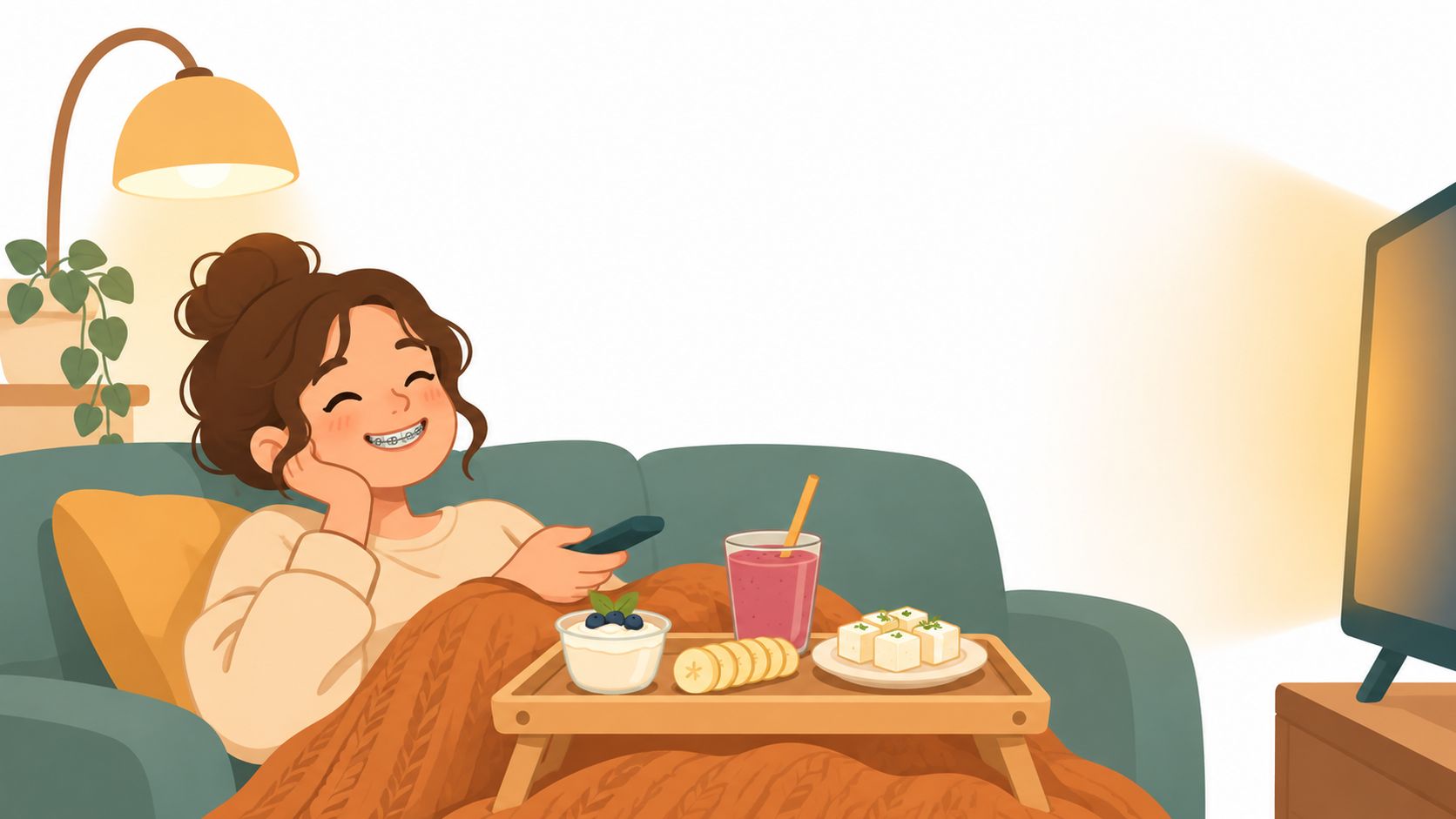
The craving usually hits when everyone else has a bowl and the movie is starting. A braces-friendly tray can sit on the same couch without asking a bracket to take a hit.
The short window after an adjustment
Appliance damage is one reason to stay away from popcorn the whole time braces are on. Soreness is the other, and it peaks right after a visit. A 2025 study of 92 orthodontic patients found that 88% modified their diet because of orthodontic pain, 63% shifted to a soft diet during the first three days, and the average dietary change lasted 4.7 days. Hard fruits and vegetables were avoided by 74% of participants, while 47% avoided sticky snacks, and greater pain was significantly associated with greater dietary restriction.
That lines up with what families notice. The first few days after an adjustment are when soft foods matter most. Popcorn stays off the list for the rest of treatment too, but yogurt and similar foods do the most good in that short stretch.
Swaps that actually stay soft
| Snack swap | Why it works | Watch for |
|---|---|---|
| Plain yogurt | Soft, needs no hard biting | Pick versions without crunchy mix-ins |
| Applesauce | Soft and easy to clean | Check for hard add-ins |
| Cheese cut into small pieces | Low force on appliances | Skip crunchy cheese snacks |
| Soft ripe fruit cut small | Little force needed | Avoid hard fruits and vegetables |
| Soft pretzels | Softer than hard pretzels | Not automatically safe; ask the orthodontist first |
A small cup of plain yogurt, an applesauce pouch, cheese cubes, or ripe banana or melon cut into small pieces covers a movie without a hard bite. Seedless grapes cut in half work for many kids. A crunchy coating, granola clusters, or a partly popped corn snack put back in the bowl still counts as risky, even if the package says "soft."
Soft pretzels are not automatically safe. Tear, texture, and any salty crust still need a yes from the orthodontist before they become the default concession snack.
Food choices should follow the appliance-specific instructions from the treating orthodontist. Metal braces and ceramic braces share the same hard-food limits, and a plan for one child isn't a plan for a sibling in a different appliance.
A short look at everyday eating with braces can make the swap feel less like a punishment and more like a routine.
Pack the alternate snack before you leave the house. A sleepover or a Friday game is easier when the safe option is already in the bag, so popcorn isn't the only thing on the table.
When Popcorn Is Safe to Eat Again
Parents usually ask for a date. There isn't a calendar day that fits every patient. Popcorn is generally discouraged for the full length of fixed braces treatment, so the return depends on the orthodontist's plan, not on a number of months guessed at home.
The NHS guidance for fixed orthodontic appliances categorizes popcorn as a crunchy food to avoid because crunchy foods may damage braces or become trapped in them. Families in North Wilmington, Middletown, Dover/West Dover, and Millsboro should follow the food instructions from their own orthodontic team, since appliance design and the individual plan can differ. Most braces cases at Stellar Orthodontics finish in 18 to 30 months, and popcorn still waits until that patient's fixed appliances are off.
A simple return checklist
- Confirm the plan at the last braces visit. Ask which foods to bring back, and in what order. Retainer wear instructions come with that conversation, and they aren't optional extras.
- Start softer than you think. Teeth that just lost their brackets can feel tender for a short time. Soft textures first, then firmer foods, beats a full bowl on removal day.
- Keep cleaning when popcorn returns. Hulls can still lodge in spaces that brackets used to cover, and under a bonded retainer. Brushing and flossing still matter on movie night.
- Report pain that doesn't settle. Tooth pain or sensitivity that lingers is a reason to contact the office, not a reason to push through another serving.
This is general guidance. It doesn't replace the instructions the team gives each patient, including when a retainer changes how you eat.
Book a Free Consultation at Stellar Orthodontics
A free consultation is the calm next step when a family is unsure about popcorn, other food limits, braces in general, or a bite that already happened. Parents can ask those questions before treatment starts, or while braces are already on. You don't have to wait for a broken bracket to get a clear food list.
Stellar Orthodontics sees families at four Delaware offices: North Wilmington at 2304 Concord Pike, Middletown at 818 Kohl Avenue, Dover/West Dover at 125-2 Greentree Drive, and Millsboro at 26670 Centerview Drive. Pick the office closest to home. Bring the snacks your child eats, plus any recent worry about a loose bracket or a poking wire, so the team can walk through a personal list instead of a generic poster.
The consultation is free whether or not you go ahead with treatment, whether insurance covers any of it, or whether a child qualifies for Medicaid braces. There's no pressure to decide in the chair. If popcorn, movie night, or an accidental kernel is the question on your mind, book a free consultation and ask it there.
Stellar Orthodontics helps Delaware families sort food limits during braces, including what to do after one accidental kernel and which soft snacks can stand in on movie night. A visit covers your child's appliances and a food list you can use at home, at games, and at the theater. When you're ready, book a free consultation with Stellar Orthodontics.