
Many adults decide on braces after years of putting the decision off, then spend the night before the fitting wondering about one thing. Will it hurt at work tomorrow, during dinner, or in the middle of a meeting? That worry is understandable. Adults aren't looking for a vague promise that everything will be fine. Most want a clear picture of adult braces pain, how long it lasts, and how ordinary routines can continue around it.
The reassuring pattern is that soreness is usually predictable and short lived. The fitting itself tends to feel like pressure rather than pain, discomfort builds later in the day, and the first few days are normally the hardest part. Knowing that sequence in advance makes planning meals, meetings, and bedtime much less stressful.
Table of Contents
- Your First Day with Braces
- Why Braces Hurt and Why That Is a Good Sign
- A Realistic Pain Timeline for Adults
- Relief Strategies That Actually Work
- Eating, Brushing, and Daily Life with New Braces
- When Discomfort Becomes a Problem
- Looking Ahead with Confidence
Your First Day with Braces
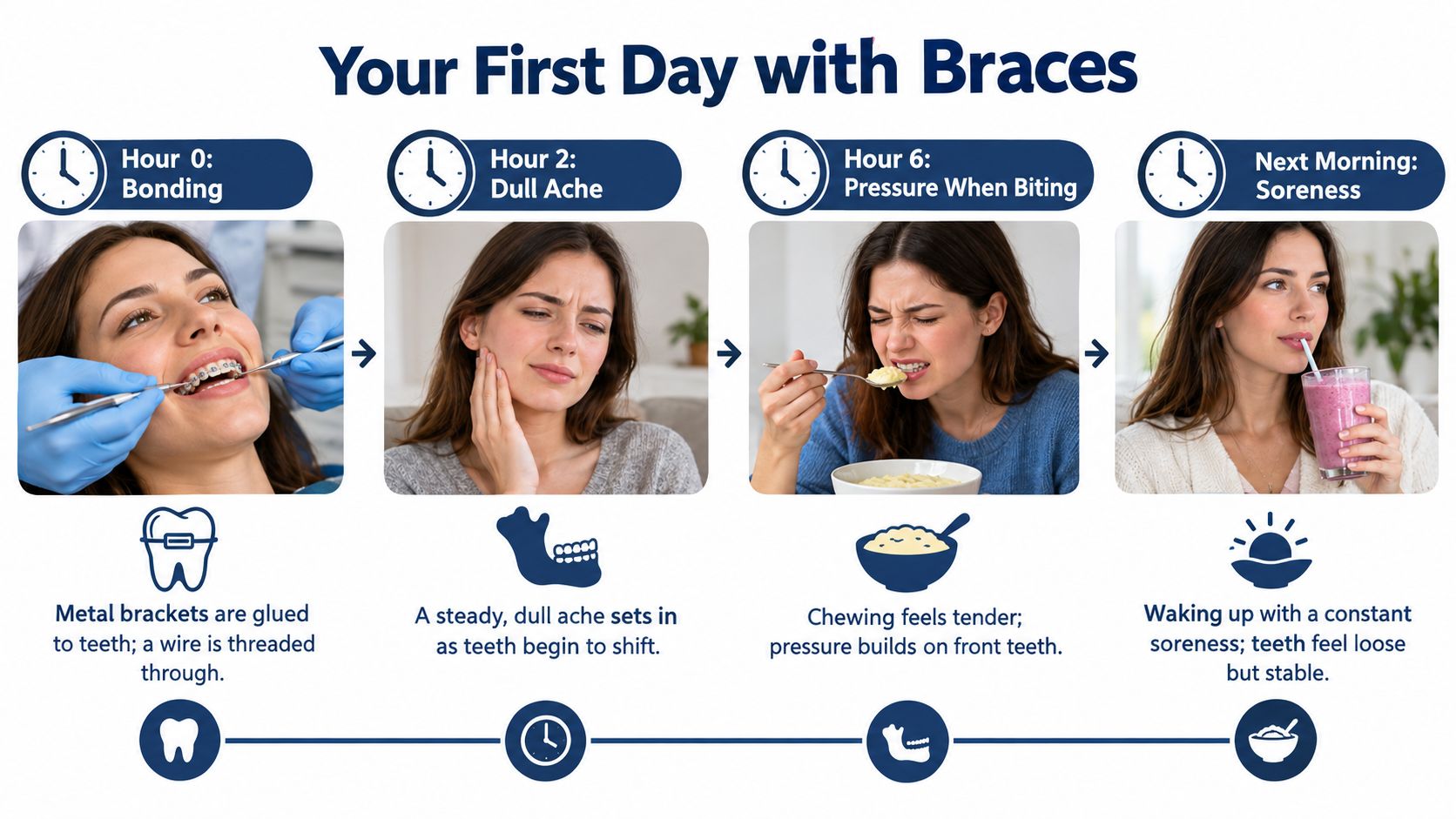
Bonding day often surprises patients because the appointment itself feels easier than expected. Teeth are cleaned and dried, brackets are attached, and a wire is placed. There's pressure while everything is positioned, but sharp pain during fitting isn't typical. Hospital guidance describes placement and adjustment of fixed braces as generally relatively painless, with aching developing later, as explained in hospital guidance on fixed braces care.
The timeline below shows how that first day commonly unfolds.
The first few hours at home
A dull ache often appears during the drive home or by early evening. Teeth may feel tender when they touch, and biting into toast or a sandwich can feel oddly difficult. Cheeks and lips also notice the new brackets, especially while talking or smiling. That combination can make a normal Delaware evening feel off, from sipping coffee on the commute to choosing a softer dinner than planned.
Research gives that experience a useful time frame. Pain typically began about 4 hours after bonding, 31.7% of participants reported pain immediately, and another 31.7% noticed it within 2 to 3 hours, reaching an average maximum of 42.4 millimeters on a 100-millimeter scale during the first 24 hours before falling to about 9.0 millimeters by day 7, according to a 2025 clinical study of pain after braces bonding.
The next morning
Waking up sore doesn't mean something went wrong overnight. Teeth have had several hours to respond to steady force, so pressure feels clearer at breakfast. A smoothie, oatmeal, or scrambled eggs usually works better than a bagel. The mouth also feels crowded at first, like wearing new shoes that haven't softened yet.
The first morning is often the moment adults worry most, yet it's also the most predictable part of the pattern.
Why Braces Hurt and Why That Is a Good Sign
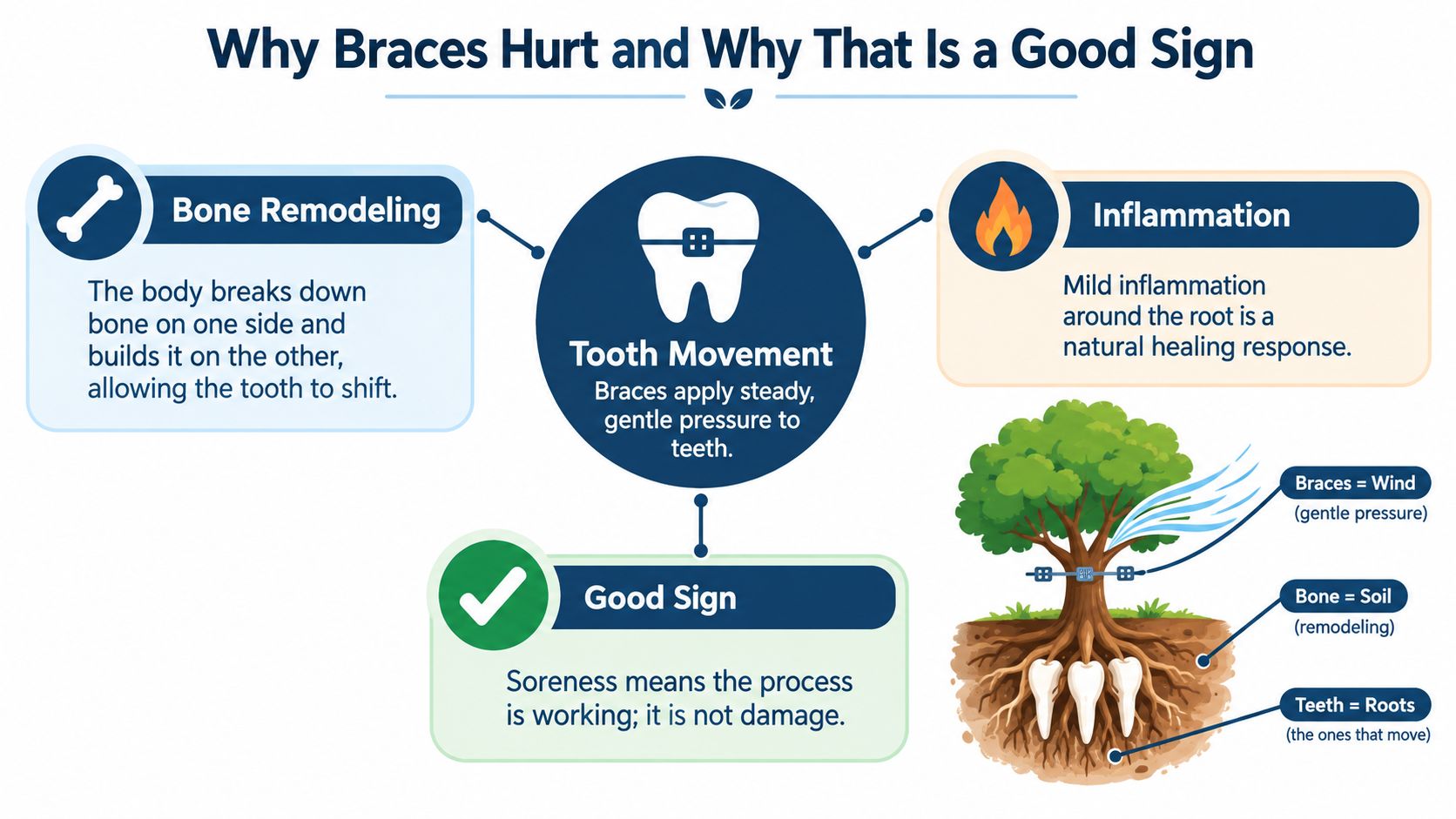
Soreness alarms many adults because pain often signals damage in everyday life. Braces work differently. The ache usually reflects tissues responding to gentle, controlled force, not a tooth being injured.
The concept map below connects pressure, inflammation, and tooth movement in plain terms.
What happens around each tooth
Each tooth sits in a thin space held by the periodontal ligament, a cushion between tooth and bone. Braces nudge the tooth within that space. One side gets compressed, while the other side is stretched. Think of a fence post easing through soil. Soil packs down on one side and loosens on the other, allowing slow movement without forcing the post through solid ground.
That compression reduces local blood flow and oxygen, and inflammatory mediators such as prostaglandins and bradykinin sensitize nearby nerve endings, which explains why discomfort feels like pressure or tenderness during biting rather than sharp, continuous pain, as described in research on the periodontal ligament response to orthodontic force.
Why the ache means movement is underway
On the compressed side, bone gradually breaks down so the tooth can shift. On the tension side, new bone forms to fill the space left behind. That rebuilding process is the treatment itself. Without it, teeth couldn't move safely or stay supported.
Cheeks, lips, and tongue have a separate adjustment. Soft tissue needs time to get used to brackets and wire ends, much like skin toughening after a new pair of shoes. Mild rubbing early on is common and usually settles as the mouth adapts.
A short video explanation can help visual learners connect the biology with the sensation.
A Realistic Pain Timeline for Adults
Adults often plan better when discomfort is placed on a calendar instead of described as a few rough days. The pattern after placement is the clearest example, and later adjustments usually repeat a smaller version of it.
Pain was generally highest between 24 hours and 3 days after placement or adjustment in a study of 58 adults, with increased discomfort expected for about 1 to 3 days after each appointment and some soreness continuing during the first week, based on a prospective longitudinal study of adults with fixed orthodontic treatment.
Broader evidence points in the same direction. A large majority experience discomfort, including 70% of adults reporting pain after bracket placement and 70% of adults and children reporting pain after the first archwire, while another study found 90.2% experienced braces related pain, as summarized in a 2025 review of orthodontic pain prevalence. Prevalence doesn't mean severe pain for everyone. Intensity varies by person, appliance, and sensitivity.
Typical adult braces discomfort by day
| Day | What you feel | Pain level (0-100 VAS) |
|---|---|---|
| Day 1 | Pressure builds after the appointment, biting feels tender | Highest during the first 24 hours |
| Days 2 to 3 | Dull ache is most noticeable, firm foods feel difficult | Still elevated, then easing |
| Days 4 to 5 | Tenderness fades, cheeks feel less irritated | Falling |
| Days 6 to 7 | Mild awareness rather than constant soreness for many adults | Low for most routines |
Planning around adjustments
Scheduling matters for working adults and parents. A fitting or tightening before a major presentation, wedding, or travel day can add unnecessary stress. A quieter next day gives more flexibility for soft meals and rest. Adults comparing appointment cadence can review guidance on how often braces need to be tightened before booking around busy weeks.
Later adjustments tend to feel familiar rather than shocking. The mouth already knows the hardware, and most adults know which foods and comfort steps help them personally.
Relief Strategies That Actually Work
No single trick suits every adult. A layered plan works better, starting with simple comfort measures and adding medication only when it's appropriate for the person's health history.
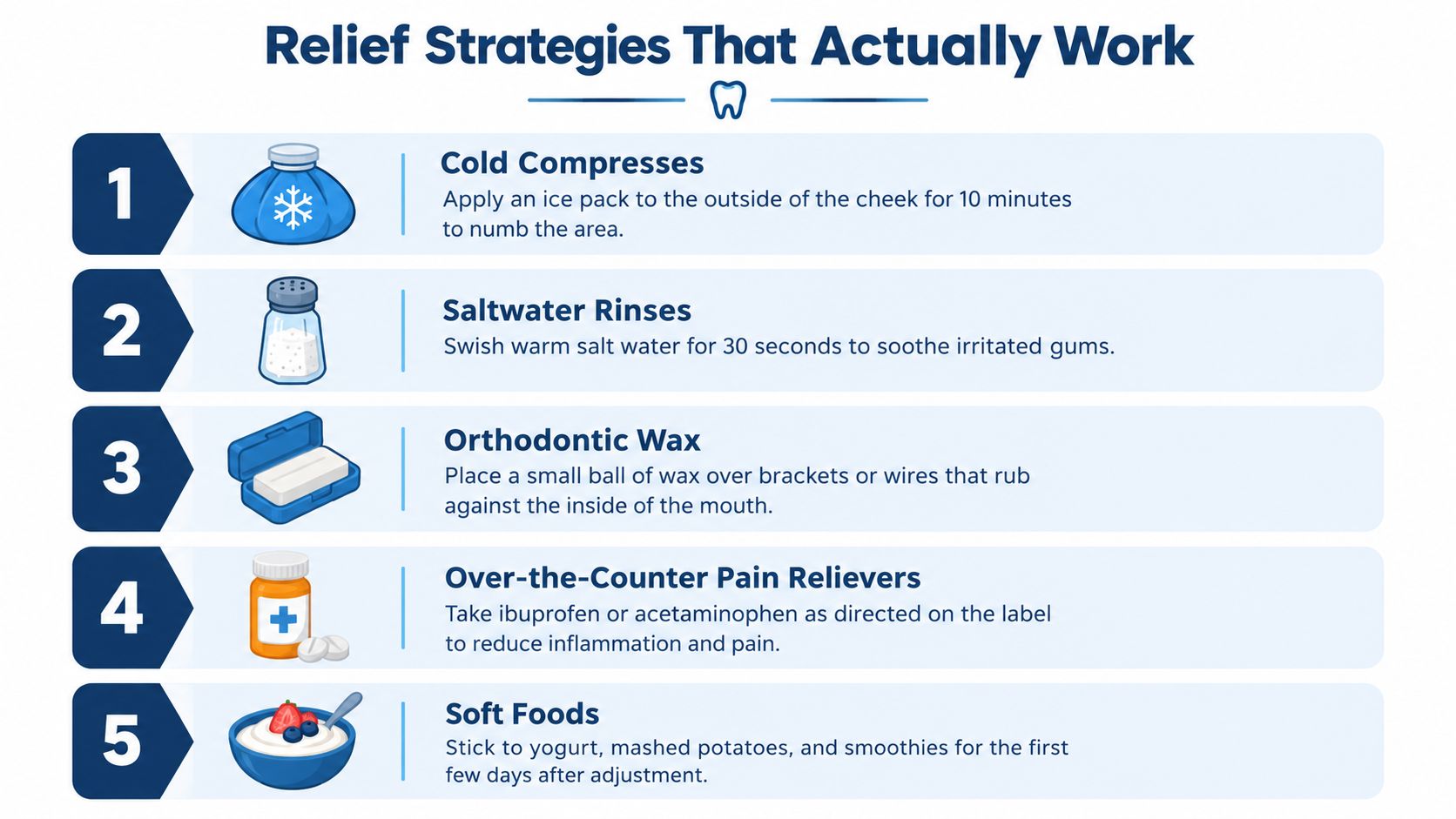
The visual list below groups the most practical at home options.
Comfort measures without medication
- Cold compress: A cold pack on the outside of the cheek can numb soreness after an appointment.
- Warm saltwater rinse: Gentle swishing can soothe irritated gums and small sore spots.
- Orthodontic wax: A small ball pressed over a rubbing bracket creates a smooth barrier for cheeks and lips.
- Cold drinks and soft foods: Chilled water, yogurt, and smoothies reduce chewing effort during tender hours.
These steps don't move teeth faster. They reduce friction and mechanical loading while tissues calm down, which is often enough for milder soreness.
Medication and timing
Evidence favors planned, clinician guided use rather than waiting until pain feels severe. Pharmacologic interventions generally reduced orthodontic pain more effectively than non-pharmacologic approaches across 37 randomized controlled trials and 2,430 participants, with naproxen, etoricoxib, ibuprofen, and acetaminophen among evaluated options and vibration and low level laser therapy showing more moderate benefits, according to a systematic review and network meta-analysis of orthodontic pain treatments.
That evidence doesn't make every option safe for every adult. NSAIDs and prescription medicines need screening for stomach, kidney, or cardiovascular concerns, anticoagulant use, pregnancy, allergies, and drug interactions. Product directions and clinician advice should guide choice and timing. Adults unsure about a medicine should ask before the appointment, not while already uncomfortable at night.
A calmer approach: Preparing wax, soft foods, and an approved pain reliever before bonding day removes frantic decision making later.
Comparing options side by side helps. Wax solves rubbing but not deep pressure. Cold helps surface soreness but won't fix a poking wire. Medication can reduce ache, while soft foods prevent extra strain. Used together, each tool covers a different part of adult braces pain.
Eating, Brushing, and Daily Life with New Braces
Daily logistics cause as much anxiety as the ache itself. Adults want to know whether lunch at work, brushing before a meeting, or talking through a presentation will feel manageable.
Chewing was the main external pain trigger in adults aged 18 to 50, with upper incisors and molars most often reported as painful, while another study found about 90% experienced post installation pain, 75.8% reported it lasting one to six days, and feeding and brushing were the activities most affected, based on 2025 questionnaire research on adults with orthodontic pain.
Eating during the tender window
Soft meals reduce pressure on front teeth and molars. Reliable choices include yogurt, scrambled eggs, oatmeal, soup, mashed potatoes, pasta, steamed vegetables, and soft fish. Cutting food into small pieces helps because biting straight into a sandwich loads the front teeth.
Hard crusts, whole apples, popcorn, nuts, sticky candy, and chewy bagels are poor choices early on. They increase chewing force and can damage hardware. A fuller reference like a practical list of foods to avoid with braces helps with grocery planning before the first appointment.
Brushing, speaking, and sleep
Tender gums still need cleaning. A soft brush, gentle pressure, and slower movements around brackets make brushing more comfortable. Floss threaders or orthodontic floss picks can reduce fumbling when teeth feel sensitive. Skipping hygiene because of soreness usually makes gums more irritated, not less.
Speech may feel slightly different at first because lips and tongue are mapping new shapes. Reading aloud at home, staying hydrated, and using wax on a rubbing spot can help before a meeting heavy day. Most adults sound normal to listeners sooner than expected.
Sleep can be disrupted on the first night if soreness peaks in the evening. An approved pain reliever taken as directed, a soft dinner, and wax placed before bed often make the night easier. Parents and commuters may also want a small kit for the car or desk with wax, a travel brush, and a soft snack.
Social confidence matters too. Smiling, photos, and close conversation feel strange only until the hardware becomes familiar. That adjustment is emotional as well as physical, and it usually passes quickly.
When Discomfort Becomes a Problem
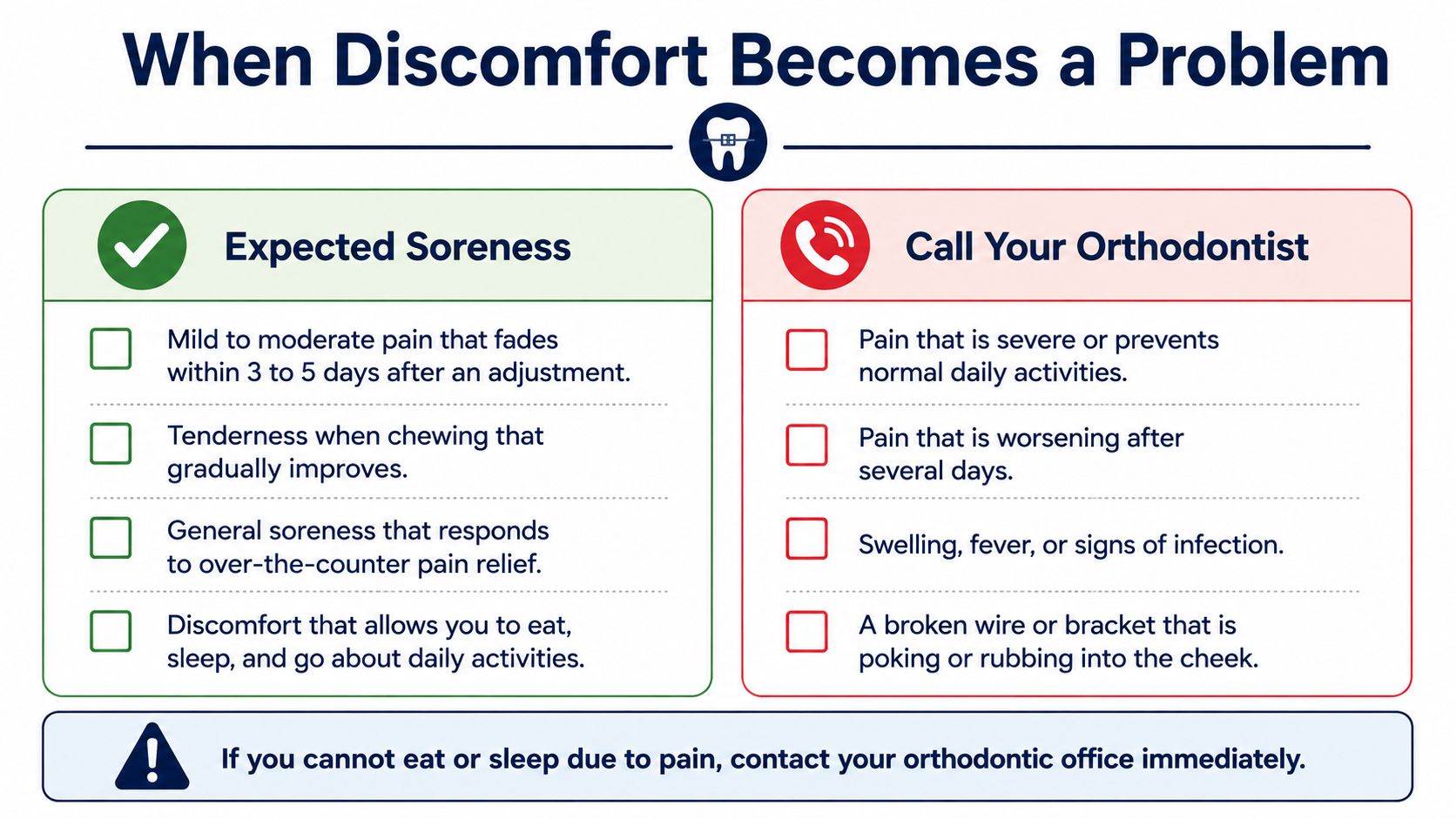
Expected soreness follows a pattern. It builds after placement or tightening, peaks early, and then improves. Symptoms that break that pattern deserve attention rather than patience.
The comparison below separates routine tenderness from warning signs.
Signs that need a call
- Pain that keeps worsening: Discomfort should trend downward after the early peak, not steadily climb.
- Pain in one specific tooth: Sharp or localized pain feels different from general pressure across several teeth.
- Swelling, fever, or bleeding: These symptoms don't fit routine post adjustment soreness.
- Loose bracket or poking wire: Hardware problems can injure cheeks and won't resolve with pain relievers alone.
Guidance advises contacting the orthodontist if pain continues for more than a few days after fitting or adjustment, or if gums become very red, swollen, or painful, as stated in National Health Service guidance on braces.
A simple rule for adults
If eating or sleeping becomes impossible because of pain, the orthodontic office should hear about it promptly.
Delaware patients can get help locally through Stellar Orthodontics in North Wilmington, Middletown, Dover/West Dover, or Millsboro, where the team can check whether soreness is routine or hardware related. Adults dealing with a broken wire or sudden severe symptoms can also review emergency orthodontic care options before deciding how urgently to call.
Calling early isn't overreacting. A quick check can confirm normal healing, trim a wire, or repair a bracket before a small irritation becomes a sore that affects eating for days.
Looking Ahead with Confidence
The first week carries most of the worry because every sensation is new. After that, adults usually have a personal playbook. Soft foods are stocked, wax is in a bag or desk drawer, and adjustment days are placed more thoughtfully on the calendar.
That confidence is supported by consistent evidence. Pain generally increased after placement or adjustment, reached its highest level during the first 24 hours, and declined over the following week across 35 studies involving 2,611 adults, supporting the view that soreness is expected and time limited while persistent, severe, or localized pain warrants assessment, according to a 2025 systematic review and meta-analysis of adult orthodontic pain.
What changes after the first adjustment cycle
The mouth adapts in practical ways. Cheeks toughen, brushing becomes routine, and food choices stop requiring constant thought. Many adults also notice early alignment changes, which reframes temporary tenderness as visible progress rather than an abstract promise.
Treatment goals extend beyond appearance. Straighter teeth can be easier to clean, and a better aligned bite can distribute chewing forces more evenly. Those long term benefits help explain why adults continue with treatment even after an uncomfortable first week.
Starting with realistic expectations
Fear often comes from imagining constant pain for the entire treatment. Reality is more like weather moving through. A front arrives after placement or tightening, peaks quickly, and clears. Between adjustments, most days feel ordinary, with work, family meals, exercise, and social plans continuing as usual.
Adults across Delaware who feel unsure can start with a free consultation to discuss pain expectations, appliance choices, scheduling, and daily life concerns before committing. A digital scan and a calm conversation can replace guesswork with a plan built around work hours, family routines, and personal sensitivity. That first step doesn't require bravado. It only requires clear information and a team willing to answer practical questions.
Book a free consultation to talk through adult braces pain, treatment options, and a first week plan that fits work, meals, and family life. Adults in North Wilmington, Middletown, Dover/West Dover, and Millsboro can visit Stellar Orthodontics to schedule a visit and start with realistic, reassuring guidance.