
A child walks out of the orthodontic office with fresh brackets, grins for a photo in the parking lot, and eats dinner without complaint. By bedtime the same child is quiet, holding a hand against one cheek, saying their teeth feel tight and full.
That turn is normal. The soreness usually comes from the gentle pressure of the new archwire nudging teeth toward their new positions, not from the appointment itself. Braces placement involves no injections, no drilling, and no pain, and the bonding visit runs about 60 to 90 minutes while brackets are attached and the first wire is tied in. What shows up hours later is the mouth noticing that something has changed.
The seven tips below follow that timeline. They start with the first night, move through the eating and cleaning habits that make the following two weeks easier, and end at the point where a parent should pick up the phone instead of reaching for another home remedy. Every one is low-cost and safe to use alongside professional care.
Families across Delaware can find that care at Stellar Orthodontics in North Wilmington, Middletown, West Dover, and Millsboro, so support sits close by whether the first tender night lands on a school night or a holiday weekend.
Table of Contents
- 1. Warm Salt Water Rinses
- 2. Orthodontic Wax on Irritating Brackets and Wires
- 3. Over-the-Counter Pain Relievers Used as Directed
- 4. Choosing Soft Foods During the First Few Days
- 5. Cold Compresses and Cool Foods
- 6. Gentle Brushing and Flossing with Orthodontic Tools
- 7. Calling Your Orthodontic Office for Broken Parts or Persistent Discomfort
- How each braces comfort tip compares at a glance
- Book a free consultation at any of our four Delaware offices
1. Warm Salt Water Rinses
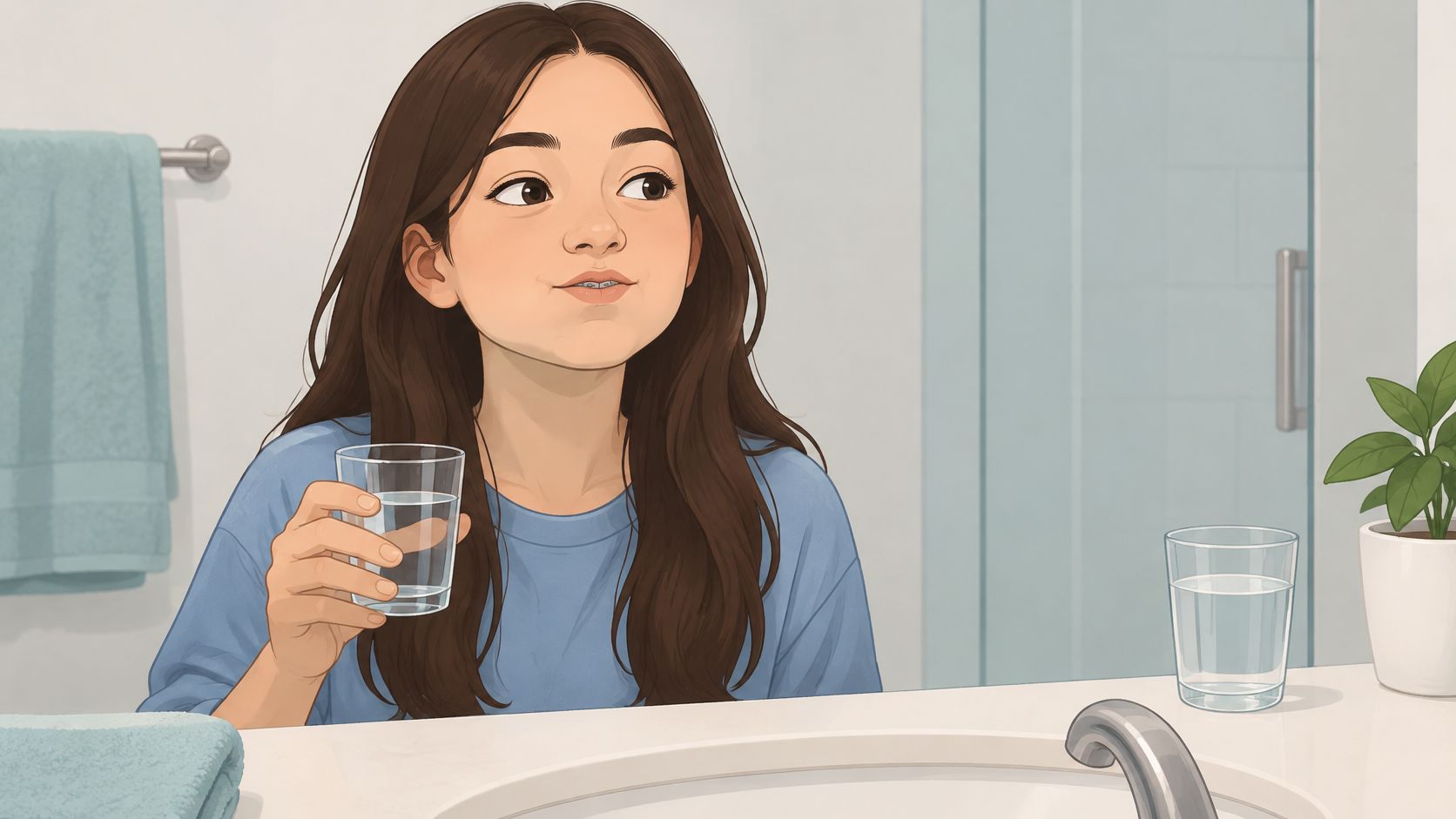
A 10-year-old eats tomato soup in peace on the ride home from her bonding appointment. By 8 p.m. she's pressing a hand to her cheek and saying her teeth feel too big for her mouth. Her mother stirs half a teaspoon of salt into a cup of warm water, hands it over, and has her swish for about 40 seconds before spitting into the sink.
That rinse is the cheapest item on this list and usually the first one an orthodontic team suggests. Warm salt water clears food and plaque from around brackets and soothes gum tissue that a new wire has just pressed on. It doesn't numb the mouth or speed up tooth movement. It calms and cleans, and on night one that's often enough.
Soreness after an adjustment commonly lasts for a day or two and can make eating uncomfortable, and the Barts Health NHS Trust guidance on managing braces recommends reassurance, soft foods, and a warm salt water rinse for exactly that window.
Mixing a rinse that does its job
- Half a teaspoon of salt per cup: more salt doesn't make it stronger, it just makes it taste worse and can sting.
- Warm, never hot: test it on your own wrist first, the way you would a bottle.
- Thirty to sixty seconds of gentle swishing: then spit. Swishing hard doesn't clean better.
- Supervise younger children: a 7-year-old can easily swallow the cup by accident.
- Brush afterward: a soft-bristled brush and a floss threader finish the job the rinse started.
Where this tip stops: salt water soothes tissue, but it can't move a wire that's digging into a cheek. If there's a hard edge behind the sore spot, that's a wax-and-phone-call problem, not a rinsing problem.
2. Orthodontic Wax on Irritating Brackets and Wires
A bracket or wire end rubbing the inside of a cheek can leave a sore spot within hours. Keep orthodontic wax at home and carry some in a backpack or car. A small piece pressed over the irritating edge creates a smooth surface against the cheek.
The Leicester Hospitals guidance on looking after braces explains that wax can cover a broken part of a brace and reduce discomfort until the patient sees the orthodontist. It can make the area more comfortable while you arrange follow-up.
Applying wax so it stays where you put it
- Dry the area first: moisture can make wax slide off.
- Roll a small ball, then flatten it: press it over the sharp point and smooth the edges.
- Remove it before brushing and flossing: replace it afterward if the area still needs protection.
- Replace it when dirty or loose: wax that has collected food may not stay in place.
Practical rule: use wax to cover an irritating edge temporarily. If a wire keeps poking or a bracket is loose, contact your orthodontist for guidance.
For example, if a lower molar bracket comes loose on a Saturday and the wire rubs the cheek, wax can help protect the sore spot while you contact the office. Ask your orthodontist to show you how to apply it at your next visit. A little practice makes it easier to cover the edge when you need to.
3. Over-the-Counter Pain Relievers Used as Directed
Every parent asks a version of the same question at the front desk: should my child take something before the soreness starts?
Soreness is the rule rather than the exception. Published clinical literature reports that roughly 70% to 95% of patients experience pain after orthodontic procedures, including placement of separators or initial archwires, and a 2017 network meta-analysis of 15 randomized controlled trials involving 1,341 participants with a mean age of 17.3 found that ibuprofen, acetaminophen, naproxen, and aspirin all eased pain at the 6, 12, and 24 hour marks (review of orthodontic pain management). The same source notes aspirin is generally not appropriate for children unless a clinician specifically directs it.
What the professional guidance doesn't do is agree on which drug. Cleveland Clinic recommends acetaminophen after orthodontic appointments and advises avoiding ibuprofen and other NSAIDs, reasoning that NSAIDs block prostaglandins involved in healing and may interrupt tooth movement, while the American Association of Orthodontists lists both ibuprofen and acetaminophen as over-the-counter options (Cleveland Clinic guidance on braces). That disagreement is exactly why the choice belongs with the treating orthodontist or pharmacist, not with a search result.
Safe use in plain terms
- Ask which option fits the patient: age, weight, allergies, stomach or kidney history, asthma sensitivity, and other medicines all change the answer.
- Follow the label and the clinician, not an article: children's dosing depends on weight and on the concentration of the bottle in your hand.
- Write down the time of each dose: a note on the fridge prevents a double dose at bedtime.
- Check combination products: cold and flu syrups often carry the same ingredient as a pain reliever.
- Call if pain climbs after the first day or two: expected soreness fades, it doesn't intensify.
One trial shows how much the protocol matters. In a study of 159 patients aged 12 to 16, participants took either 400 mg of ibuprofen or 1,000 mg of paracetamol an hour before separator placement and again six hours later, and average pain through bedtime was 8.5 mm higher on a 100 mm scale in the paracetamol group, though two doses weren't enough to control all pain the next day (multicenter trial of pre-procedure analgesia). Adults weighing the same question can read more about soreness after adult braces appointments and which moments tend to hurt most.
4. Choosing Soft Foods During the First Few Days
After a Tuesday adjustment, even familiar foods may take more effort to chew. Planning a few softer meals, such as soup, mashed potatoes, and yogurt, gives the mouth a gentler start while soreness settles.

For some people, chewing feels uncomfortable during the first days after an adjustment. A 2025 observational study of 194 orthodontic patients found that 55.7% used analgesics for their discomfort, and women were more likely to report diet impairment (study of pain and analgesic use during orthodontic treatment). Softer choices can make meals easier while the teeth feel tender. They are a temporary comfort measure, not a change to the braces routine.
The soft-food shelf worth keeping stocked
- Yogurt, cottage cheese, applesauce: soft options that need little or no chewing.
- Mashed potatoes, oatmeal, scrambled eggs: filling choices that are easy to bite.
- Soups and smoothies: blend fruit and yogurt for a more substantial meal.
- Fruit that gives way: try bananas, ripe peaches, or canned pears. Cook carrots and apples until tender rather than biting them raw.
- Skip the obvious trouble: hard crusts, nuts, popcorn, chewy candy, and ice can put pressure on brackets.
Bagels, whole apples, and crusty bread may be uncomfortable at first. Choose softer foods while chewing feels tender, then return to firmer textures as comfort allows.
Keep a list of foods to avoid with braces handy, especially for sticky foods that can pull at brackets. Cut firm fruit into small pieces instead of biting into it. Brush after sugary foods or drinks, including smoothies, to clear residue from around the teeth and brackets.
5. Cold Compresses and Cool Foods
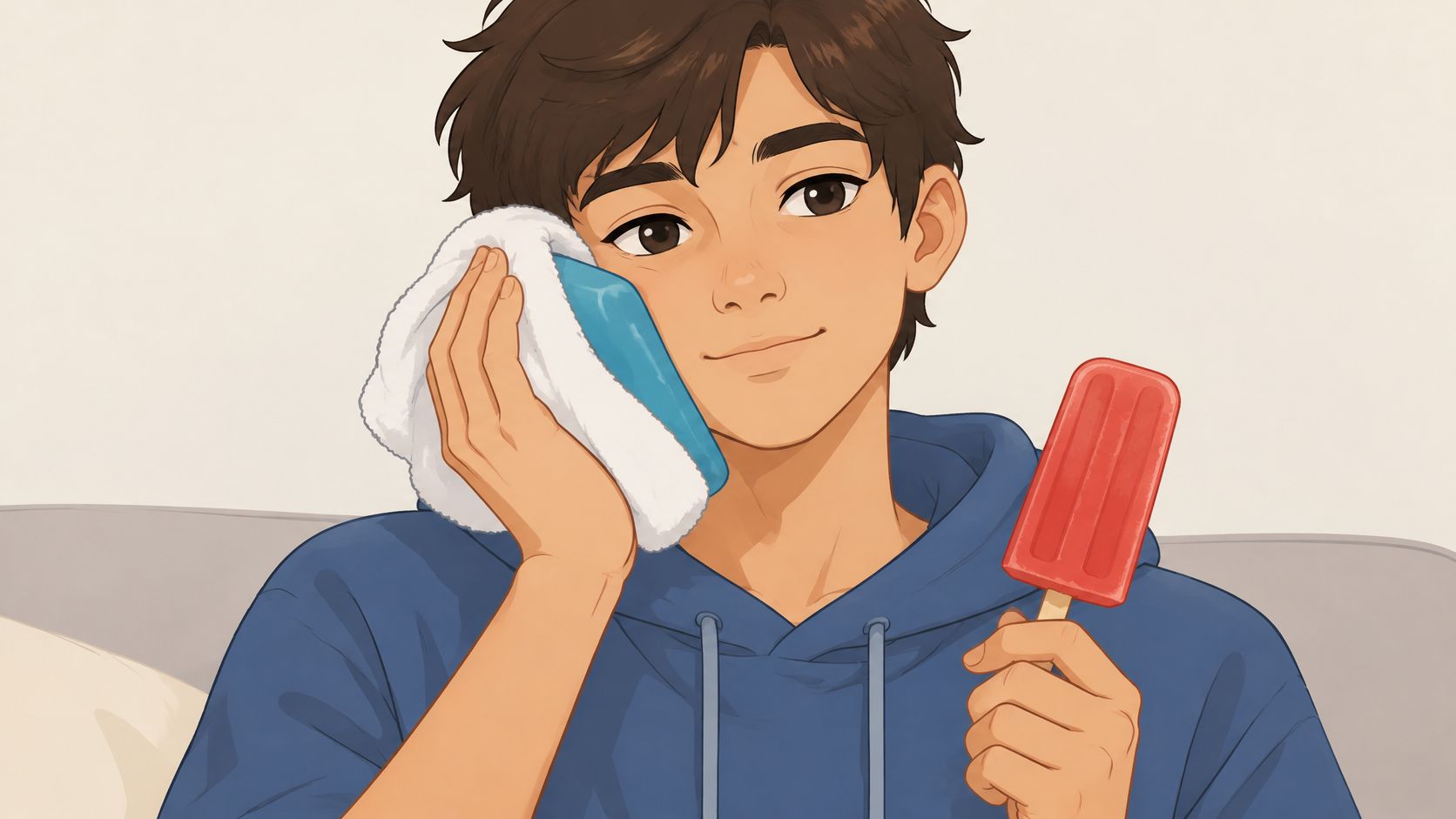
Cold is the quieter of the home comforts. A teen who comes home from an adjustment with a throbbing upper arch can hold a wrapped ice pack against the outside of the cheek for 10 to 15 minutes and feel the edge come off. A chilled applesauce cup or a sugar-free popsicle does something similar from the inside.
Using cold without creating a new problem
- Wrap it first: a thin towel between the pack and the skin prevents a burn or a red mark.
- Ten to fifteen minutes at a time: then take a break. Longer isn't better.
- Go sugar-free and unsweetened: popsicles and applesauce without added sugar protect the teeth you're already working to keep clean.
- Skip the ice cubes: chewing ice is a bracket-loosening habit, and a broken bracket means an extra visit.
- Rinse or brush afterward: sweet residue sits against the gumline otherwise.
Where cold stops helping: it's a comfort measure for tissue, and it won't settle pain coming from real pressure on one tooth. If the soreness is sharp, one-sided, or still climbing on day three, cold packs aren't the answer. Say a family in Millsboro keeps two gel packs in the freezer and rotates them on adjustment nights. That's a habit worth copying, as long as the second pack comes out when the first one goes back in.
6. Gentle Brushing and Flossing with Orthodontic Tools
The night after brackets go on, brushing is easy to put off because the gums already ache. Plaque left along that edge can make the tissue swell, bleed, or feel raw where it meets a bracket. Cleaning will not take away the squeeze from a new wire. It can keep plaque from adding irritation on top of ordinary adjustment soreness.
A 14-year-old in Millsboro started using a small interdental brush under the lower archwire each evening. By the next visit, the gumline around those brackets was less tender, mainly because less plaque was sitting there.
The tools do more of the work than extra scrubbing. A soft-bristled brush covers the tooth face. A small interdental brush reaches the gaps under the archwire. An orthodontic floss threader gets floss into contacts a normal strand cannot reach. The short demonstration below shows the motion a hygienist would walk through at the chair.
A two-minute routine that protects sore gums
- Angle the bristles toward the gumline: about 45 degrees, small circles, one bracket at a time.
- Clean above and below each bracket: the brush head should touch both edges.
- Thread rather than snap: a floss threader slides under the wire so floss reaches the contact without popping.
- Replace a splayed brush: frayed bristles stop cleaning and start irritating.
- Ask for a technique check: if the same spot stays tender after careful cleaning, ask the orthodontic team to watch one pass. A short correction can catch a habit that keeps rubbing the same gum.
Hard pressure does not clean better. It can scrape tissue that is already sensitive. Light circles, then the threader, then stop.
7. Calling Your Orthodontic Office for Broken Parts or Persistent Discomfort
A wire end catches a cheek on a Tuesday night in Middletown, two days after an adjustment. Home steps can calm ordinary tenderness. They cannot fix a broken part, or pain that keeps climbing.
When it's normal, and when to pick up the phone
Use the first few days as a rough baseline, not a guarantee. Mouths do not all settle on the same clock.
- Expected: tenderness when biting, a dull ache across several teeth, sensitivity to cold drinks, and improvement by day three or four.
- Call promptly: severe or worsening pain after that early stretch, facial swelling, fever, inability to eat or drink, a loose appliance catching a cheek, or pain fixed on a single tooth.
- Don't improvise: never cut a wire or try to rebond a bracket at home.
A 2025 survey found that 21.2% of dissatisfied orthodontic patients cited appliance discomfort, which shows how much this stretch shapes the way families remember treatment (survey of orthodontic patient satisfaction).
Have the number saved: store your orthodontic office contact in your phone under a name you'll find in a hurry, along with the date of your last adjustment.
If a wire is poking and you cannot be seen right away, press orthodontic wax over the end and keep the area clean until the visit. Wax works like a small bumper on a sharp corner. It stops the rub. It does not glue a bracket back onto a tooth.
A 2024 systematic review of interventions for orthodontic separation pain found that NSAIDs, low-level laser therapy, anesthetic gel, and transcutaneous electrical nerve stimulation outperformed placebo (review of interventions for orthodontic separation pain). The strength of that evidence varied by treatment, and laser therapy showed only weak-to-moderate support. Those in-office choices belong in a conversation with the treating orthodontist, not in a home experiment.
Patients in North Wilmington, Middletown, West Dover, and Millsboro can call Stellar Orthodontics about a poking wire or a loose bracket. For a problem that should not wait until the next regular visit, read what to do for a broken brace or persistent pain and contact the office promptly. A free consultation with iTero digital 3D scanning is also available for anyone weighing braces for the first time.
How each braces comfort tip compares at a glance
Use this timeline to judge what can wait and what needs a call. Mild tenderness after placement or an adjustment often settles over the next few days. A broken part, a wire that keeps poking, or worsening pain needs attention from the orthodontic office.
| Tip | Best time to use it | Typical timeframe | Who to contact, and when |
|---|---|---|---|
| Warm Salt Water Rinses | After meals or before bed when the mouth feels irritated | During the first few days of soreness | Contact the orthodontic office if irritation persists or you have been advised to avoid salt |
| Orthodontic Wax on Irritating Brackets and Wires | When a bracket or wire rubs the cheek, lip, or tongue | Until the rubbing stops or the office can advise you | Call if the wire still pokes or the irritation continues despite wax |
| Over-the-Counter Pain Relievers Used as Directed | For short-term tenderness after placement or an adjustment | Follow the medicine label; ask a pharmacist or clinician if unsure whether it is suitable | Call the orthodontic office if pain is severe or lasts beyond a few days |
| Choosing Soft Foods During the First Few Days | When chewing feels tender | For the first few days after placement or an adjustment | Call if discomfort persists or makes eating difficult |
| Cold Compresses and Cool Foods | When teeth or gums feel tender | Use for temporary relief while soreness is present | Call if pain worsens or does not ease |
| Gentle Brushing and Flossing with Orthodontic Tools | During daily cleaning, especially around sore gums | Continue throughout braces treatment | Ask the orthodontic team for help if soreness or cleaning problems continue |
| Calling Your Orthodontic Office for Broken Parts or Persistent Discomfort | For a loose bracket, poking wire, or soreness that is not easing | Call promptly for a broken or poking part; call if pain, swelling, or bleeding continues or worsens | Contact your orthodontic office first for appliance problems or persistent symptoms |
Book a free consultation at any of our four Delaware offices
A sore first night in braces can make ordinary meals and brushing feel unfamiliar. For mild, temporary soreness, the comfort tips above can help. If a bracket breaks, a wire pokes, or discomfort persists, call your orthodontic office for guidance rather than trying to repair the appliance at home.
Stellar Orthodontics offers a free orthodontic consultation, whether or not you proceed with treatment or have insurance coverage. The practice also offers a free Medicaid braces evaluation at all four offices, as well as monthly payment plans for braces and Invisalign.
Call the office closest to home to ask about an appointment: North Wilmington, Middletown, West Dover, or Millsboro. Dr. Robert Park, Dr. Can Nguyen, and Dr. Sonal Dave see patients across Delaware. Free consultations include iTero digital 3D scanning and a plain-language discussion of treatment options, timing, and financing.