Your child comes home from an orthodontic appointment, and by dinner they have a headache. Is this manageable tonight, or does something need checking?
That parent's question is different from the one researchers ask. Large-scale evidence has not shown that braces raise the overall rate of headaches, yet soreness after an adjustment is common and expected. A headache gets judged by its own pattern: when it started, how long it lasts, and what else is going on that day.
For Delaware families considering treatment at Stellar Orthodontics, knowing that difference makes both treatment decisions and after-hours decisions less stressful.
Table of Contents
- The Short Answer on Braces and Headaches
- What the Headache Research Actually Shows
- Why Your Head Might Ache While Teeth Move
- Matching Your Headache to Its Most Likely Cause
- Home Comfort Steps for the First Few Days
- When to Call Your Orthodontist and When to See a Doctor
- Book a Free Consultation at a Delaware Office Near You
The Short Answer on Braces and Headaches
Braces are not established as a general cause of migraine or recurrent headache. A 2025 systematic review of orthodontic interventions in children and adolescents found no statistically significant increase in headache prevalence among treated patients compared with untreated controls. For a parent, the practical meaning is this: soreness soon after an adjustment is expected, while a headache deserves to be judged on its own pattern rather than assumed to be part of moving teeth.
What the research result means in plain terms
An odds ratio compares the odds of an outcome in one group against the odds in another, with a value of one meaning equal odds. The reported result sat close to one, and its range of uncertainty crossed that neutral point, so the observed difference could plausibly reflect ordinary variation rather than an effect of treatment.
Not statistically significant means the analysis did not find strong enough evidence to separate the observed difference from chance under its assumptions. It leaves room for an individual child to feel head pain around an adjustment.
Practical rule: A headache happening during orthodontic treatment is not the same as a headache caused by orthodontic treatment.
A free consultation gives families a chance to separate expected tooth soreness from symptoms that call for a different assessment.
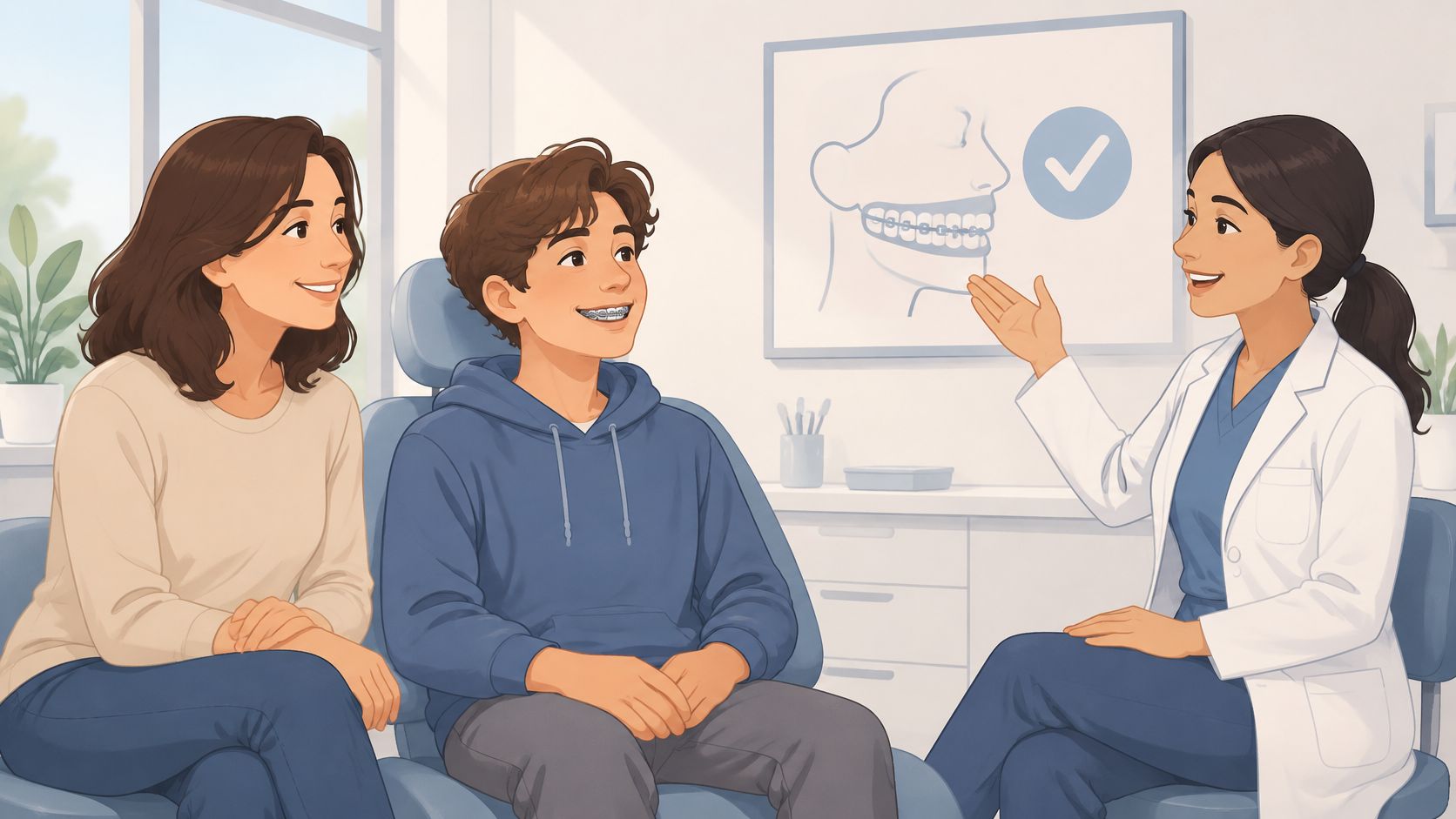
A child's symptoms still matter
Timing is the first clue worth checking. A mild ache that shows up in the days after an adjustment and then fades fits an adjustment-related pattern. A new, severe, persistent, or unusual headache is a different situation, and parents should not assume the appliance explains symptoms that interrupt school, sleep, meals, or normal activities.
The same caution applies to clear aligner trays. A tray change may be relevant to the timing, but timing alone does not establish the cause.
The more useful question is whether this child's symptoms fit a brief adjustment-related discomfort pattern or need an independent medical evaluation. Illness, primary headache disorders, vision problems, sleep disruption, and jaw-muscle strain all remain possible explanations, and those sit outside what an orthodontic adjustment can account for.
What the Headache Research Actually Shows
The research compares groups of children over time, which helps answer a narrower question: do headaches appear more often in groups receiving orthodontic treatment, or in groups that are not? That group-level view is useful, but it works like a wide-angle photo. It can show patterns across many children without explaining why one child has a headache on a given evening.
| Study | What it looked at | What it found |
|---|---|---|
| 2025 systematic review of orthodontic interventions in children and teens | Headache prevalence in treated versus untreated patients | No statistically significant increase in headache odds. The systematic review and meta-analysis discussing headache and orthodontic treatment reports an odds ratio of 1.22, 95% CI 0.78–1.92, p = 0.38 |
| Australian cohort of 340 females aged 12–18 | 135 with current or past braces versus 205 without | No difference in migraine prevalence between the groups, as described in the same review |
| Fixed-appliance study in children | Headache and jaw-joint symptoms in treated versus untreated children | Headache 15.0% versus 16.7%; joint clicking 56.4% versus 46.6%, as summarized in the same review |
| Follow-up of 50 orthodontic patients, average age 12.9 | Symptoms before, during, and immediately after treatment | Headache and several temporomandibular-disorder signs decreased during treatment; joint sounds didn't follow the same pattern, according to the same review |
| Meta-analysis of children and teens with malocclusion | Headache after orthodontic treatment versus no treatment | The systematic review and meta-analysis discussing headache and orthodontic treatment reports 20.09% after treatment versus 18.75% without treatment, with a pooled odds ratio of 0.42 |
| 2025 observational study of 152 orthodontic patients | Headache and painful temporomandibular disorders during orthodontic care | The same review reports headache in 26.4%, headache attributed to temporomandibular disorders in 13.2%, and painful temporomandibular disorders in 23.7% |
The mixed results are easier to understand when the numbers are kept in their own lanes. The 20.09% and 18.75% figures describe the share of children in the compared groups who reported headaches. The pooled odds ratio summarizes multiple study comparisons in one estimate. It uses the size and design of each study, so it is closer to a weighted team score than a simple division problem.
That lower pooled estimate suggests lower odds in the studies that were combined. It still cannot show that braces prevent headaches for an individual child. Studies can differ in how often symptoms were checked, how headache was defined, what orthodontic appliances were used, and what else was happening in children's lives.
The jaw-related findings need the same careful reading. Joint clicking can occur without pain, so it does not automatically mean a child has a painful jaw disorder. A symptom that improves during treatment also leaves an open question: did the appliance help, did the child adapt, or would the symptom have settled with time? Counting headaches among orthodontic patients answers a different question again. It shows how often headaches were reported, not what caused them.
For parents, the practical lesson is narrow and useful. A headache during braces is common enough to ask about and track, especially if it clusters around adjustment visits. The research does not make braces the default explanation for every headache, and it does not turn braces into a headache treatment. It gives families a population-level backdrop for a very individual question: is this a short, expected discomfort pattern, or does the headache need a separate medical look?
Why Your Head Might Ache While Teeth Move
A child may leave a placement appointment feeling comfortable, then notice tender teeth later. At Stellar Orthodontics, braces placement involves no injections, no drilling, and no pain; soreness afterward is a separate response to pressure.
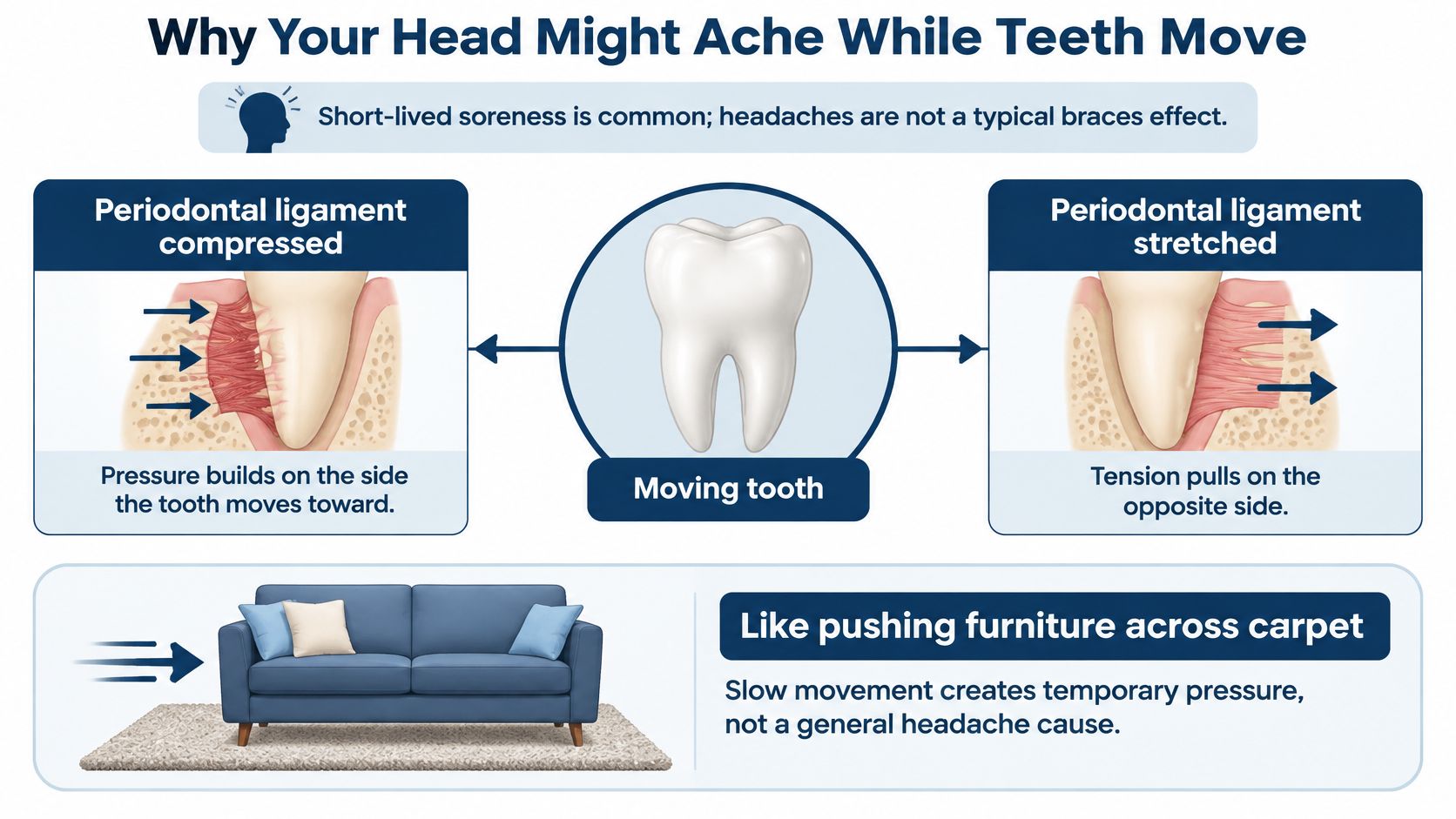
Moving a tooth is like pushing furniture slowly across a carpet. The periodontal ligament, the tissue around the root, is compressed on the side toward which the tooth moves and stretched on the opposite side, which can register as soreness.
The illustration shows that local pressure response.
Possible contributors, not proven causes
Several circumstances may accompany that discomfort:
- Muscle guarding: A child may hold the jaw differently while the bite feels unfamiliar.
- Clenching: An unfamiliar mouth sensation may coincide with more nighttime jaw tension.
- Food and water changes: Tender teeth may lead to skipped snacks, smaller meals, or inadequate drinking.
- Sleep and worry: Interrupted sleep or anxiety before a school day may contribute to the overall headache picture.
These are possibilities to check, not a diagnosis. The clinical study of jaw-related symptoms during fixed orthodontic treatment found no meaningful headache excess compared with untreated children, supporting caution about blaming chronic headaches on routine braces.
Clear aligners use the same pressure biology, so a new tray can also bring tooth tenderness. Soreness is generally occasional rather than continuously intense; the treating orthodontist should confirm the expected pattern for the individual patient.
This video offers additional context about orthodontic treatment.
Matching Your Headache to Its Most Likely Cause
At bedtime, a parent doesn't need to identify the exact headache diagnosis. A useful starting point is to record when it began, whether it's improving, and what came with it.
An adjustment-linked ache, an afternoon headache after missed lunch, and a headache with jaw locking shouldn't all receive the same explanation. Timing helps organize the possibilities, but it can't confirm the cause.
Headache timing and what it usually points to
The time windows below are prompts for describing symptoms, not guaranteed onset or recovery schedules.
| When the headache shows up | What is usually going on | How long it tends to last |
|---|---|---|
| First 3 to 7 days after braces go on or a new aligner tray starts | Possible ligament adaptation to pressure and jaw-muscle guarding around an unfamiliar bite | The orthodontist should confirm the expected timing; worsening symptoms need assessment |
| 4 to 24 hours after an adjustment or wire change | Fresh tooth pressure may overlap with clenching | The orthodontist should confirm the expected recovery pattern rather than promise a fixed duration |
| Late afternoon or evening on school days | Possible clenching, missed meals, low water intake, screen-related strain, or stress | May last hours and recur if the contributor remains; repeated episodes warrant review |
| Alongside jaw clicking, jaw fatigue, or limited opening | Jaw-joint and muscle symptoms may overlap with headache | No fixed duration should be assumed; mention symptoms at the next visit, sooner for pain or restricted movement |
What jaw symptoms can and can't explain
Temporomandibular disorders, often shortened to TMD, involve the jaw joints, chewing muscles, or related structures. Symptoms can include jaw pain, fatigue, joint noises, restricted opening, and locking.
A systematic review of orthodontic treatment and temporomandibular disorders found no evidence that orthodontic treatment causes, prevents, or cures these disorders, and described a 20-year follow-up that found no association with their onset or persistence. A jaw symptom appearing during treatment therefore needs assessment on its own merits, not an automatic assumption that tooth movement caused it.
The distinction between “headache in an orthodontic patient” and “headache attributed to TMD” also matters. Those aren't interchangeable categories, and the presence of clicking alone doesn't establish the source of head pain.
A useful evening check
Parents can record a few concrete observations without repeatedly testing a sore jaw:
- Recent changes: Note an adjustment, new tray, new elastic instructions, or damaged appliance.
- Daily pattern: Record missed food, limited drinking, poor sleep, illness, or prolonged screen use.
- Associated symptoms: Note jaw discomfort, nausea, light sensitivity, fever, or visual changes.
For example, recurring headaches on school afternoons without any relationship to orthodontic visits deserve a broader discussion with the child's clinician. A primary headache pattern, sleep problem, illness, or vision issue may need consideration.
A headache that matches no row is useful information too. Parents shouldn't force an unexplained pattern into an orthodontic explanation.
Home Comfort Steps for the First Few Days
Home care is appropriate for mild, improving discomfort without medical warning signs. Its purpose is to make eating, resting, and normal activities easier, not to suppress a headache that keeps getting worse.
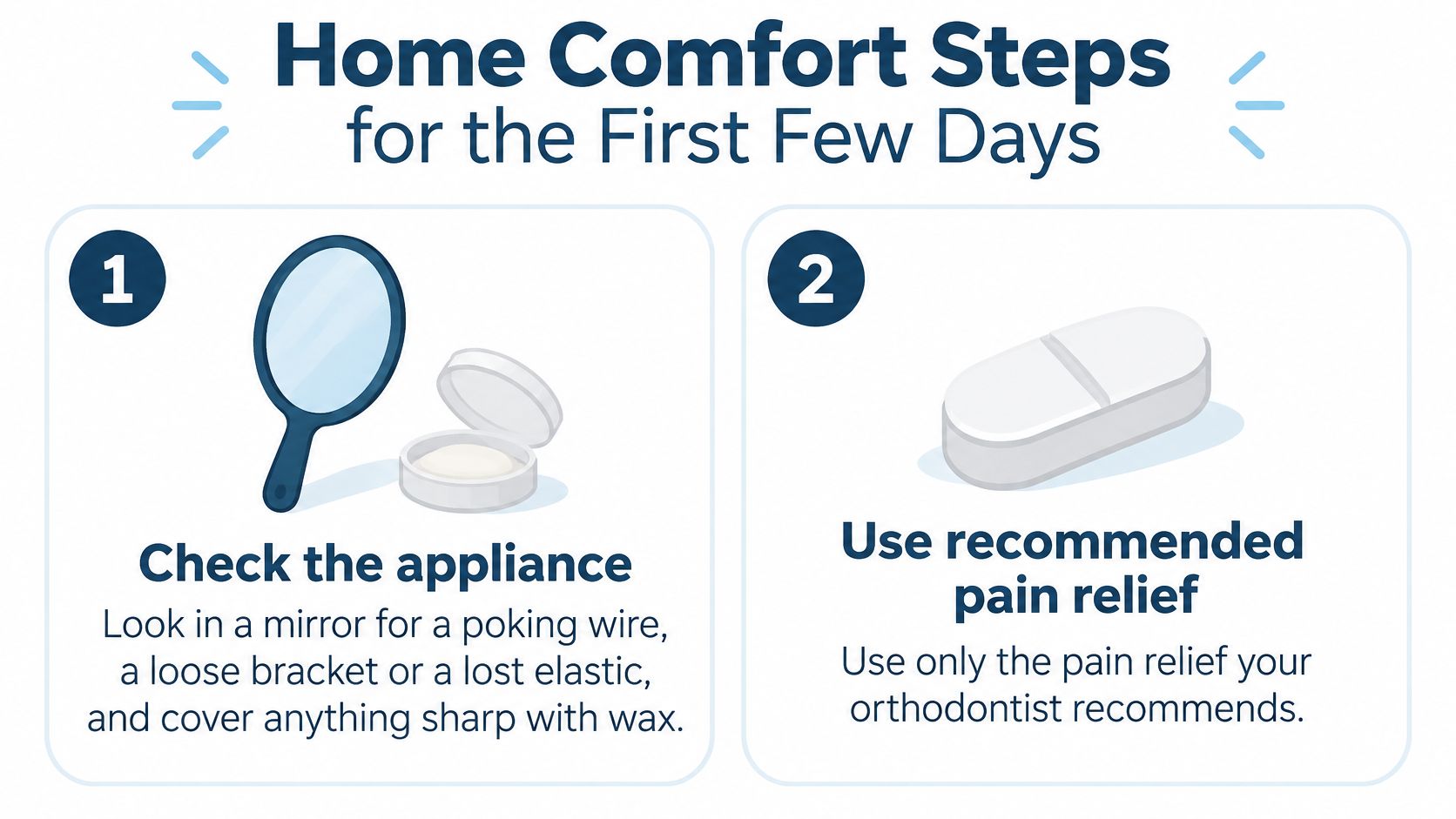
A simple appliance check can identify irritation that needs attention.
A practical comfort routine
Check the appliance in a mirror. Look for a poking wire, loose bracket, or missing elastic, and cover a sharp area with orthodontic wax to reduce rubbing while the office advises on repair.
Use only approved pain relief at the labeled dose. The orthodontist or pediatrician should approve the medicine for the child, and aspirin shouldn't be given to a child for this discomfort.
Match the compress to the discomfort. A wrapped cold pack may soothe early tenderness after tightening, while a comfortably warm compress may help later muscle tightness; neither should be placed against skin at an extreme temperature.
Keep meals gentle but regular. Soft, cool foods such as yogurt and applesauce, regular snacks, and frequent water breaks can make it easier to maintain normal intake without stressing tender teeth.
Protect sleep and report grinding. A consistent bedtime and a quiet wind-down can support rest, while suspected nighttime grinding should be discussed before adding any mouthguard or other appliance.
Keep a brief daily log. Record adjustment dates and headache timing alongside what helped, so the next appointment starts with a clear pattern rather than a vague recollection.
The Stellar Orthodontics guide to braces pain relief offers additional guidance for managing appliance-related discomfort.
Avoid testing the pain: Hard chewing, skipped meals, and stretching a sore jaw wide open won't help identify the headache's cause.
Parents also shouldn't increase medication beyond the approved directions or change appliance instructions independently. If the comfort routine stops helping, the headache escalates, or new symptoms appear, continued home management isn't the right next step.
When to Call Your Orthodontist and When to See a Doctor
Appliance problems belong with the orthodontist. Medical warning signs need medical care. A child can have both, and an orthodontic appointment shouldn't delay assessment of a concerning headache.
Pediatric guidance on evaluating headache warning signs emphasizes progressive worsening, abnormal neurologic findings, focal deficits, persistent vomiting, signs of raised intracranial pressure, rapidly evolving onset, and systemic illness. An isolated vague symptom may be nonspecific, but parents shouldn't try to rule out serious illness at home.
Who to call based on what is noticed
| What is noticed | Call the orthodontist | Get medical care |
|---|---|---|
| Mild soreness or a dull headache in the first week | Yes, if advice is needed; appliance pressure and timing can be reviewed | Usually unnecessary if mild, improving, and without warning signs |
| Loose bracket, poking wire, or cheek irritation | Yes; these are routine repair issues, often addressed the same day when available | Usually unnecessary for isolated irritation |
| Headache with jaw pain, clicking, or limited opening | Yes; request a bite and appliance assessment | Seek assessment for locking or swelling |
| Headache worsening over days or weeks | Yes, to assess possible appliance involvement | Yes; arrange pediatric assessment without waiting for orthodontic review |
| Headache waking a child from sleep | Mention it to the orthodontist | Yes; contact the child's clinician promptly |
| Sudden, exceptionally severe headache | Don't delay medical care for an orthodontic call | Emergency care |
| Headache with fever, stiff neck, rash, or confusion | Not the first call | Urgent medical assessment; emergency care for confusion, stiff neck, or a severely ill child |
| Headache with repeated vomiting or vision changes | Not the first call | Same-day medical assessment; emergency care if sudden or severe |
| Headache with weakness, numbness, or trouble speaking or walking | Not the first call | Emergency care |
| Headache after a head injury or fall | Not the first call | Medical assessment; emergency care for severe or neurologic symptoms |
What to report by phone
The Stellar Orthodontics emergency orthodontist page is relevant for appliance concerns. A useful message includes the last adjustment date, headache onset, any rubbing wire or bracket, and which comfort steps helped.
Don't bend a wire independently, and don't wait out neurologic symptoms. Asking the orthodontist about a plausible appliance problem is appropriate; waiting for orthodontic reassurance when a headache is escalating or neurologic symptoms appear isn't.
Book a Free Consultation at a Delaware Office Near You
An orthodontic consultation can clarify expected comfort patterns without promising that treatment will solve a headache. Bringing a brief symptom log, recent adjustment dates, and any previous headache history helps keep the discussion specific.
At Stellar Orthodontics, the orthodontist who would treat the patient's case runs the consultation. Families can discuss metal braces, clear ceramic brackets, and clear aligners while asking how each option fits the patient's orthodontic needs.
Questions worth bringing
- How are wire changes sequenced? Ask what sensations are expected after a planned change and what would be unusual.
- How often are adjustments needed? Ask how the schedule will be individualized rather than assuming every patient follows the same timetable.
- Would another appliance change the comfort picture? Ask about realistic differences without assuming that switching appliances will prevent headaches.
The consultation is free whether or not treatment proceeds, insurance covers any portion, or a child qualifies for Medicaid braces. At the free evaluation, the orthodontist determines whether the child meets Delaware Medicaid's medical-necessity criteria, and the family learns the result before leaving the office.
Four Delaware locations
| Office | Address |
|---|---|
| North Wilmington | 2304 Concord Pike |
| Middletown | 818 Kohl Avenue |
| Dover/West Dover | 125-2 Greentree Drive |
| Millsboro | 26670 Centerview Drive |
Families should confirm directly with the office how insurance or Medicaid coverage applies to the child's proposed care. An evaluation doesn't itself promise coverage.
A free orthodontic consultation can be booked at the location closest to home, without a commitment to treatment. A headache with medical warning signs should go to a doctor first rather than wait for that appointment.
Stellar Orthodontics offers free consultations to help Delaware families understand orthodontic options, expected soreness, and appliance-related concerns. Visit Stellar Orthodontics to arrange an evaluation in North Wilmington, Middletown, West Dover, or Millsboro and bring any headache questions or symptom notes.