
A parent in Middletown scrolls through smile photos late at night, wondering whether her daughter's crowded front teeth could look like any of them. Some pictures show barely noticeable brackets. Others show removable trays, dramatic before-and-after changes, or smiles photographed under bright studio lights. It's hard to tell which images offer a useful comparison.
Clear braces images can show appearance and visible changes in alignment. They can't establish a diagnosis, predict treatment length, or promise the same result for another patient. Even the phrase clear braces can cause confusion, since ceramic brackets and removable clear aligners aren't the same appliance.
A useful gallery includes more than polished finished smiles. Starting photos, progress pictures, everyday snapshots, and close-ups of the actual appliance help families understand both the appearance and the work involved.
For Delaware families considering Stellar Orthodontics in North Wilmington, Middletown, Dover/West Dover, or Millsboro, the most helpful approach is simple: save a few relevant examples and bring specific questions. These seven photo categories can help parents, teens, and adults separate an attractive image from information that supports a treatment decision.
Table of Contents
- 1. Before-and-After Smile Photo Sets
- 2. Treatment Stage Progression Photos
- 3. Different Smile Types and Bite Examples
- 4. Clear Ceramic Braces vs. Metal Braces vs. Clear Aligners Comparison Photos
- 5. Patient and Parent Perspective Photos
- 6. Everyday Life With Braces Photos (Eating, Sports, and Hygiene)
- 7. Home Smile Tracking Photo Guide
- How each type of clear braces image helps families decide what to look at first
- Turning clear braces photos into a plan for your family
1. Before-and-After Smile Photo Sets
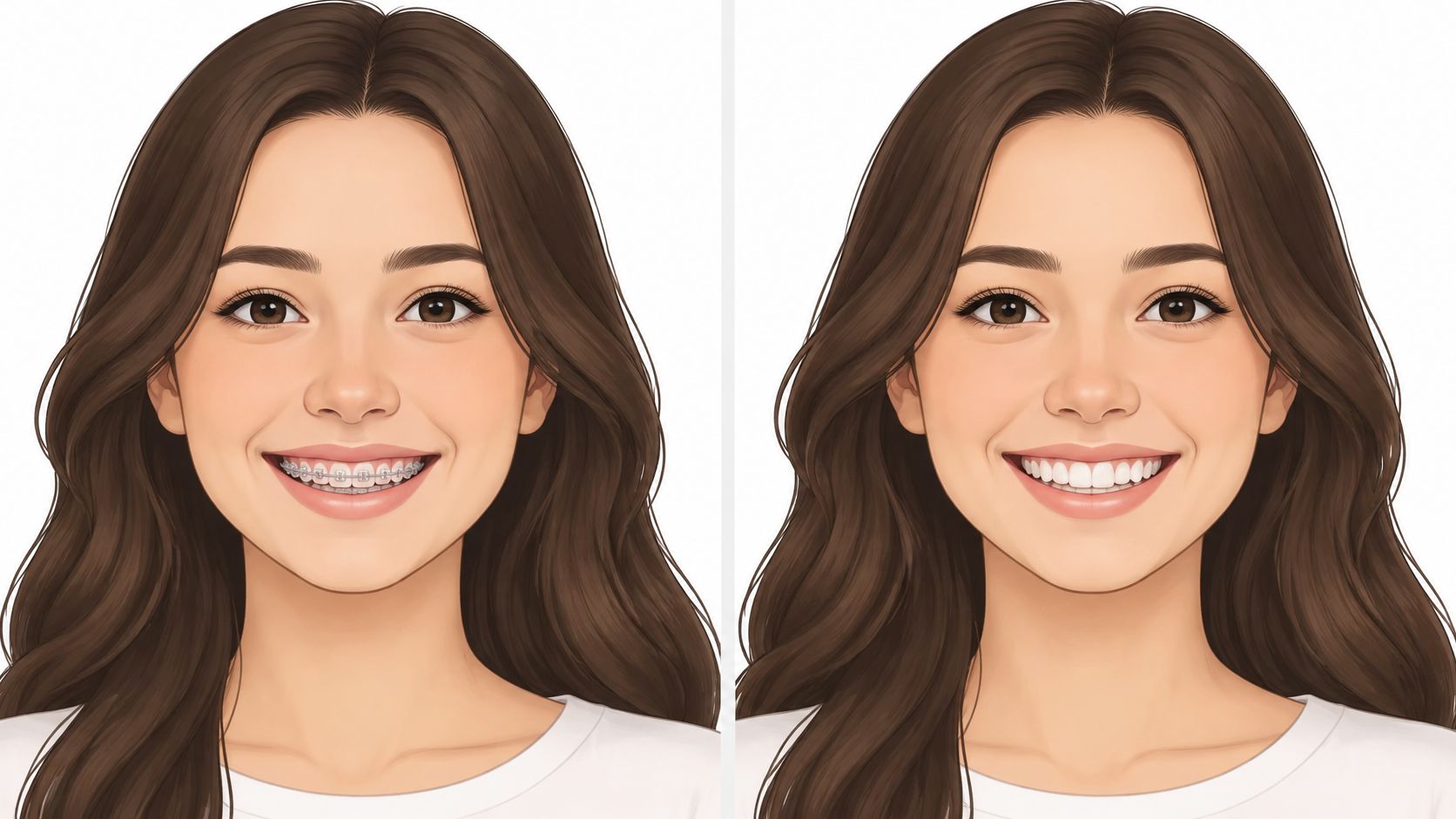
Before-and-after sets make visible changes easy to recognize. A teen's overlapping lower front teeth may appear more evenly aligned afterward, while an adult's starting spaces may no longer be visible. Those examples illustrate different treatment goals, even when both finished smiles look straight.
The image above depicts metal braces, not clear ceramic brackets. That distinction matters because a finished smile alone doesn't identify which appliance produced it. Families browsing ceramic braces before-and-after examples should look for an explanation of the starting concern, the appliance used, and the treatment goals.
What makes a comparison useful
- Look for matching conditions. Similar camera angles, lighting, head positions, and smile expressions make changes easier to judge. Natural light can help, but consistent lighting matters more than a flattering setting.
- Look beyond the front teeth. Side views can reveal relationships between upper and lower teeth that a broad smile hides.
- Check the appliance description. Ceramic braces, metal braces, and aligners may appear in the same gallery. They shouldn't be treated as interchangeable treatment recommendations.
A study comparing aesthetic brackets with tooth-shade tabs found that bracket composition and brand affected color and translucency. A bracket that blends into another patient's teeth therefore isn't an exact preview of its appearance on someone else.
Practical rule: A before-and-after pair shows one patient's outcome, not another patient's treatment promise.
A Delaware family's next step is to bring a starting smile photo and a relevant gallery example to a free consultation. The orthodontist can explain which similarities matter and which differences require a different plan.
2. Treatment Stage Progression Photos
A photo of newly placed brackets beside a mid-treatment image can show how a treatment sequence develops. Look at the start, placement, mid-treatment, and retainer stages together. This progression helps distinguish active treatment from the work of maintaining the result. A retainer photo shows the next phase, not proof that teeth will stay unchanged without following the orthodontist's instructions.
Appearance can change during treatment
Freshly placed ceramic braces are only one appearance reference. A laboratory study of ceramic bracket discoloration found discoloration across the tested systems and solutions, with coffee producing the greatest color change. The lab results do not predict exactly how a particular patient's brackets will look.
A useful progression gallery identifies brackets, elastic ties, and adhesive separately. That helps families ask which component appears discolored and whether cleaning, replacement, or another response is appropriate.
The appliance affects what each image can show:
- Ceramic braces photos can show alignment and changes in bracket or tie appearance.
- Metal braces photos can show tooth positions without tooth-colored brackets blending in.
- Aligner photos should indicate whether trays were worn. A tray-free smile does not show how visible the appliance is during everyday wear.
Photos show visible changes, but they cannot establish whether treatment is progressing as planned or explain what is happening with the bite. Families can compare the stage sequence with the orthodontist's explanation at scheduled visits. Attendance and prescribed elastic or aligner wear also belong in that conversation, since images cannot show how consistently the plan has been followed. Before choosing ceramic braces, metal braces, or aligners, a Delaware family can ask the orthodontic team which stages and appliance details to expect in their own photo record.
3. Different Smile Types and Bite Examples
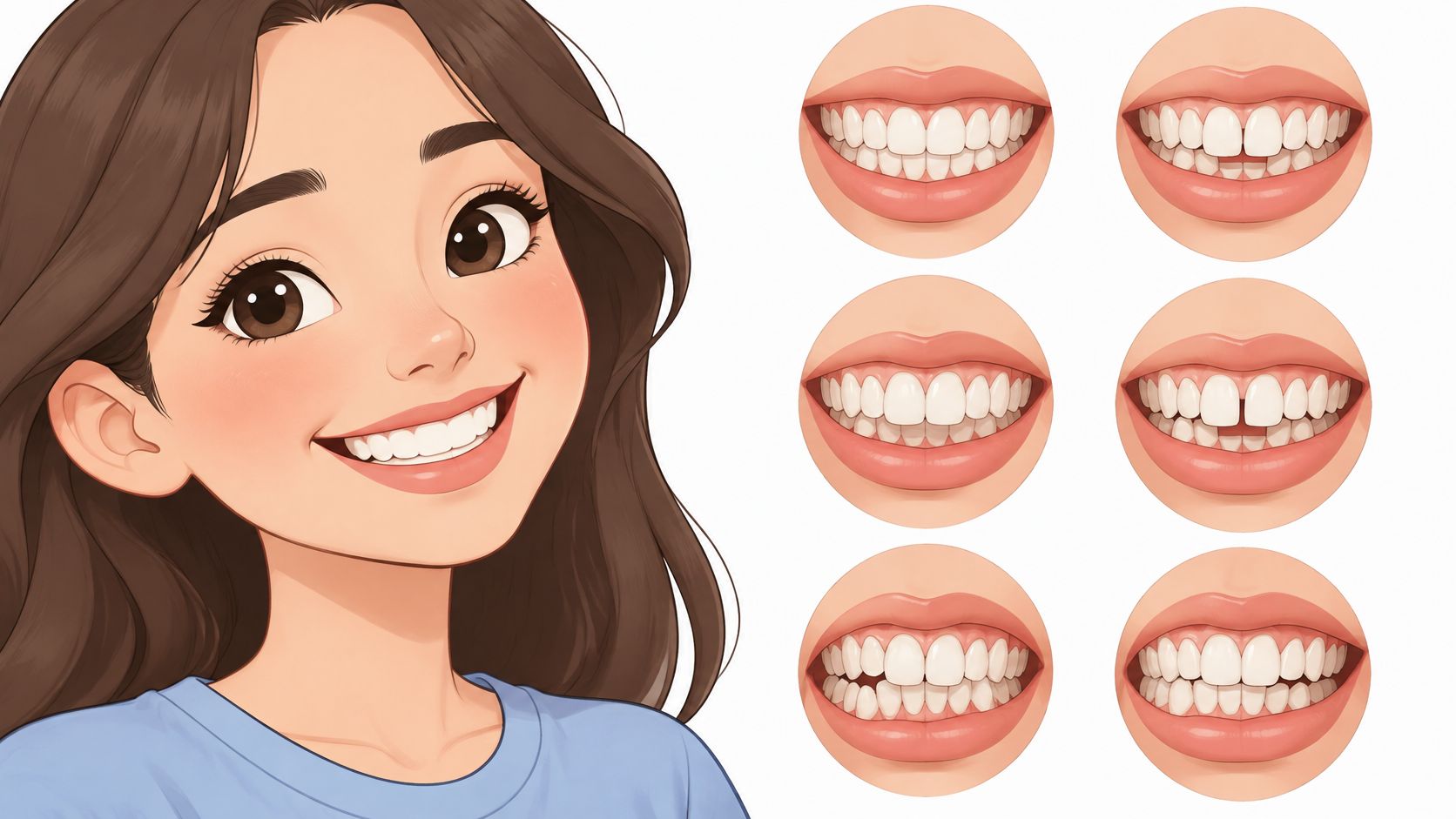
A smile can look crowded without revealing the full bite concern. Galleries organized by crowding, spacing, overbite, underbite, crossbite, and open bite help families describe what they notice. The illustration above offers a vocabulary guide, not a diagnostic tool.
For example, an adult may notice a front gap when the back teeth come together. An open-bite photo could help that person explain the concern, but it can't establish the cause or determine whether ceramic braces, metal braces, or aligners are appropriate.
Similar-looking smiles can need different plans
Clinical views should show more than a relaxed smile. A front view with the teeth together, side views, and professional views of the chewing surfaces provide different information. Families shouldn't try to reproduce difficult clinical photographs by forcing a phone or household object into a child's mouth.
The appliance choice follows the evaluation, not the gallery category. Ceramic and metal braces both use fixed brackets and wires, while aligners use removable trays. A picture of someone with a similar overlap doesn't establish that the same approach will suit another patient.
A parent preparing for a consultation can gather:
- A relaxed smile photo showing the concern without filters.
- A comfortable bite photo with the teeth resting together naturally.
- A short history noting thumb sucking, mouth breathing, jaw discomfort, or difficulty biting foods.
Those observations are useful context, not proof of a diagnosis or its cause. For a child with a possible crossbite, an in-person examination is more useful than matching online pictures.
Families in North Wilmington, Middletown, West Dover, or Millsboro can book a free consultation to discuss the concern and appropriate timing. Parents don't need to identify the bite type correctly before seeking an evaluation.
4. Clear Ceramic Braces vs. Metal Braces vs. Clear Aligners Comparison Photos
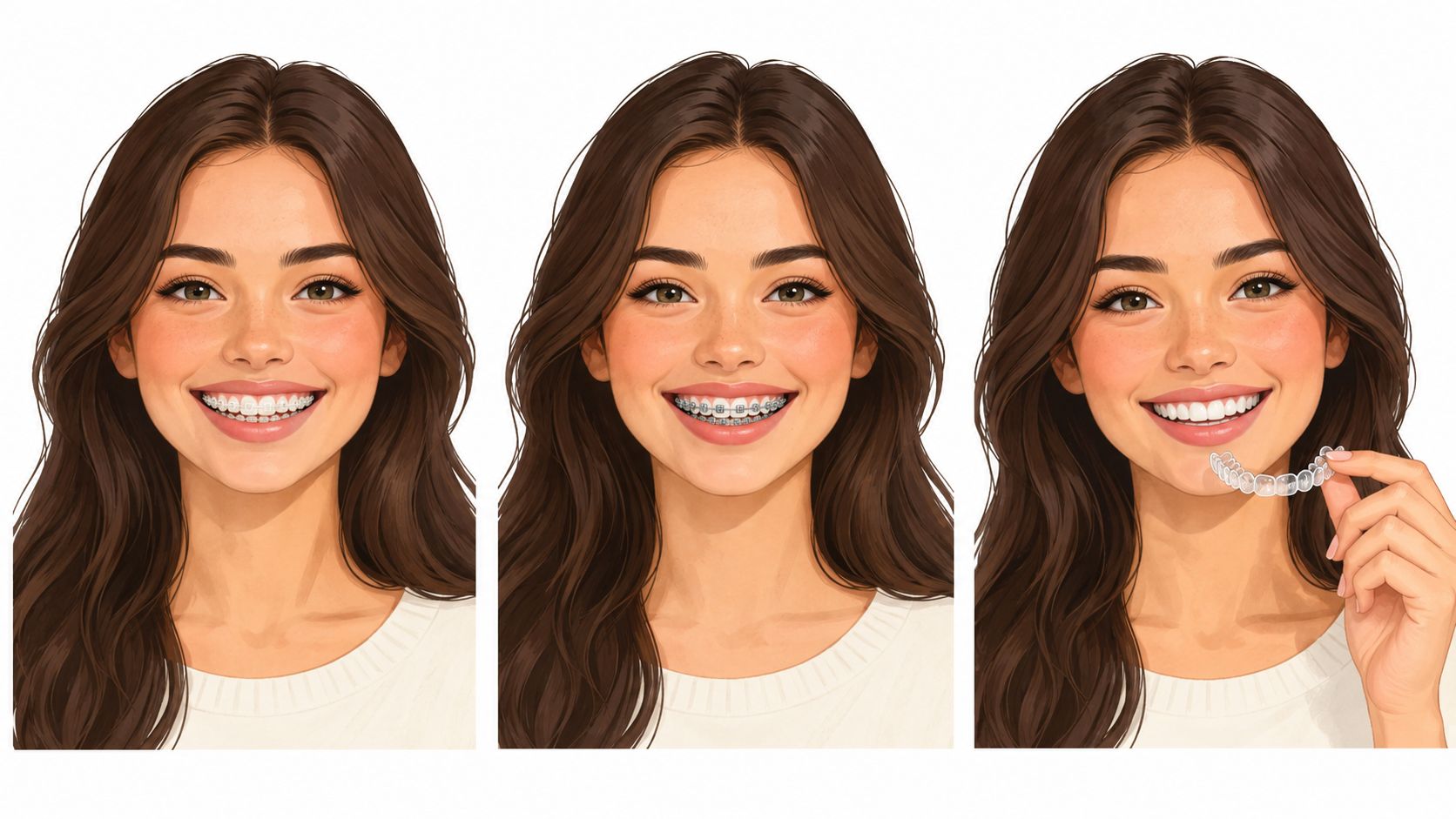
A fair appliance comparison uses similar lighting, framing, and viewing distance. A close-up of metal brackets beside a distant smile with ceramic braces makes the difference look larger than a balanced comparison would. The illustration above shows metal braces and aligner trays, but it isn't a clinical comparison of all the options.
For a teen concerned about school photos, a normal conversational-distance smile may be more relevant than a magnified tooth close-up. Both views still matter: one shows social appearance, while the other reveals brackets, wires, ties, or aligner attachments.
- Clear ceramic braces use tooth-colored or translucent brackets. Wires and ties can remain visible, and their appearance depends on the components selected.
- Metal braces have a more visible metallic appearance. Their material properties can be a practical advantage when durability is a concern.
- Clear aligners are removable transparent trays. Photos should show them being worn, including any attachments, rather than only resting beside a case.
The trade-off a smile photo misses
A prospective clinical comparison of ceramic and metal brackets reported higher bracket-failure rates for ceramic appliances, particularly in lower and posterior regions. That finding supports a discussion about bracket placement and breakage prevention, not a blanket conclusion that ceramic braces are unsuitable.
The ceramic braces versus metal braces guide can help families prepare questions about appearance and daily care. A useful question is whether ceramic brackets would be used throughout treatment or only in selected visible areas.
Stellar Orthodontics offers clear ceramic braces, metal braces, and Invisalign at its Delaware locations. The practical next step is an examination that considers the bite, care routine, and patient's preferences together.
5. Patient and Parent Perspective Photos
A school-picture smile can answer a different question from a clinical close-up: how noticeable does the appliance look in an ordinary portrait? A parent's snapshot of an aligner case beside a school bag can show how treatment fits into a routine. Neither image needs to promise a perfect experience to be useful.
Consider a teen deciding between fixed braces and aligners. A ceramic-braces portrait may address appearance concerns, while a photo of a brushing kit highlights daily cleaning. An aligner snapshot may prompt a practical discussion about keeping trays safe during lunch rather than wrapping them in a napkin.
Personal experience isn't a prediction
A patient's comments about comfort, confidence, or convenience describe that person's experience. They don't establish how another child will adjust or which appliance will be best. Photos paired with specific, permission-based observations are more useful than broad claims that treatment is easy for everyone.
A relatable patient photo can make treatment feel less unfamiliar. It can't replace an individual discussion about responsibilities, concerns, and suitability.
Consent also matters, especially for children and teens. The British Orthodontic Society's consent guidance calls for written consent for visual recordings, an explanation of their purpose and possible future use, and information about withdrawing consent without compromising care. This is professional guidance, not a statement of Delaware law.
Families can ask whether permission covers clinical records, educational use, public sharing, or separate choices for each. A child's comfort with sharing deserves attention alongside the parent's decision.
Before a free consultation at Stellar Orthodontics, parents can invite their child to identify the most important question: appearance, eating, cleaning, sports, or remembering trays. That answer makes patient-perspective photos more useful than choosing the happiest-looking smile.
6. Everyday Life With Braces Photos (Eating, Sports, and Hygiene)
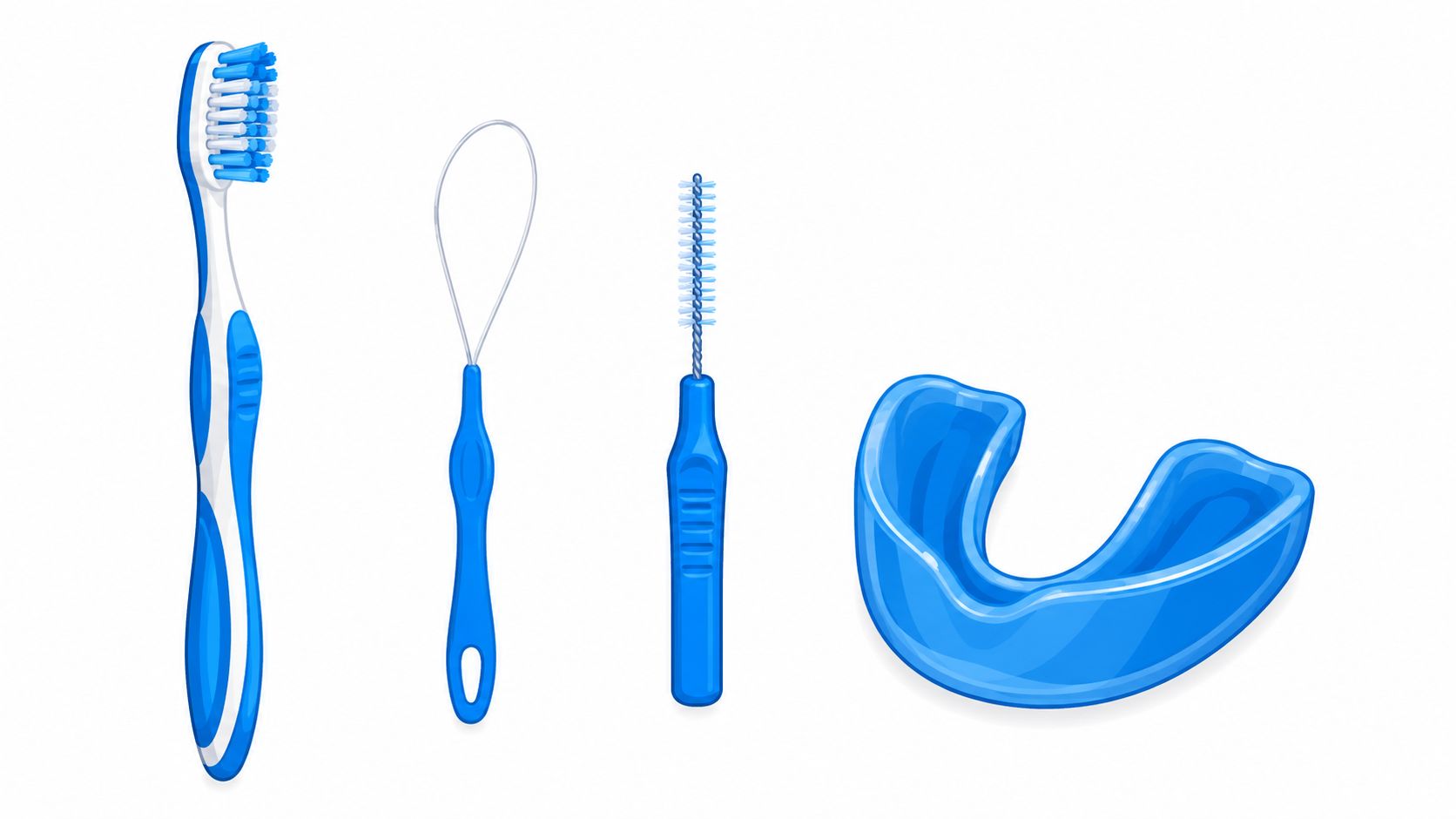
A toothbrush, floss threader, and small interdental brush may offer more practical information than another finished-smile portrait. Everyday-life photos show what patients need to manage around meals, school, and sports. The tools pictured above are examples, not a personalized cleaning prescription.
For a student heading from class to soccer practice, a useful setup includes a travel toothbrush, suitable flossing supplies, orthodontic wax, and a protective mouthguard selected with professional guidance. A photograph can show the equipment, but the team still needs to demonstrate how it should fit or be used.
Match the routine to the appliance
- Ceramic and metal braces: Cleaning must reach around brackets and along the gumline. Families should request a demonstration of floss threaders and correctly sized interdental brushes.
- Clear aligners: Trays need a safe case during meals and a cleaning routine appropriate for the material. Removal doesn't eliminate the need for thorough tooth cleaning.
- Sports protection: A mouthguard must accommodate the appliance and changing tooth positions. A generic product photo can't establish an appropriate fit.
The foods-to-avoid-with-braces guide gives families a starting point for discussing hard and sticky foods. The consultation should turn that list into realistic lunch, snack, and meal choices.
Appearance care deserves equal attention. A review of aesthetic bracket color stability describes discoloration associated with pigmented exposures and differences among materials. Clear doesn't mean permanently stain-proof, and families shouldn't assume that harder brushing will reverse every color change.
Useful next step: A printed cleaning routine and an in-person demonstration are more valuable than a photograph of a perfectly arranged bathroom counter.
7. Home Smile Tracking Photo Guide
A clear photo can help a family explain what has changed or what feels different. For example, a parent may want to show how an overlapping tooth looks, while an adult may want to document how an aligner fits around one tooth. Home photos support appointment discussions, but only an orthodontic examination can assess treatment progress.
Keep the setup simple and repeatable
Use a familiar spot and keep the phone at the same height and distance. In the video, watch how the camera stays steady and the smile remains framed consistently. That makes it easier to compare images without mistaking changes in angle or lighting for changes in the teeth.
- Use steady lighting. Face a window to reduce harsh shadows. Turn off beauty filters and color effects, which can alter how brackets or teeth appear.
- Keep the head level. Use a relaxed smile with teeth showing. An exaggerated grin is harder to reproduce and may hide how the teeth meet.
- Label appliance status. Note whether aligner trays were in or out. With fixed braces, photograph the area of concern close enough to show it clearly, not just in a distant smile.
- Add useful context. Record which tooth or appliance area concerns you, when the issue began, and whether anything changed during eating or cleaning. Note a rough wire, a bracket that feels loose, or a tray that seems cracked or no longer fits. These details help the team understand what the photo may not show.
A materials review of ceramic bracket optics explains that translucency varies with material and bracket characteristics. Consistent lighting can reduce visual differences between photos, but a phone image cannot measure bracket color precisely.
Contact the Stellar Orthodontics office if a bracket feels loose, an aligner cracks, or discomfort continues for more than a few days. Significant pain, swelling, or an injury calls for prompt professional advice. Don't move wires, modify trays, or change prescribed wear based on a photo alone.
How each type of clear braces image helps families decide what to look at first
A gallery is more useful when each image answers a different question. Use these comparisons to focus on appliance choice, daily demands, and what a photo can reasonably show. No single image establishes which option suits a particular bite.
| Appliance | What to look for in the photo | What it cannot show | Practical point to compare |
|---|---|---|---|
| Clear ceramic braces | How brackets and wires appear against the teeth in a natural smile | How visible they may look under different lighting, or how they feel during treatment | Ask how to clean around brackets and wires |
| Metal braces | The brackets and wires, including how they appear in a smiling or speaking photo | Whether their appearance will feel acceptable to the individual wearing them | Compare the visibility of metal brackets with ceramic brackets in similar photos |
| Clear aligners | Whether trays are shown in or out, and how the smile looks in each case | Whether someone will wear the trays as directed or how well they fit a specific treatment need | Ask about prescribed daily wear and where trays should be stored during meals |
Ceramic braces offer a less noticeable bracket option than metal braces, while both use fixed brackets and wires. Aligners have a different daily routine: they are removable, so eating and cleaning do not happen around fixed hardware, but consistent wear is part of the plan. A photo can show appearance, not how well a person will manage that routine.
Compare like with like. A close-up of ceramic brackets beside a distant photo of metal braces can make the difference look larger than it is. Look for similar angles and expressions, then consider how each option fits school, meals, sports, and cleaning habits. For a Delaware family, a practical next step is to ask during a consultation which routine would be easiest to maintain at home and school.
The gallery categories also serve distinct purposes. Before-and-after pairs illustrate visible change, while progression photos show treatment at different stages. Bite examples show patterns in tooth position, but not their cause. Perspective and everyday-life photos can help families discuss comfort, confidence, and routines. Home tracking images record appearance over time, but they do not replace an orthodontic assessment.
Use each photo to raise a focused question. For example, ask whether a bracket close-up reflects typical visibility, or whether an aligner photo shows trays in place. That keeps the comparison practical without treating a gallery as a prediction of an individual result.
Turning clear braces photos into a plan for your family
A saved photo can help your family explain what matters most, whether that is how visible an appliance looks or what change you hope to discuss. Treat each image as a conversation starter. It cannot show which treatment suits an individual case, the appointments involved, or the care required at home.
Bring questions, not a promised outcome
Choose a few relevant images rather than saving a full gallery. Add a brief note about routines or concerns that could affect daily treatment, such as school activities, sports, or discomfort. This gives the orthodontic team a focused starting point without asking a photo to settle the decision.
Keep the consultation questions specific:
- Treatment choice: What makes ceramic braces, metal braces, or Invisalign suitable options for this case?
- Daily routine: What would care involve at meals, during sports, and at home?
- Planning: Which goals are realistic, and what details still need an examination?
A digital scan can add useful detail to that discussion. The review of extended-reality applications in orthodontics describes visualization tools that can help explain tooth movement, while noting limits in the evidence. A simulation can help communicate a treatment plan, but it does not establish the final result.
Families can bring saved photos to a free consultation with iTero digital scanning at Stellar Orthodontics' North Wilmington, Middletown, West Dover, or Millsboro locations. The practice offers clear ceramic braces, metal braces, and Invisalign for children, teens, and adults across Delaware. A simple photo log and a clear description of your concern can help start a practical conversation about treatment goals.