.png)
A teen pulls clear aligners out at the school lunch table, wraps them in a napkin, and reaches for a sandwich. A parent watching from across the room may wonder whether the trays will be found again, whether they'll smell by morning, or whether a quick rinse really counts as cleaning. Those questions are common because aligners look simple, but they sit closely against the teeth for most of the day and need a routine that works at home, school, and on busy Delaware weekends.
The good news is that how to clean Invisalign doesn't need to become a complicated project. A few repeatable habits, the right water temperature, and a sensible deeper clean can help keep trays clear and comfortable. The routine below matches each method to the moment a patient is most likely to use it.
Table of Contents
- Why Invisalign Cleaning Matters from Day One
- Your Everyday Invisalign Cleaning Routine
- Choosing the Best Products to Clean Invisalign
- A Simple Weekly Deep Clean for Invisalign
- Common Invisalign Cleaning Mistakes to Avoid
- Fixing Stains, Odor, and Cloudy Aligners
- Keeping Invisalign Clear Between Visits
Why Invisalign Cleaning Matters from Day One
At lunch, a teen may remove an aligner, set it beside a tray, and promise to remember it after eating. The napkin seems harmless, but it can hide the tray from view and send it into the trash with the wrappers. A case, a water rinse, and a small aligner brush are much safer habits than relying on memory.
Clear aligners sit against the teeth for much of the day, creating a close, warm space where saliva, plaque, and food pigments can collect. If food residue remains on the teeth before the trays go back in, the aligners can hold that residue against enamel. Poor hygiene can contribute to unpleasant odor, gum irritation, staining, and tooth decay, so clean teeth matter just as much as clean plastic.
A foundational scanning electron microscopy study examined nine cleaning strategies and found that only one protocol was statistically effective at removing bacterial biofilm. That protocol used 5 minutes of ultrasonication at 42 kHz with a 0.3% benzalkonium chloride detergent, with a statistically significant difference at p < 0.05. The same study found that water-only rinsing was significantly less effective than the other tested methods, as reported in this study of cleaning strategies for removable aligners.
Clean trays support a clear treatment routine
A tray that becomes stained, rough, or misshapen may be more noticeable and less comfortable. Heat can change the shape of the plastic, while scratches can create places for buildup to collect. Cleaning from the first day helps a patient avoid waiting until odor, cloudiness, or a fit problem forces a change.
Parents can frame the habit as part of wearing aligners, not as an extra chore. A teen who learns to rinse after removal, brush gently, and use the case every time has a routine that can travel from North Wilmington to school, sports practice, and family trips without much disruption. Families can also review what Invisalign is and how it works before treatment begins, so cleaning, wearing, and storing the trays feel like one connected process.
Your Everyday Invisalign Cleaning Routine
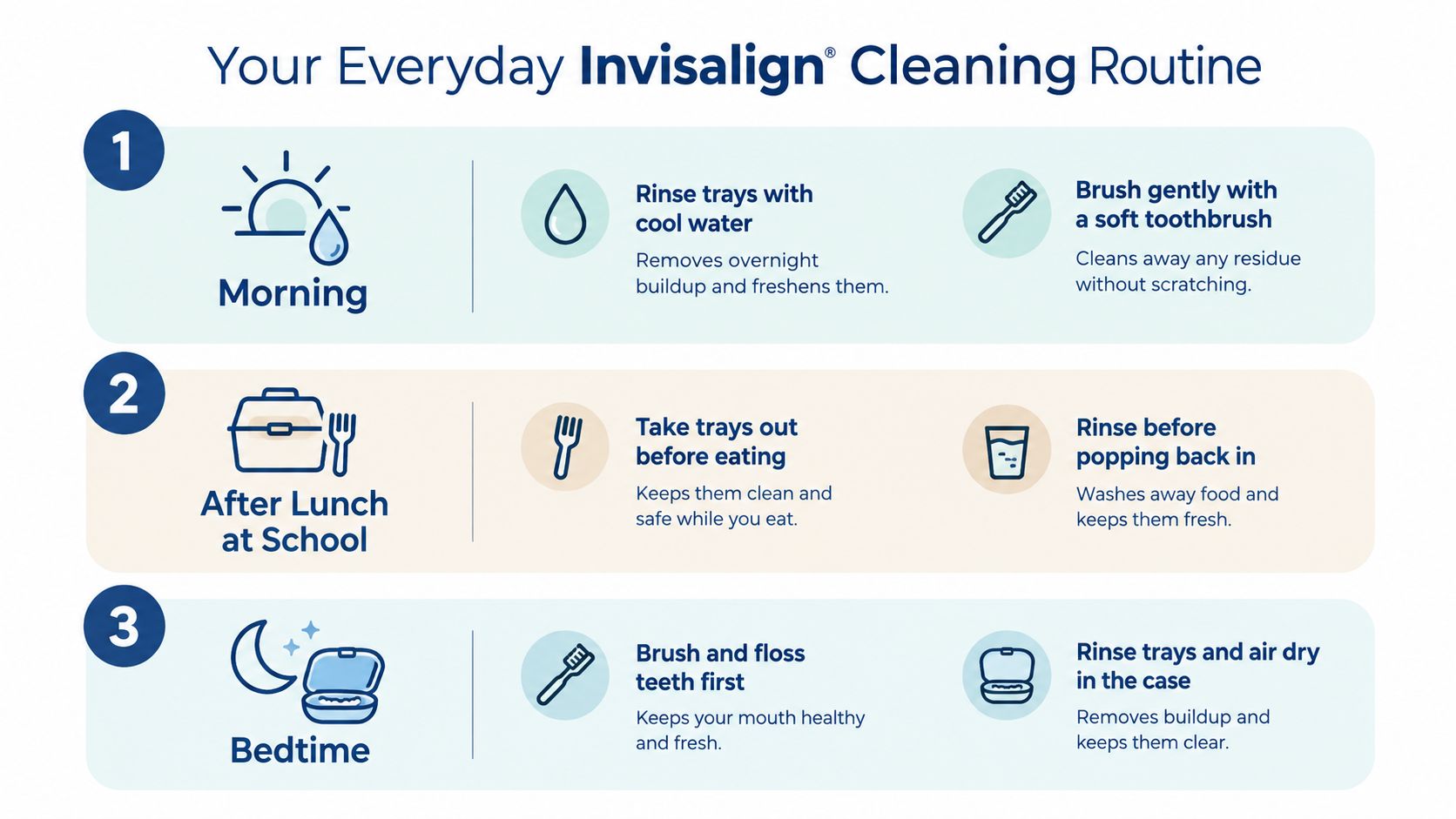
A useful routine follows the day rather than asking a teen to remember one large cleaning session. The morning bathroom, the school lunch break, and bedtime each offer a natural cue.
Morning rush
After removing the aligners, rinse them under cool or lukewarm water. Use a soft-bristled toothbrush reserved for the trays, add a small amount of gentle, clear liquid soap, and brush the inside and outside with light pressure. Rinse thoroughly before reinserting or placing the trays in their case.
Invisalign guidance pairs daily rinsing with gentle brushing and clear soap, while independent guidance also warns against toothpaste and hot water. The daily Invisalign cleaning guidance supports a routine that parents can supervise without buying a large collection of products.
Morning takeaway: Rinse, brush gently with clear soap, rinse again, and put the trays back in clean.
After lunch at school
The trays should come out before eating. After lunch, a teen can rinse the mouth with water, rinse the aligners, and gently swipe the inside with a clean finger under running water if a toothbrush isn't available. That quick step is better than placing food residue back against the teeth, but a proper brushing routine should still happen later.
A case belongs in the backpack, not a napkin or loose pocket. If a case is forgotten, a clean, secure container is safer than wrapping the trays in paper, but the regular case should return to the routine as soon as possible.
Lunch takeaway: Remove before eating, rinse the mouth and trays, then store them safely.
Bedtime reset
At night, the patient should remove the aligners, brush and floss the teeth, then clean the trays with the same soft-brush and gentle-soap method used in the morning. After rinsing, the trays can air-dry in a ventilated case rather than being sealed while wet.
A bedtime routine catches the residue that accumulated during the day and gives the aligners a clean start for overnight wear. The clear-aligner care guidance also describes gentle daily cleaning and deeper soaking as practical parts of ongoing care.
Bedtime takeaway: Clean the teeth, clean the trays, and let the case stay ventilated while everything dries.
Choosing the Best Products to Clean Invisalign
The best product depends on the moment. Gentle clear soap is usually the simplest daily choice because it removes surface film without relying on abrasive particles. A purpose-made crystal soak can suit a deeper refresh, while vinegar or peroxide may be considered when commercial products aren't available, provided the orthodontic team has no different instruction.
Evidence increasingly supports combining physical cleaning with a chemical cleaning method. A review of clear orthodontic appliance disinfection protocols concluded that mechanical and chemical cleaning work best together, while studies have also examined material changes under different solutions. The review of disinfection protocols and aligner materials describes this balance between reducing contamination and protecting the appliance.
| Product | Cleaning Power | Plastic Safety | Ease of Use |
|---|---|---|---|
| Gentle clear liquid soap | Good for daily surface film, saliva, and ordinary odor | Generally gentle when used with a soft brush and rinsed well | Easy for most households |
| Invisalign Cleaning Crystals | Useful for a controlled deeper soak and biofilm reduction | A laboratory study reported no detrimental surface effects during its study period | Convenient, but requires dissolving and soaking |
| White vinegar | Can provide strong microbiological control in some tested protocols | Results depend on concentration, timing, and material | Low-cost, but less standardized |
| Diluted hydrogen peroxide | Useful for stubborn buildup or discoloration when used cautiously | Use only as a diluted, occasional option and rinse thoroughly | Easy to prepare, but requires careful measuring |
A microbiological study reported complete eradication with several tested agents, including neutral detergent, vinegar, and commercial products, while another found lower median bacterial counts with commercial cleaning agents. It also found cleaning crystals more effective than white vinegar, without apparent surface deterioration under scanning electron microscopy, as detailed in this study of cleaning agents and aligner surfaces.
Toothpaste isn't a good tray cleaner because its abrasive particles can scratch clear plastic. Colored mouthwash may leave a tint, and harsh products such as bleach, alcohol-based rinses, boiling water, and denture tablets containing persulfate should stay off the cleaning list unless an orthodontic professional specifically approves them.
A Simple Weekly Deep Clean for Invisalign
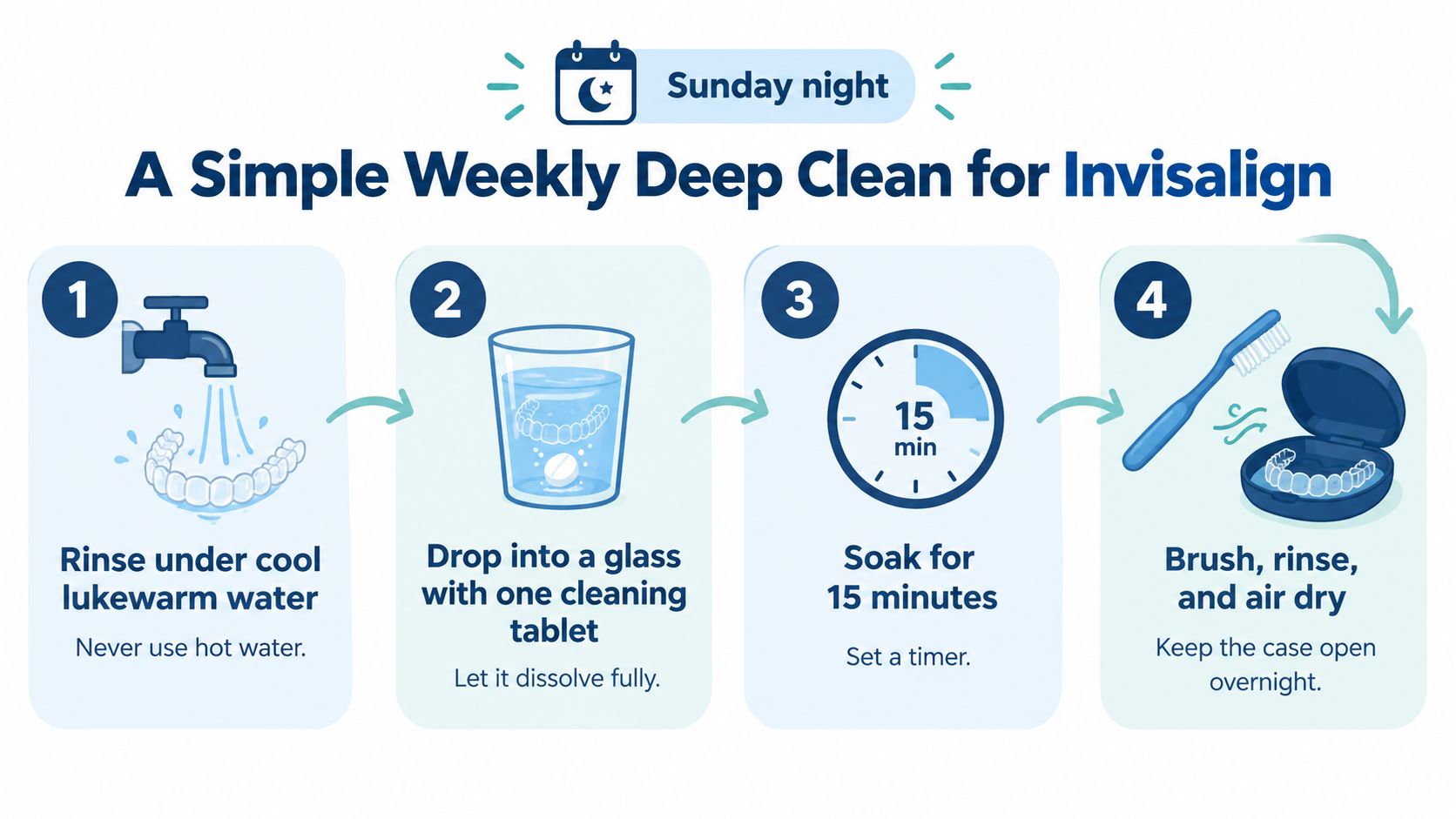
Sunday night works well for families because the routine can happen before bed, when the bathroom is quieter and the next school day is easier to prepare for. The process should be controlled and gentle, not an aggressive scrub.
- Rinse first. Hold the aligner under cool or lukewarm water to loosen saliva film. Hot water isn't appropriate because it may change the plastic shape and affect fit.
- Prepare the soak. Dissolve one packet of Invisalign Cleaning Crystals in lukewarm water in a small glass, following the product directions.
- Set a timer. Place the aligner in the solution for 15 minutes. While it soaks, wash the case with mild dish soap and warm water, then rinse it thoroughly.
- Brush and rinse. Use a soft-bristled brush reserved for aligners, focusing on the inner curves where saliva film collects. Rinse the tray well and air-dry it on a clean paper towel before returning it to a ventilated case.
The routine takes under twenty minutes when the case is cleaned during the soak. Families without crystals may ask the orthodontic office about alternatives. A commonly described option is a one-to-one mixture of hydrogen peroxide and water for 30 minutes, followed by thorough rinsing, but this should remain an occasional alternative rather than an automatic daily habit.
A clean case matters because a damp, dirty container can put residue back onto an otherwise clean tray. Families can also review guidance about retainers and long-term appliance care as treatment moves toward retention.
Common Invisalign Cleaning Mistakes to Avoid
Most cleaning mistakes come from trying to make the job faster. The shortcut may save a moment, but it can leave a tray warped, scratched, stained, or misplaced.
Heat doesn't improve cleaning
Hot or boiling water can soften thermoplastic material and alter the tray's shape. The change may not be obvious when the aligner comes out of the water, yet a subtle distortion can affect how it seats over the teeth. Official product guidance recommends cool, lukewarm, or tepid water instead, as explained in the cleaning crystal instructions.
Toothpaste can make clear trays look dull
Whitening and gritty toothpastes are designed for hard enamel, not clear aligner plastic. Repeated scrubbing can create fine scratches, and those scratches may hold residue that contributes to a cloudy appearance or odor. A separate soft toothbrush and mild clear soap are safer choices for routine tray cleaning.
Lunch storage needs a reliable rule
A napkin is easy to grab and easy to throw away. It also leaves the aligner exposed to food, tables, pockets, and accidental crushing. The simplest family rule is face or case. If the tray isn't in the mouth, it goes into the case.
Colored mouthwash can stain the plastic, while straight bleach or alcohol-based products may be too harsh for regular use. Skipping the case creates other problems, too. Trays can end up in laundry, under furniture, or near pets that may chew them.
Families should also take care around attachments, the small tooth-colored features used with some aligner plans. A patient who notices a loose attachment, a rough tray edge, or a fit change should contact the orthodontic office rather than trying to reshape the aligner at home. More information about how Invisalign attachments work can help parents understand why careful handling matters.
Fixing Stains, Odor, and Cloudy Aligners
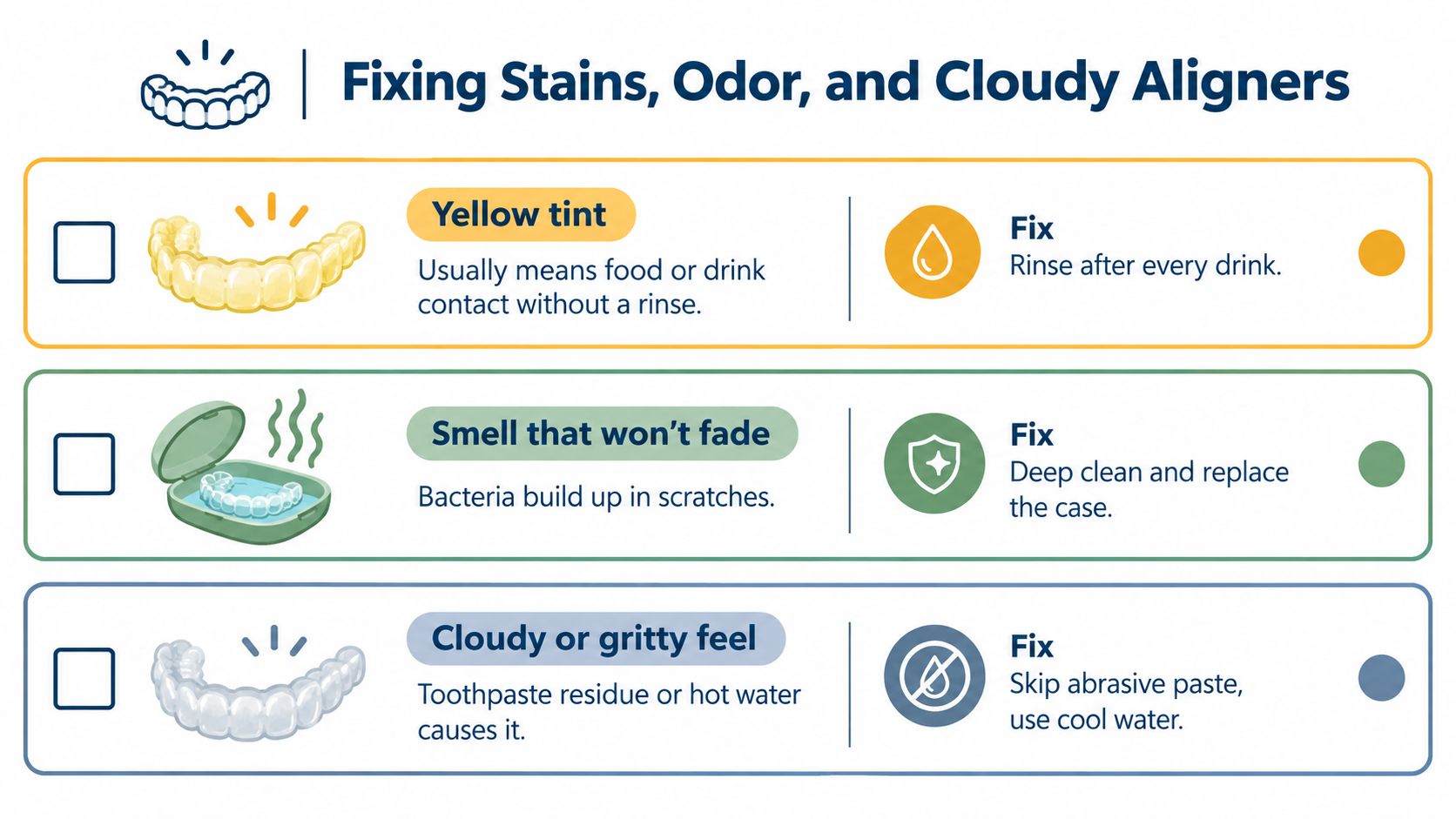
A tray that looks different usually gives a useful clue. The right response depends on whether the problem is a surface stain, bacterial odor, cloudy film, or physical damage.
Yellow tint
A yellow tint often follows contact with coffee, tea, curry, or another strongly colored drink or food. Rinsing after every drink helps prevent new residue. For a mild stain, a cautious diluted peroxide soak may help, followed by gentle brushing and thorough rinsing.
White or cloudy film
A white film or gritty texture often points to plaque, soap residue, or mineral buildup. The first response is a complete daily clean, followed by the weekly crystal routine if the tray remains cloudy. Toothpaste and hot water should be removed from the routine because both can contribute to a dull surface.
Odor that keeps returning
Persistent odor may come from the case rather than the aligner. Wash the case with mild soap and warm water, rinse it, and leave it open to dry. If the smell continues after the trays and case are both cleaned, the orthodontic office can determine whether the tray needs closer inspection or replacement.
Brown spots that don't lift with gentle cleaning may need professional attention. Rough or cracked edges, sharp areas, or a tray that no longer seats fully are not cleaning problems to solve at home. The safer next step is a call to the orthodontic team.
Keeping Invisalign Clear Between Visits
Aligner care works best as an ongoing partnership with the orthodontic team. Appointments can check progress, but everyday choices determine what the trays are exposed to between visits.
A patient can keep the routine manageable by attaching it to existing habits:
- Rinse on removal: Rinse the trays whenever they come out, especially after meals or drinks.
- Clean before reinserting: Brush the teeth before putting the aligners back whenever possible.
- Use the case: Store trays in the case, never in a napkin, pocket, or open backpack.
- Choose plain water: Remove aligners for coffee, tea, soda, juice, and other drinks besides water.
- Protect them from heat: Keep trays away from hot water, hot cars, and other heat sources.
At a routine visit, the orthodontic team may check how the tray fits, assess the bite, and look for signs of buildup or damage. A patient should call sooner if odor persists after cleaning, white calcium spots appear, yellowing doesn't improve, edges feel rough or cracked, or the tray no longer seats fully.
Consistent care helps patients avoid interruptions caused by damaged or poorly fitting trays. It also gives parents a clear way to support treatment without inspecting every step. A teen can carry a case and a spare soft brush, while the office remains available when a problem doesn't respond to ordinary cleaning.
Families exploring clear aligners can book a free consultation at Stellar Orthodontics, where the team can explain cleaning, fit, storage, and everyday wear for children, teens, and adults. Free consultations are available at the North Wilmington, Middletown, Dover/West Dover, and Millsboro locations, so Delaware patients can choose the office that fits their routine.