.png)
A pediatric dentist has just mentioned that a child may have an overbite. The word can sound more serious than it is, especially when a parent is trying to understand whether the concern involves appearance, tooth wear, jaw growth, or all three. The next question often follows quickly: Can metal braces correct it, and what exactly do they change?
The short answer is that metal braces are a precise, well-established way to move teeth and improve how the upper and lower teeth meet. They can correct many dental overbites, but they don't substantially reshape the jaws. That distinction matters for diagnosis, timing, expectations, and whether another appliance or surgical planning could eventually enter the conversation.
Table of Contents
- What an Overbite Really Means for Your Child
- How the Parts of Metal Braces Work Together
- The Mechanics That Actually Move an Overbite
- Real Treatment Timelines by Case Severity
- Metal Braces vs Invisalign and Other Options
- A Delaware Family's Overbite Journey at Stellar
- Risks, Side Effects, and Common Myths
- Your Next Step at Stellar Orthodontics
What an Overbite Really Means for Your Child
An overbite describes the vertical overlap of the upper front teeth over the lower front teeth when the mouth closes. A small overlap is normal and helps the front teeth guide the bite. Concern rises when the overlap is deep, the lower teeth contact the roof of the mouth or gum tissue, the upper incisors lean significantly, or the bite affects chewing and comfort.
A parent may notice that a child's upper front teeth look prominent, but the visible overlap doesn't tell the whole story. The orthodontist also examines the back teeth, tooth angulation, facial proportions, jaw relationship, crowding, and whether the lower incisors are being pushed into soft tissue. The same-looking front-tooth overlap can come from different combinations of tooth position and jaw structure.
The NHS explanation of orthodontic treatment lists an improper meeting of the upper and lower jaws, including an overbite or underbite, as a reason braces may be used. Orthodontic treatment aims to help the upper and lower teeth meet properly when the mouth closes, not only to make the front teeth look straighter.
Why the cause matters
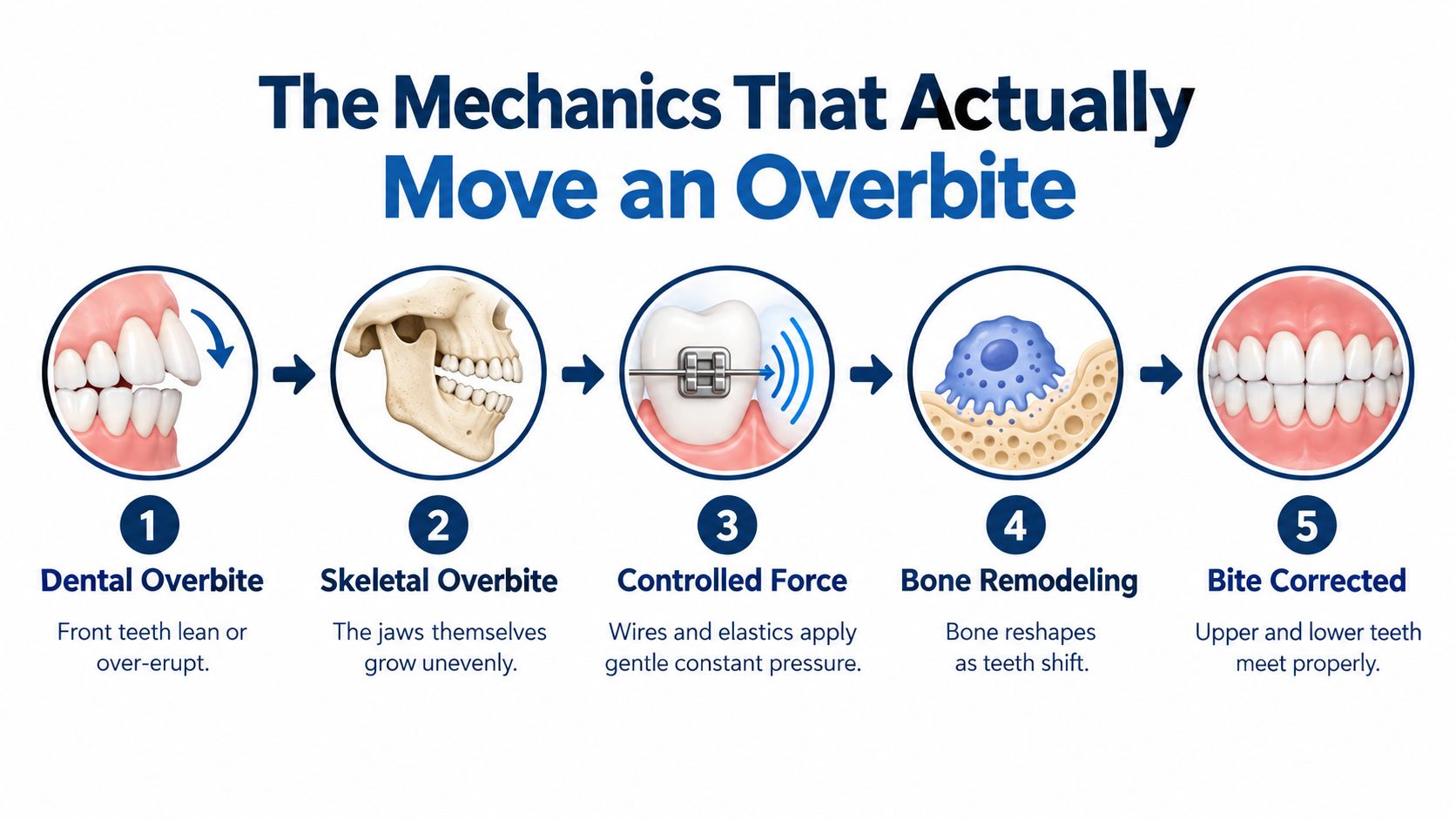
A dental overbite mainly involves the teeth. The upper incisors may lean inward, the front teeth may have erupted too far, or the back teeth may sit in a way that increases the vertical overlap. Metal braces can often address these relationships by moving individual teeth through controlled forces.
A skeletal overbite involves the relationship and growth pattern of the jaws. Braces can reposition the teeth to improve the bite, but they can't substantially change jaw growth. A mixed case has both dental and skeletal components, so the plan may need to balance tooth movement with the child's growth stage and facial pattern.
A useful consultation question: “Is the overbite mainly dental, skeletal, or mixed, and what part of the correction can braces realistically provide?”
For a child or teen in North Wilmington, Middletown, Dover/West Dover, or Millsboro, timing may matter because the orthodontist can consider growth, tooth eruption, and the child's ability to cooperate with instructions. An evaluation doesn't automatically mean immediate braces. It gives the family a clearer explanation of what needs correction and why.
How the Parts of Metal Braces Work Together
Metal braces work like a small track system attached to the teeth. Each bracket is bonded to a tooth and acts as a handle. The archwire runs through the bracket slots and supplies the shape and guidance that encourage the teeth to move. Bands may support the back teeth, while elastics can connect the upper and lower arches when the bite needs additional direction.
The system doesn't force a tooth into place in one sudden movement. The orthodontist adjusts the wire and supporting components over time, and the tissues around each tooth respond gradually. As the teeth shift, bone around the roots changes in response to the applied force. The exact schedule for adjustments depends on the treatment plan, the child's response, and whether additional mechanics are needed.
What each component contributes
- Brackets guide tooth position. Their slot orientation helps the orthodontist control tipping, rotation, and the relationship between the tooth crown and root.
- Archwires provide the main direction. Different wire shapes and sizes can help level the bite, coordinate the arches, and guide the front teeth.
- Elastics add a relationship between arches. When prescribed, they help the upper and lower teeth meet in a more useful pattern. Their effectiveness depends heavily on wearing them as directed.
- Bite-opening aids create clearance. Bite turbos or related additions can temporarily prevent the teeth from locking together while other teeth move.
A child may feel pressure, tenderness when chewing, or irritation from a new bracket during the first part of treatment or after an adjustment. Soft foods, orthodontic wax, and careful brushing can make that transition easier. Persistent pain, swelling, or a loose bracket deserves a call to the orthodontic office rather than guesswork at home.
The design philosophy behind modern fixed appliances has a long history. Edward H. Angle opened the Angle School of Orthodontia in St. Louis in 1900 and later developed the Edgewise appliance in 1925, which allowed orthodontists to control tooth position in three dimensions with an archwire placed into a bracket slot, as described in this history of Edward Angle and fixed appliances.
Families comparing appliance styles can also review the types of metal braces available. The important question isn't which piece looks most modern. It's whether the chosen system gives the orthodontist the control needed for the child's particular bite.
The Mechanics That Actually Move an Overbite
Metal braces correct an overbite mainly through controlled dentoalveolar movement, meaning they change the position and angulation of the teeth and the supporting bone around them. They don't substantially change jaw growth. A systematic review of deep-bite treatment describes mechanics such as leveling the curve of Spee, uprighting or retracting incisors, and using anterior intrusion or molar extrusion according to facial pattern and periodontal limits, as summarized in this review of deep-bite treatment.
That distinction becomes easier to understand through two examples. If the upper front teeth lean inward and the lower incisors have over-erupted, braces may improve the overlap by changing those tooth positions. If the upper jaw and lower jaw have a significant skeletal mismatch, braces may improve the way the teeth meet, but the underlying jaw relationship may remain.
How the orthodontist opens a deep bite
Intrusion moves selected teeth slightly into the supporting bone. For a deep bite, the orthodontist may use controlled intrusion of the front teeth when the facial pattern, root position, gum health, and bone limits make that approach appropriate.
Extrusion moves a tooth farther into the mouth. In some patients, carefully guided eruption of back teeth helps open the front bite. That option isn't suitable for every facial pattern, because vertical changes can affect the appearance and function of the whole bite.
Bite turbos create temporary space between the teeth. They can keep a child from biting directly onto brackets while the orthodontist begins leveling the arches or repositioning the incisors.
Leveling the curve of Spee changes the up-and-down shape of the lower arch. A deep curve can contribute to excessive front overlap, so leveling it may help the upper and lower teeth meet more evenly.
The diagnosis drives the selection. A parent doesn't need to identify the correct wire or elastic configuration, but should understand whether the plan targets tooth position, jaw relationship, or both. “More correction” isn't automatically better if it pushes teeth beyond healthy periodontal or facial limits.
Real Treatment Timelines by Case Severity
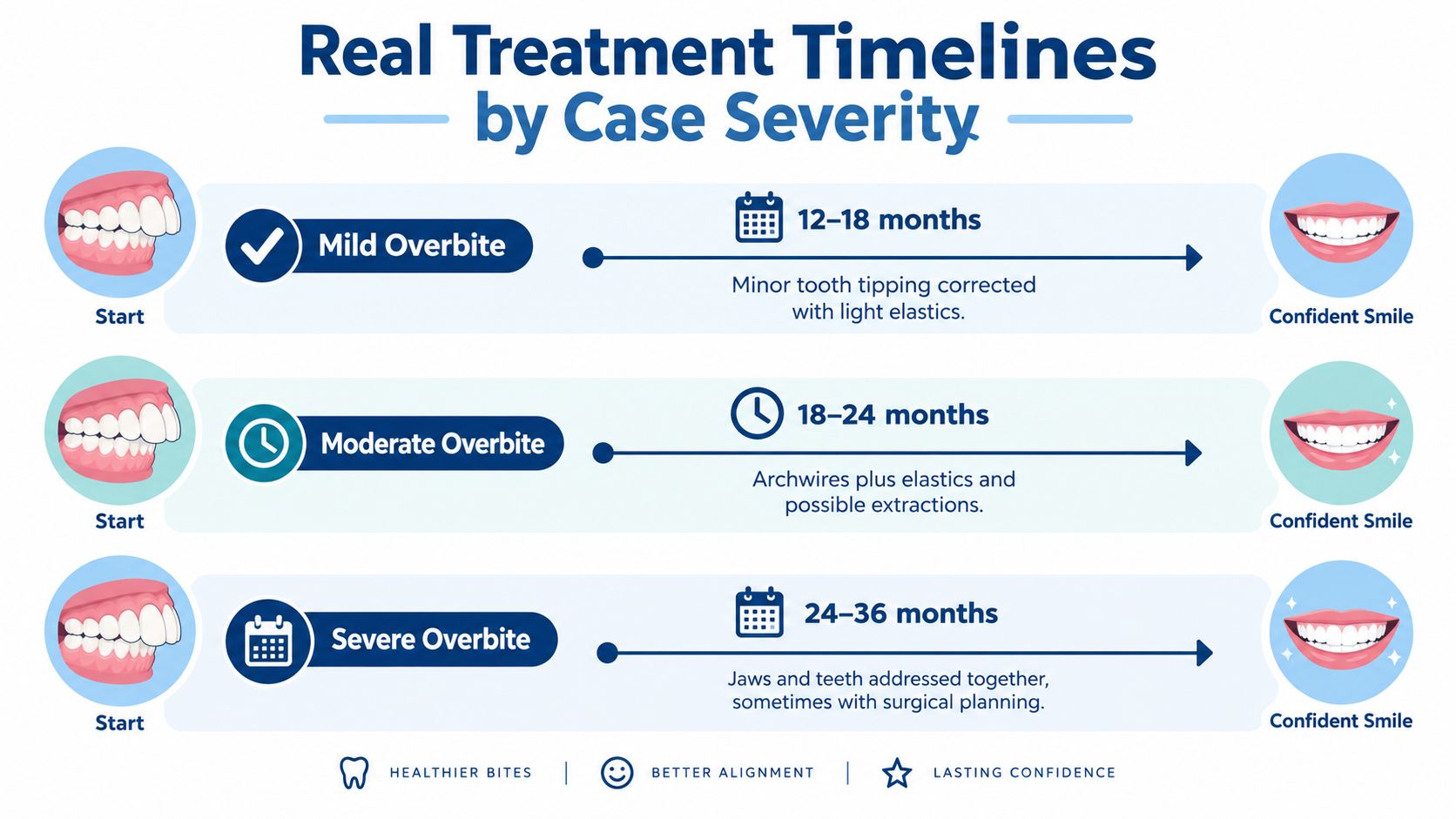
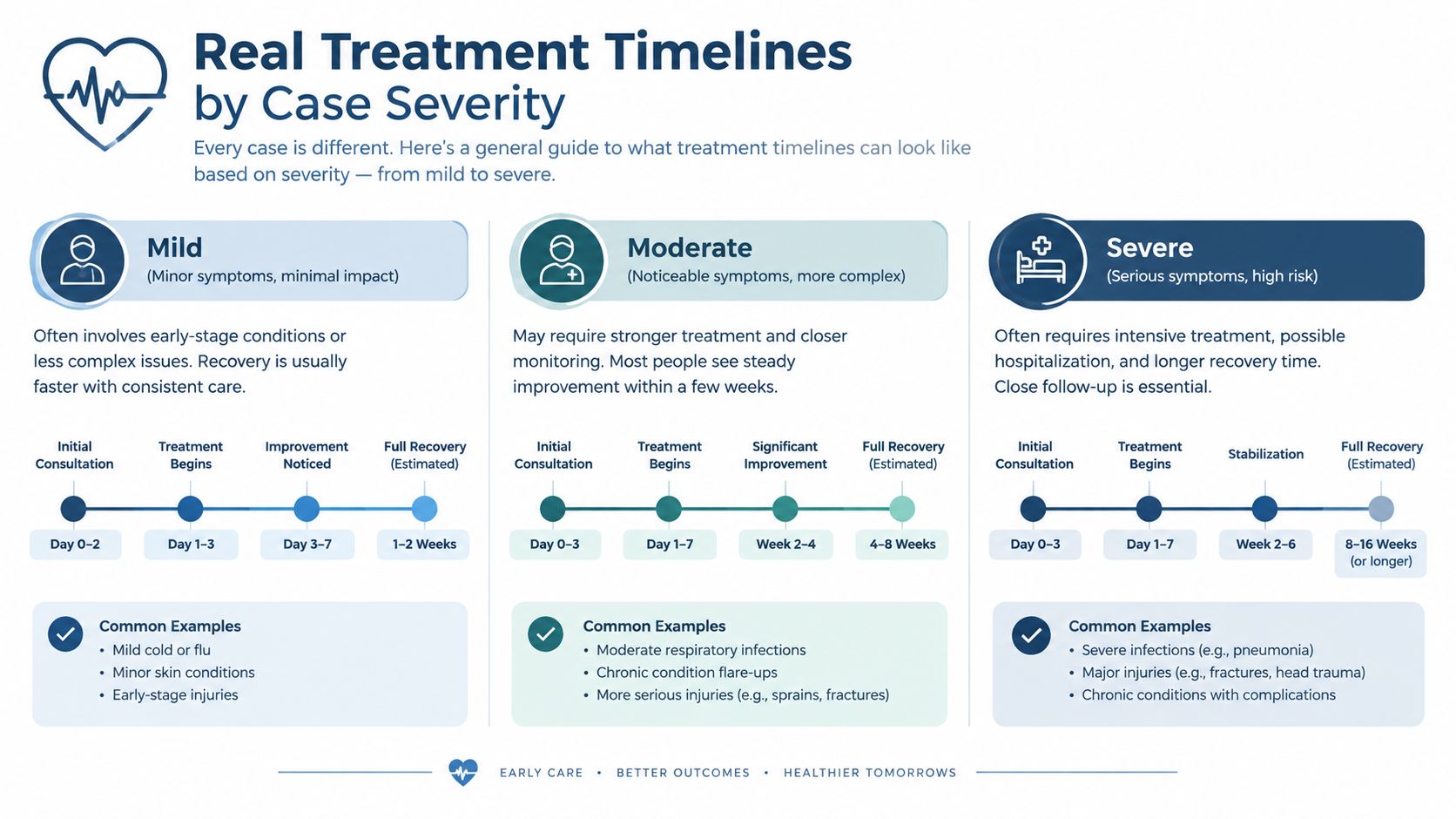
Parents usually want a calendar, but an overbite doesn't come with one universal schedule. A mild dental overlap may need a simpler sequence than a deep bite combined with crowding, unusual tooth angulation, or a skeletal discrepancy. Growth stage, eruption, missed visits, broken brackets, and cooperation with elastics can also change the path.
The timeline visual below uses broad severity categories, but the ranges shown should not be treated as a personal prediction.
| Case pattern | What may influence the plan | Why the calendar varies |
|---|---|---|
| Mild dental overbite | Limited tooth tipping or small bite adjustments | The orthodontist may need fewer mechanics, but tooth response still determines progress |
| Moderate overbite | Arch coordination, elastics, crowding, or bite-opening measures | Several tooth movements may need to occur in a particular order |
| Severe or mixed overbite | Significant dental movement, growth considerations, or surgical discussion | Braces may improve tooth relationships without fully changing the jaw structure |
A child who wears elastics inconsistently may not follow the same course as a child who follows the prescribed schedule. Oral hygiene also affects decision-making, because the orthodontist may need to pause or modify treatment if the teeth and gums aren't being kept healthy. Families can read more about the factors that shape how long braces take to work.
Retention is part of correction
Braces come off when the orthodontist judges that the teeth and bite have reached a suitable position. That isn't the end of care. Teeth can shift after active treatment, and a retainer helps hold the corrected arrangement while the surrounding tissues adapt.
The retainer may be removable, fixed, or used in combination, depending on the patient's needs. A child who loses a removable retainer or notices that it no longer fits should tell the orthodontist promptly. Waiting can allow unwanted movement to progress and may make retention more complicated.
The appliance choice can affect control in selected cases, but severity and diagnosis often matter more than whether brackets are metal or tooth-colored. A consultation should focus on the movement required, the child's growth stage, and the responsibilities that come with the proposed plan.
Metal Braces vs Invisalign and Other Options
Metal braces aren't automatically the right answer for every overbite, and clear aligners aren't automatically the gentler or simpler answer. The orthodontist weighs the amount of vertical control required, the child's ability to follow instructions, tooth eruption, skeletal pattern, hygiene, and the complexity of the movement.
Clear ceramic braces use brackets in a fixed system, so they can offer the same general style of tooth-by-tooth control while appearing less noticeable. Aligners use a series of removable trays and may suit selected mild or moderate dental cases, particularly when the patient can wear them reliably. Deeper bites or movements that require sustained control may make fixed appliances a more practical choice.
A 2020 systematic review comparing aligners with fixed appliances found that one included study showed greater improvement in the overbite component with braces. The reported difference was 1.0 Peer Assessment Rating point, with a 95% confidence interval from 0.2 to 1.9 and P = 0.02, while the complete PAR score didn't show a statistically significant overall difference, according to the systematic review and meta-analysis. That result supports individualized planning rather than a blanket rule.
| Option | Best for | Typical overbite use | Key trade-off |
|---|---|---|---|
| Metal braces | Cases needing fixed, three-dimensional control | Dental deep bites and complex bite coordination | More visible and requires careful cleaning |
| Clear ceramic braces | Patients wanting a less noticeable fixed appliance | Similar fixed-brace mechanics in suitable cases | Brackets can be more vulnerable to damage or staining from habits |
| Removable clear aligners | Selected patients able to follow wear instructions | Certain dental overbites and planned tooth movements | Results depend on consistent wear and the planned movements must be achievable |
| Surgical orthodontics | Selected adults with significant jaw discrepancies | Cases where tooth movement alone can't address the skeletal relationship | Requires separate evaluation, planning, and recovery considerations |
Families can review Invisalign versus braces for kids before a consultation, then ask why one appliance fits the child's bite better than another. Stellar Orthodontics offers metal braces, clear ceramic braces, and Invisalign, allowing the discussion to stay centered on the diagnosis rather than the appliance's appearance alone.
A Delaware Family's Overbite Journey at Stellar
Consider a representative composite family from Middletown. Their teenager had a deep front overlap, but the visible concern didn't reveal whether the problem came mainly from the teeth or the jaws. During the consultation, the orthodontist assessed the bite, tooth positions, facial pattern, growth stage, and available space before discussing whether fixed braces could provide the necessary correction.
An iTero digital 3D scan formed part of the first visit at Stellar Orthodontics locations in North Wilmington, Middletown, Dover/West Dover, and Millsboro. The scan helped the family view the teeth and bite from different angles, while the clinical examination supplied information that a digital image alone can't provide.

What the treatment sequence looked like
At bonding, the brackets were placed on the teeth and connected with an archwire. The orthodontist explained which bite-opening measures might be used and whether elastics would become part of the plan. The teenager left with instructions for brushing around the brackets, choosing comfortable foods during early tenderness, and reporting a loose component.
At later visits, the orthodontist adjusted the mechanics as the teeth responded. The family learned that progress wasn't judged only by whether the front teeth looked straighter. The orthodontist also checked how the arches coordinated, whether the bite was opening appropriately, and whether the teeth and gums remained healthy.
After the braces were removed, the teen received a clear lower Essix-type retainer and instructions for retention. That retainer wasn't cosmetic packaging after treatment. It was part of holding the new tooth positions.
This example is a composite, not a report of a particular patient. Its value is in showing the questions a Delaware family can expect to discuss: What caused the overbite? Which teeth need to move? What can growth change? What must the patient do between visits?
Risks, Side Effects, and Common Myths
Metal braces have benefits and trade-offs. Mild soreness after placement or an adjustment is common, and brackets can rub the cheeks or lips. Fixed appliances also make plaque control more demanding, so brushing around each bracket, using fluoride as directed, cleaning between teeth, and limiting foods that damage brackets all matter.
White-spot lesions can develop when plaque and acids remain around brackets. Root changes, gum irritation, discomfort, and metal sensitivity are also possible concerns. The degree of risk varies by the patient, hygiene, treatment conditions, and individual susceptibility. Swelling, persistent pain, a significant reaction, or a loose bracket should be reported to the orthodontic office.
The TMJ question needs careful wording
Parents sometimes hear that correcting an overbite will prevent future jaw-joint problems. The evidence doesn't support that promise. A 2025 orthodontic review reported that evidence connecting overbite or other bite measurements with later temporomandibular-disorder symptoms is weak and inconsistent. It also reported that orthodontic treatment hasn't been proven to prevent, cause, or cure TMD.
That doesn't mean bite concerns should be ignored. It means the orthodontist should separate the goals of improving tooth contact, protecting soft tissues, supporting function, and addressing a diagnosed jaw-joint condition. Braces can move teeth, but they aren't a guarantee against every future source of jaw discomfort.
Overbite correction isn't only cosmetic
A deep bite can affect how the front teeth contact, how the arches meet, and whether teeth or soft tissue receive unwanted pressure. The reason for treatment depends on the child's diagnosis, not on a promise that braces will create a particular health outcome. A careful consultation explains both what treatment can change and what remains outside the reach of tooth movement.
Your Next Step at Stellar Orthodontics
Metal braces are a well-understood tool for correcting many dental overbites. They can level the arches, guide incisor position, coordinate the upper and lower teeth, and use bite-opening mechanics when appropriate. They can't substantially change jaw growth, so a skeletal or mixed overbite requires a more detailed discussion about growth, compensation, and possible alternatives.
A free consultation gives a Delaware family the chance to learn where a child's bite falls on that spectrum before choosing an appliance. Families can visit the North Wilmington office at 2304 Concord Pike, Middletown at 818 Kohl Avenue, West Dover at 125-2 Greentree Drive, or Millsboro at 26670 Centerview Drive. Stellar Orthodontics accepts most major dental insurance, offers $0-down monthly payment plans, and accepts all three Delaware state Medicaid plans, plus CHIP for children and teens under 21.
Stellar Orthodontics offers metal braces, clear ceramic braces, Invisalign, and free consultations with iTero digital 3D scanning for families evaluating overbite treatment. Visit Stellar Orthodontics to choose a Delaware location and book a consultation that explains what braces can change, what they can't, and which plan fits the child's bite.