.png)
What might a finished smile look like after metal braces, and what can a photograph prove? Before-and-after images can show visible changes in spacing, overlap, and bite position, but they can't reveal the full treatment plan behind the result. A photo doesn't show whether a patient needed extractions, expansion, elastics, habit support, growth monitoring, or a specific retention plan.
The gallery below uses six illustrative smile scenarios organized by the concern being treated. Each example explains what the visual change may represent, while keeping the limits of photographs clear. Treatment duration varies with age, bite severity, growth, cooperation, missed visits, broken brackets, hygiene, and treatment goals. A systematic review of fixed-appliance treatment found an average duration of 24.9 months, although individual timelines varied and treatment length wasn't statistically linked to a better final bite result (clinical review of fixed orthodontic appliances).
For families in Delaware, a free consultation at Stellar Orthodontics in North Wilmington, Middletown, Dover/West Dover, or Millsboro can turn a visual comparison into an individualized evaluation.
Table of Contents
- 1. Severe Crowding Correction in a 14-Year-Old From Overlapped Teeth to a Confident Smile
- 2. Underbite Correction in a 16-Year-Old With a More Balanced Bite
- 3. Open Bite Closure in a 13-Year-Old From Teeth That Don't Touch to Functional Overlap
- 4. Deep Bite Correction in a 15-Year-Old From Excessive Overlap to a More Balanced Bite
- 5. Crossbite Correction in a 12-Year-Old From a Shifted Bite to Centered Teeth
- 6. Severe Spacing Correction in an 11-Year-Old From Gaps Between Teeth to a Unified Smile
- Metal Braces Before & After, 6-Case Comparison
- Turn Before-and-After Questions Into a Personal Plan
1. Severe Crowding Correction in a 14-Year-Old From Overlapped Teeth to a Confident Smile
Severe crowding often looks straightforward in a photograph. Several front teeth may overlap, rotate, or sit behind one another, creating a smile that appears compressed. The more important question is whether the bite also needs correction and how much space the treatment plan requires.
This illustrative 14-year-old scenario represents a moderate-to-severe crowding pattern often evaluated during the teenage years. The supplied before-and-after image shows the type of visible change families may hope to see, from overlapping teeth to a more orderly alignment. It shouldn't be treated as a prediction for every patient with crowded teeth.
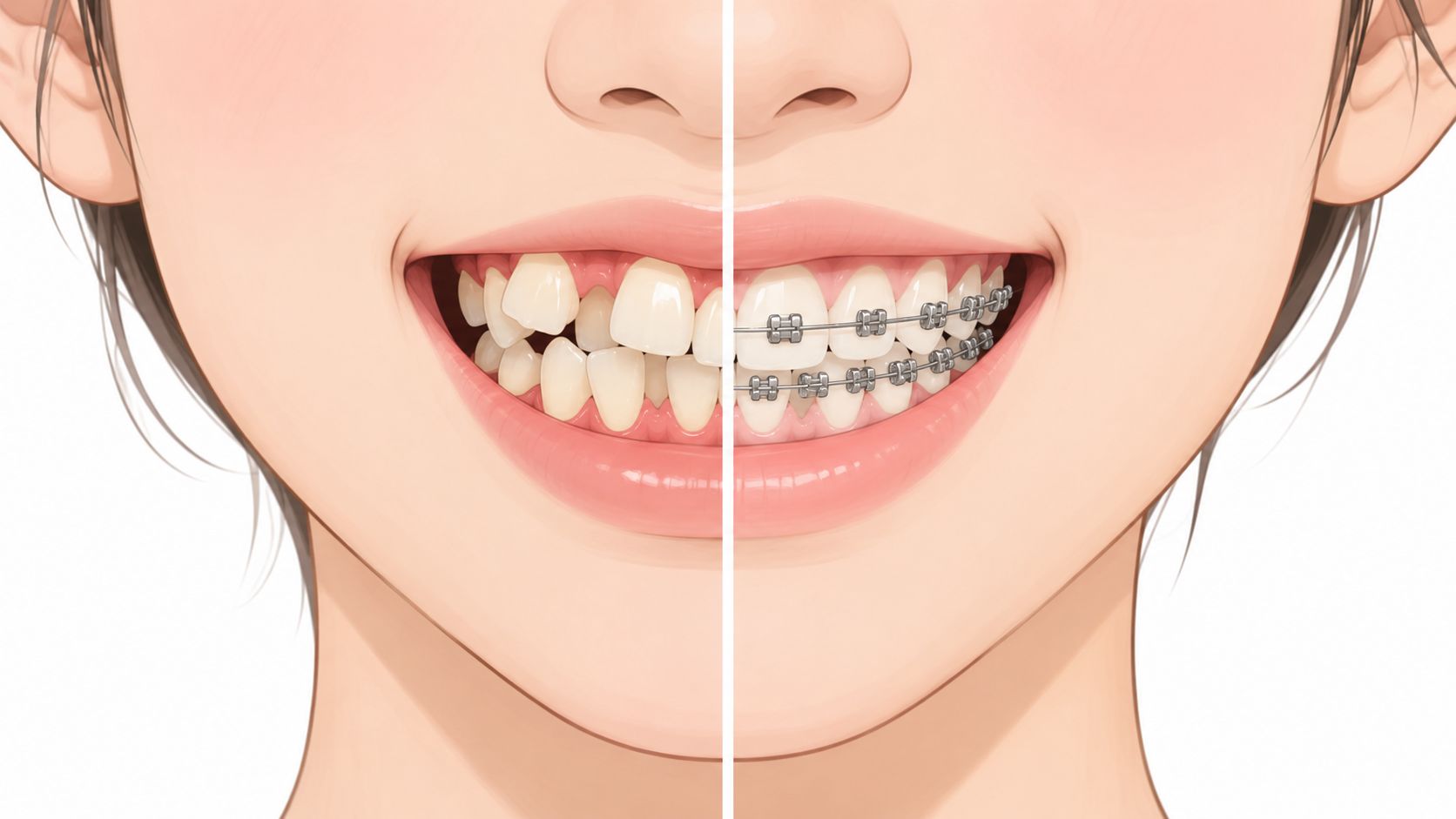
Practical rule: Straighter teeth are only part of the outcome. Enamel and gum health must be protected while brackets and wires are in place.
The example timeline is presented as 24 months, but a family shouldn't use that figure as a promised finish date. Published reviews report different averages depending on the mix of cases studied. One review of extensive fixed metal-appliance treatment found an average of 19.9 months, while another reported 24.9 months, showing why an individualized range matters (review of fixed metal-appliance treatment duration).
Daily care affects the final photograph
Crowded teeth can be difficult to clean even before braces are placed. Brackets add more areas where food and plaque can collect, so the patient should establish a reliable brushing routine before treatment begins. Interdental brushes and floss threaders can help clean around brackets and beneath wires, while the general dentist should continue monitoring oral health.
Families should also ask about foods that could loosen brackets or bend wires. Missed appointments, broken appliances, and inconsistent care can change the timeline and the final appearance. A guide to how long braces can take for crowded teeth can help families prepare questions, but only an examination can estimate the treatment range for a particular smile.
2. Underbite Correction in a 16-Year-Old With a More Balanced Bite
Could a before-and-after photograph show why an underbite improved, or only how the teeth look from one angle?
An underbite occurs when the lower front teeth sit in front of the upper front teeth. In this six-case gallery, the before image would show the forward lower-tooth relationship, while the after image may show a more balanced front bite. The photographs help illustrate visible change, but they cannot identify whether the main cause is tooth position, jaw relationship, growth, or a combination of factors.
For this 16-year-old, the example uses a 26-month treatment journey focused on correcting a pronounced underbite pattern. That timeline belongs to the scenario, not to every adolescent with the same appearance. Growth stage, bite severity, family patterns, appliance needs, and cooperation can all shape the treatment plan and its duration.
Why growth stage matters
An orthodontic evaluation examines more than the front teeth. The orthodontist may assess how the upper and lower jaws relate, how the teeth meet during chewing, and whether the jaws are still growing. Depending on those findings, treatment may include metal braces with elastics or another appliance that guides jaw development. A substantial jaw discrepancy may call for a different approach.
This distinction is important because two underbites can look similar in a front-facing photograph while requiring different plans. Bracket placement and wire progression that suit one adolescent may not suit another. The image also cannot show how consistently elastics were worn, whether appointments were kept, or how the bite functions during eating.
A patient guide from the East Kent Hospitals orthodontic service explains that fixed appliances move teeth through bone and that progress is checked during scheduled visits. It also notes that tooth movement can carry a small risk of root shortening. Longer treatment or broken appliances may increase that risk, so repairs and monitoring matter.
Questions worth asking at the consultation
- What is causing the underbite: Is it mainly dental, related to jaw position, or influenced by growth?
- What appliances may be needed: Could elastics or a growth-modification appliance form part of the plan?
- What range is realistic: Which factors could shorten or extend the estimated timeline?
- What happens after braces: How will retention help protect the corrected bite?
Bring the before photo to the free Stellar Orthodontics consultation and ask whether the underbite is dental or skeletal, what the visual example can and cannot predict, and which treatment options fit the patient's examination.
3. Open Bite Closure in a 13-Year-Old From Teeth That Don't Touch to Functional Overlap
An open bite occurs when the upper and lower front teeth do not overlap vertically as the mouth closes. The visible gap can affect a smile, but an orthodontic evaluation also examines tongue posture, thumb or finger habits, jaw growth, speech, and how the front teeth meet during biting.
For a 13-year-old with a tongue-thrust pattern and vertical growth considerations, this example shows a 28-month course using metal braces, habit support, and staged wire progression. The timeline is an illustration, not a treatment promise. The right plan depends on the child's examination, growth, habits, and cooperation.
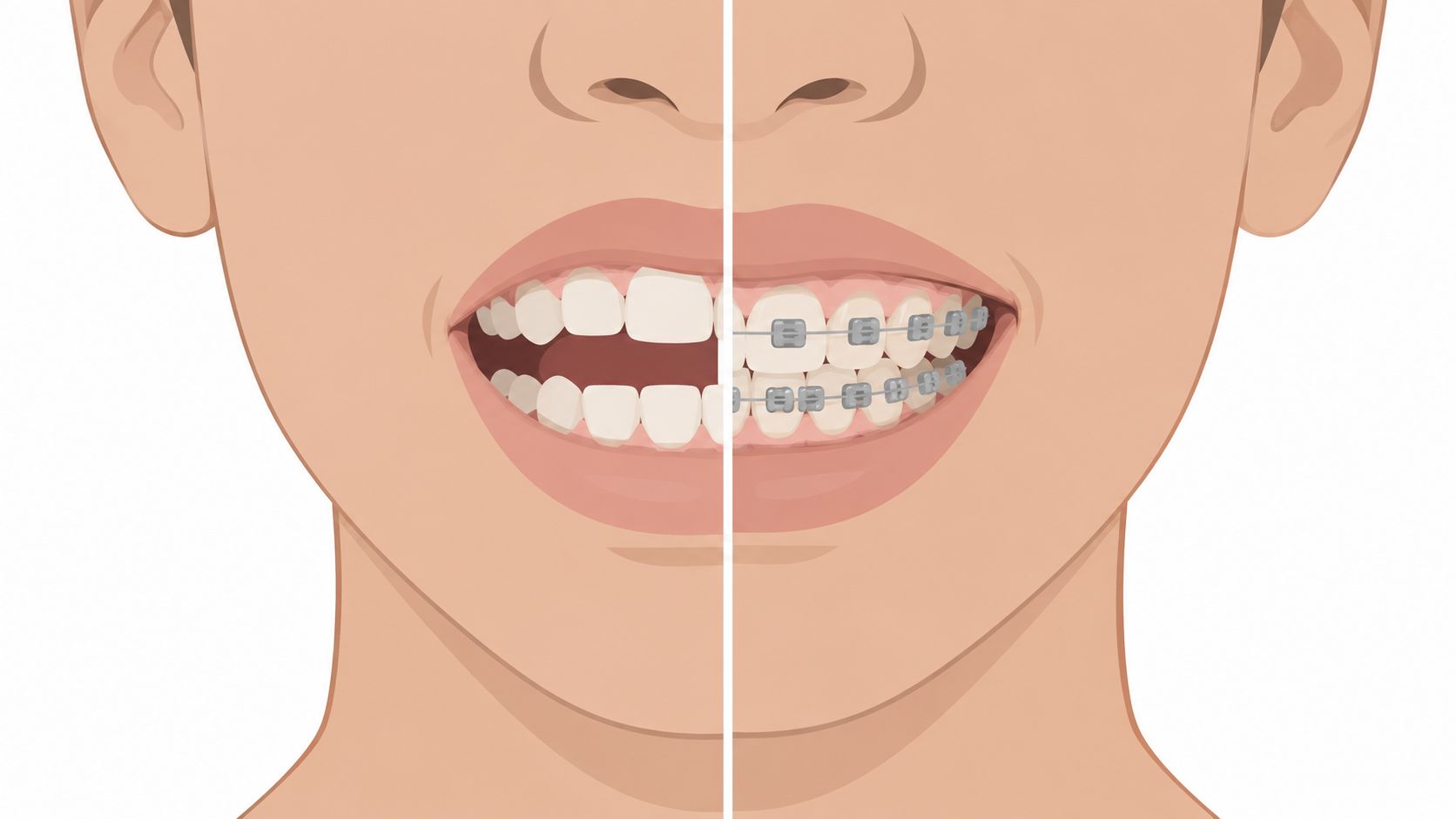
The image may suggest that the front teeth now meet more fully. It cannot show whether speech, chewing, or tongue posture improved. Metal braces guide tooth movement, while habit support addresses forces that may continue separating the teeth. Daily responsibilities can include following habit instructions, keeping appointments, protecting the braces, and cleaning carefully around brackets.
Habits and retention need ongoing attention
Treatment works more predictably when families understand the forces affecting the bite. A child may need support with tongue posture, thumb-sucking cessation, or another oral habit. Ask how the orthodontist will monitor that habit, what the child should practise at home, and when progress will be reviewed.
Retention deserves discussion before braces come off. If the original forces remain active, teeth may shift after treatment, so the retainer plan should address wear, follow-up visits, and what to do if the appliance is lost or damaged.
The adjustment period matters, too. A systematic review found that functional limitations can be most consequential during the first three months. Another clinical report found that soreness generally increases four to 24 hours after an adjustment and gradually returns toward normal by about day seven (review of orthodontic discomfort and oral-health effects). Families can bring these questions to a free Stellar Orthodontics consultation and ask which findings in the photograph apply to their child.
4. Deep Bite Correction in a 15-Year-Old From Excessive Overlap to a More Balanced Bite
When lower incisors disappear behind the upper teeth during biting, enamel wear and jaw stress may become concerns. This 15-year-old example shows how metal braces can address excessive vertical overlap while guiding the bite toward a more balanced relationship.
The before-and-after view can show the lower front teeth becoming more visible and the overlap changing. It cannot confirm whether tooth wear, jaw tension, chewing comfort, or other symptoms improved. Those findings require an in-person examination.
The case is labeled as 22 months of treatment. Controlled vertical movement of the upper and lower front teeth formed part of the approach, with the mechanics chosen according to tooth position, bite relationship, bone support, and treatment goals. The timeline is an example, not a promise for every teenager.
Slow, controlled movement matters
Deep bite correction involves more than straightening the front teeth. The orthodontist may coordinate the front and back teeth so the bite opens and settles into a healthier position. That process is like adjusting several connected gears. Moving one group of teeth can affect how the others meet, so progress is reviewed throughout treatment rather than judged from a single photograph.
A guide to how braces can address an overbite explains general mechanics. An orthodontist must determine whether a specific patient needs bite-opening features, elastics, additional appliances, or another approach.
A visible change in overlap does not automatically prove that every functional concern has been resolved. The orthodontist must assess the bite directly.
Daily care still affects the result. Avoid chewing ice or pens, which can damage brackets. If a bracket breaks or a wire bends, contact the office promptly because the planned movement may be interrupted. Braces can also trap food and increase plaque buildup, so careful brushing and regular dental care remain part of treatment (NHS guidance on braces and orthodontics).
Deep bite correction can relapse because erupting forces may persist. Ask whether a bite-plane retainer is part of the retention plan. At a free Stellar Orthodontics consultation, Delaware families can ask how the bite will be measured, what the photographs do not show, and which daily responsibilities apply to their child.
5. Crossbite Correction in a 12-Year-Old From a Shifted Bite to Centered Teeth
Could a sideways jaw shift reflect more than crooked teeth? A crossbite occurs when one or more upper teeth close inside the lower teeth. With a unilateral posterior crossbite, the lower jaw may move to one side as the child closes. A before-and-after photograph can show a centered smile, but it cannot reveal how the bite was diagnosed or which appliance created room for correction.
In this 12-year-old case, a rapid palatal expander was used during the early phase, followed by metal braces. The example describes a 20-month overall treatment timeline. Expansion timing, activation instructions, retention, and finishing alignment depend on the child's examination and growth stage. This timeline belongs to the example, not every crossbite case.
An upper-jaw expander may help when the upper arch is too narrow for the bite to fit correctly. Families should follow the orthodontist's instructions precisely and report discomfort or appliance problems rather than changing the schedule independently. Early evaluation can clarify which options fit the child's development.
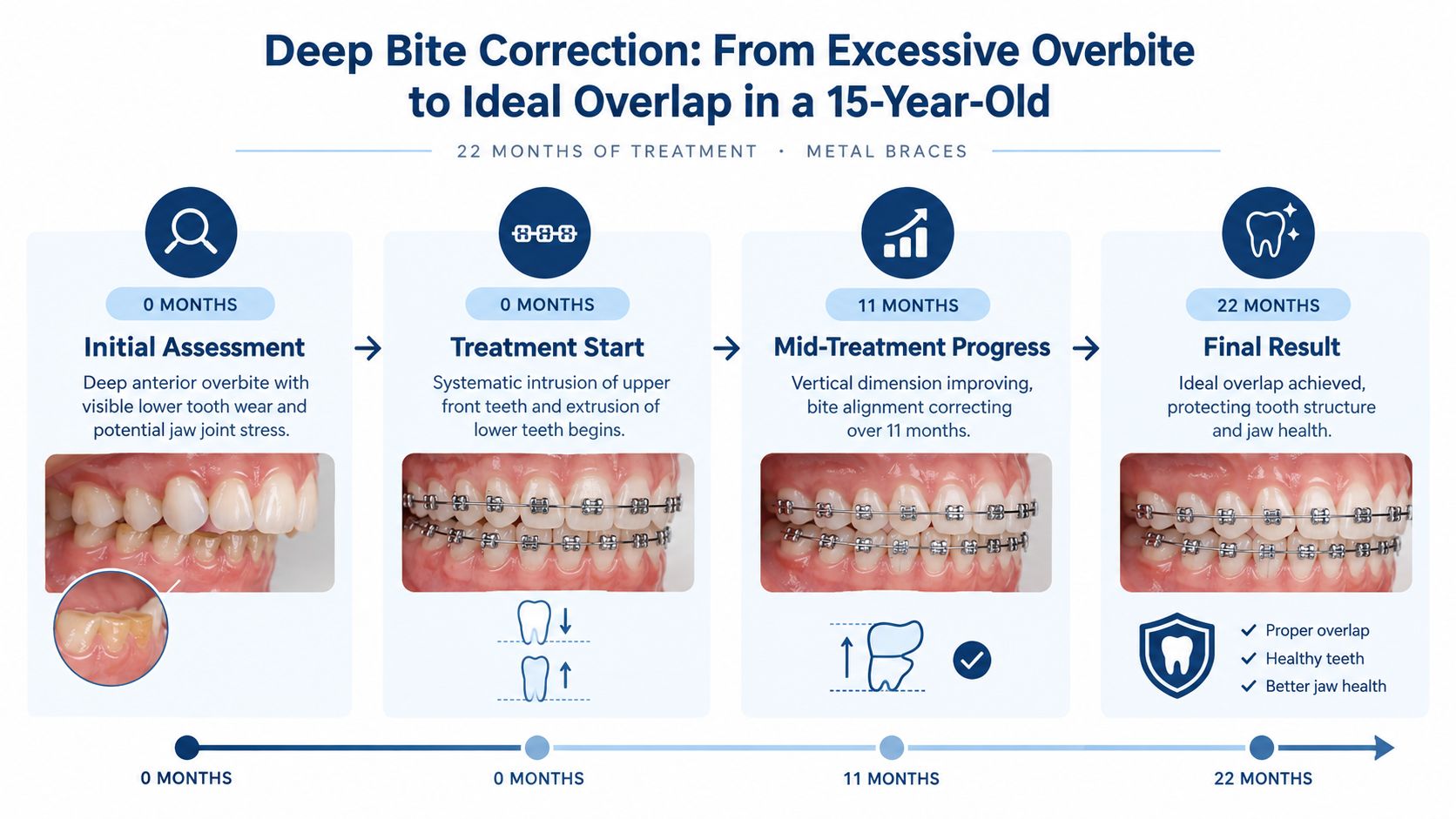
This graphic is a general visual reference, not evidence of the crossbite treatment shown here. Its label describes a deep-bite example, so families should not use it to estimate a crossbite's sequence or duration.
What families should observe at home
- Jaw movement: Mention any sideways shift when the child closes.
- Appliance comfort: Speech and eating may feel different after an expander is placed.
- Activation accuracy: Follow the prescribed instructions exactly.
- Retention planning: Ask how the corrected upper-jaw width will be maintained.
Here is a general visual explanation of orthodontic appliances and tooth movement:
A centered final image can suggest visible alignment. Only an orthodontic assessment can confirm how the teeth meet and whether the jaw shift has been addressed. At a free Stellar Orthodontics consultation, Delaware families can ask how progress will be measured, what the photographs cannot show, and what daily care the expander and braces require.
6. Severe Spacing Correction in an 11-Year-Old From Gaps Between Teeth to a Unified Smile
Gaps between front teeth can reflect a cause that photographs cannot show. In this 11-year-old scenario, widespread spacing appeared alongside a tongue-thrust pattern and a question about whether a tooth was missing or delayed. The example uses 19 months of treatment with traditional metal braces to bring the teeth together. That timeline belongs to this specific case, not every child with spacing.
Spacing may become more noticeable as permanent teeth erupt. Tooth size, arch form, a frenum, tongue posture, missing teeth, and dental development can all affect the pattern. An orthodontic examination and appropriate imaging are needed to determine which factors apply and whether every permanent tooth is developing.
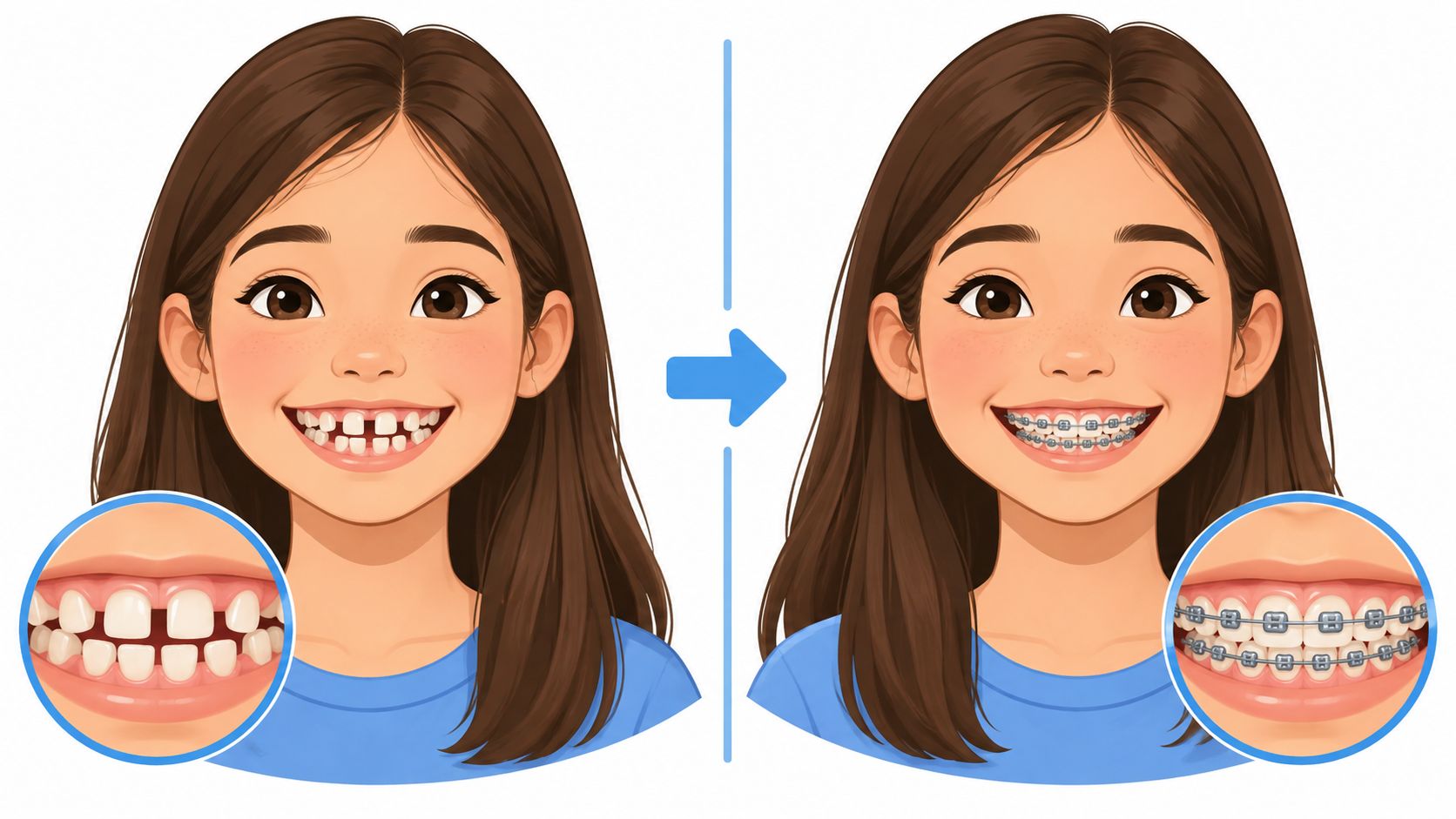
The before-and-after image may show a more continuous smile line after braces, much like seeing furniture moved closer together in a room. It cannot confirm why the spaces formed, whether the bite functions properly, or whether all permanent teeth are present. If a tooth is missing or its development is delayed, the orthodontist may coordinate with the general dentist or another dental professional. The plan could preserve a space, close it, or prepare it for a future restoration.
Closing gaps is only one part of stability
As with the open bite case above, habit support and retention carry the long-term result here. Spacing-specific retainer planning also matters because gaps may reopen when teeth are no longer held in their corrected positions. Braces can cause temporary pressure or soreness as movement begins, and the office can explain suitable comfort measures. Daily care includes brushing around brackets, cleaning between teeth, and following appointment and retainer instructions.
The overview of metal braces and their treatment options can help families understand traditional metal braces, but only an individualized evaluation can show whether this approach fits the child's dental development.
At a free Stellar Orthodontics consultation, Delaware families can ask:
- Are all permanent teeth developing normally: Could imaging clarify whether a tooth is missing or delayed?
- What is causing the spacing: Do tooth size, arch form, a frenum, or tongue posture contribute?
- How will the spaces close: Which teeth will move, and how will anchorage be controlled?
- What daily care is expected: How should the child clean around braces and manage early soreness?
- How will the result be maintained: What retainer design and wear plan will help keep the spaces closed?
Metal Braces Before & After, 6-Case Comparison
| Case / Treatment | Implementation complexity | Resource requirements | Expected outcomes | Ideal use cases | Key advantages |
|---|---|---|---|---|---|
| Severe Crowding Correction (14‑yo) | High, extractions + comprehensive alignment over 24 months | Metal braces, 4 premolar extractions, monthly adjustments, imaging | Aligned anterior teeth, improved hygiene, enhanced facial balance | Severe anterior crowding in adolescents needing space creation | Predictable, durable, cost‑effective; Medicaid‑accepted |
| Underbite Correction (16‑yo) | High, growth‑guided mechanics; timing‑sensitive (26 months) | Metal braces, targeted bracket/wire sequencing, growth monitoring, auxiliaries as needed | Corrected Class III bite, improved chewing and aesthetics; often avoids surgery | Growing patients with mild–moderate skeletal underbite | Non‑surgical correction when timed correctly; improves function |
| Open Bite Closure (13‑yo) | Very high, vertical control + habit management (28 months) | Braces, habit‑breaking therapy, specialized wire mechanics, close follow‑up | Closed anterior bite, restored biting/speech, better long‑term stability with retention | Skeletal/behavioral open bites with tongue thrust in teens | Restores function and speech; addresses habits to reduce relapse |
| Deep Bite Correction (15‑yo) | High, precise intrusion/extrusion mechanics (22 months) | Metal braces, intrusion/extrusion mechanics, careful vitality monitoring | Reduced overbite, less tooth wear, improved TMJ protection | Teens with excessive overbite and lower tooth wear or jaw stress | Precise vertical control; protects tooth structure and jaw health |
| Crossbite Correction (12‑yo) | Moderate–high, two‑phase (expander then braces) over ~20 months | Rapid palatal expander, metal braces, activation compliance, orthopedic phase | Expanded upper arch, corrected crossbite, centered midline and normalized jaw position | Unilateral posterior crossbite in growing patients with narrow maxilla | Interceptive approach prevents surgery; effective and stable when early |
| Severe Spacing Correction (11‑yo) | Moderate, space‑closure mechanics (19 months) | Metal braces, anchorage control, habit therapy if tongue thrust present | Closed diastemas, unified arch, improved aesthetics and hygiene | Generalized spacing during mixed dentition/adolescence | Fast cosmetic improvement; reliable and cost‑effective |
Turn Before-and-After Questions Into a Personal Plan
The six examples show why metal braces before and after photographs can be useful starting points, but limited decision-making tools. Crowding, underbite, open bite, deep bite, crossbite, and spacing each require different questions. A smile can look similar to a gallery image while needing a completely different plan because of jaw relationships, growth, missing teeth, habits, root position, or the way the back teeth meet.
Treatment duration should also be treated as a range rather than a promise. The American Association of Orthodontists says most patients wear braces for about 12 to 24 months, while mild corrections may take only a few months and complex cases involving many teeth or jaw-position changes can take years (AAO information about braces). The NHS gives an overall range of 12 months to 2.5 years and says adjustment visits are commonly needed every 4 to 10 weeks. These benchmarks help families ask better questions, but they don't replace an individualized estimate.
Before a consultation, parents and teens can save the gallery image that most resembles the concern and prepare questions about extractions, expansion, elastics, habit support, cleaning, broken brackets, discomfort, and retention. A strong result includes more than straighter teeth. It also includes protecting enamel and gums during treatment and following the retainer plan afterward.
Stellar Orthodontics offers free consultations at locations in North Wilmington, Middletown, Dover/West Dover, and Millsboro. Consultations include iTero digital 3D scanning, which can help the orthodontic team evaluate the teeth and bite in greater detail. The scan doesn't promise a particular result, but it can support a clearer discussion about available treatment options and the factors that may influence the timeline.
Families comparing metal braces before and after results can book a free consultation with Stellar Orthodontics to discuss crowding, spacing, underbites, open bites, deep bites, or crossbites. Visit Stellar Orthodontics to find a Delaware location and begin an individualized conversation about treatment, daily care, and retention.